
Desserts
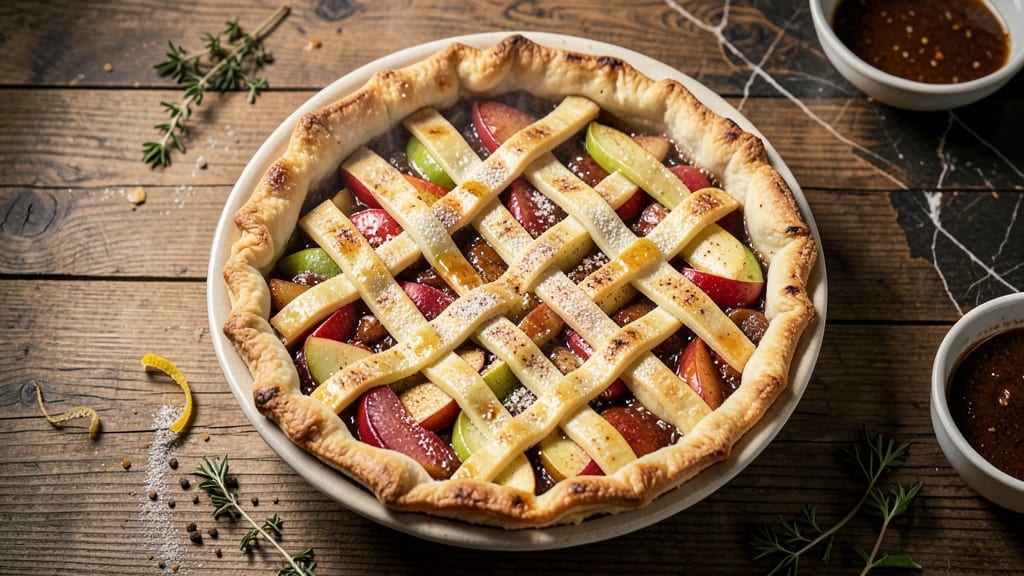
This 1894 German apple pie recipe transports you to a bakery straight out of late 19th-century Bavaria, where spiced apples and buttery crusts reigned supreme.
The original recipe relied on simple, rustic ingredients—lard or butter for the crust, tart apples for the filling, and warm spices like cinnamon and cloves to create harmony in every bite.
Unlike modern versions, this pie was baked in coal-fired ovens, which we’ll replicate with high, even heat for that signature caramelized crust and tender filling.
The crust here is the star, made with a traditional lard-and-flour dough that yields a flaky, golden-brown finish without the need for modern shortcuts. The filling balances tart apples with just enough sugar to sweetness, while cardamom and nutmeg add depth that was common in German baking of the era.
No thickeners or commercial pie fillers—just apples, spices, and a touch of lemon to brighten the flavors. The lattice crust isn’t just decorative; it allows steam to escape while keeping the filling moist, just as bakers did over a century ago.
What you’ll end up with is a pie that tastes like history—warm, spiced, and deeply satisfying, with a crust that’s crisp yet tender and a filling that’s perfectly set but still juicy.
Serve it warm with a dollop of Vanillesoße (German vanilla sauce) or whipped cream, just as it was enjoyed in 1894. This isn’t just dessert; it’s a taste of the past, recreated with authenticity and care.
The beauty of this recipe lies in its simplicity and tradition. No fancy techniques, no expensive ingredients—just the kind of baking that fed families for generations. Whether you’re celebrating a holiday, a special occasion, or simply craving a slice of nostalgia, this pie delivers.
Let’s bring this classic back to life, one slice at a time.
Ingredients for 1894 german apple pie
Simple, rustic ingredients bring 19th-century Bavarian baking to life in every slice.
| Ingredient | Amount | Notes |
|---|---|---|
| All-Purpose Flour 🌾 | 3 ½ cups | Sifted for flakier crust |
| Unsalted Butter 🧈 | 1 cup | Cold, cubed for lard substitute |
| Lard 🧈 | ½ cup | Leaf or leaf lard preferred |
| Ice Water 💧 | ½ cup | Chilled for dough handling |
| Tart Apples 🍎 | 6 medium | Granny Smith or Braeburn |
| Granulated Sugar 🍚 | 1 ½ cups | Light brown preferred |
| Ground Cinnamon 🌿 | 2 tbsp | Freshly ground preferred |
| Ground Cloves 🌶️ | ½ tsp | Freshly ground for warmth |
| Ground Nutmeg 🌶️ | ½ tsp | Freshly grated nutmeg |
| Ground Cardamom 🌿 | ½ tsp | Optional but traditional |
| Lemon Juice 🍋 | 2 tbsp | Freshly squeezed |
| Salt 🧂 | 1 tsp | Diamond Crystal preferred |
| Heavy Cream 🥛 | ¼ cup | For lattice brushing |
The apples are the heart of this pie—Granny Smith or Braeburn deliver the perfect tartness. Local farmers markets often have heirloom varieties that work beautifully, but any firm, tart apple will do. Peel and core them before slicing thinly for even cooking. The spices? Penzeys sells pre-ground cardamom and cloves if you want to skip the mortar and pestle, but freshly grinding makes all the difference. For the crust, lard gives that signature flakiness—don't substitute shortening, which lacks the same richness. If you can't find leaf lard, regular pork lard works fine. The butter adds flavor, so use good-quality unsalted.
No cardamom? Skip it—it's traditional but not essential. Want more spice? Add 0.25 tsp of ground allspice. Running low on cloves? Cinnamon alone works, just reduce to 1.5 tbsp. For the apples, prevent browning by tossing slices in lemon juice while prepping. The lattice crust is key—cut strips from rolled dough and weave them over the filling. If that feels fussy, a simple top crust with slits works too. The heavy cream for brushing? Whipped table cream is fine, but heavy cream gives that golden sheen. For extra authenticity, use a mix of butter and lard in the crust.
The dough keeps best wrapped in plastic in the fridge for up to 48 hours. Apples can be prepped ahead and stored in lemon water for 2 days. Once baked, this pie reheats beautifully—350°F for 15 minutes restores that fresh-from-the-oven warmth. Freeze the whole pie for up to 3 months—thaw overnight before serving. The lattice crust holds up well, but if you're worried, cover it loosely with foil before freezing. Leftovers? Store in an airtight container for 4 days. Serve with Vanillesoße for that authentic German touch.
Why You'll Love This Recipe
- No-Fuss Dough: I swear, this crust is the easiest I’ve ever made—just flour, butter, lard, and ice water tossed together until it holds. No rolling pins, no fuss, and it still turns out flaky enough to make you think you slaved over it.
- Tart-Sweet Magic: That lard in the crust? It’s the secret—rich, buttery, and the perfect foil for the sharp, juicy apples. Honestly, the first bite makes you forget it’s not some fancy bakery pie.
- Weeknight to Holiday: Make it for a quick dinner with a scoop of vanilla ice cream or take it to a potluck—no one will guess it’s not from a German bakery. (Yes, even on a Tuesday night.)
- Budget-Friendly Staples: Apples, flour, butter—these are ingredients you already have. I’ve made this pie for under $10 and still had leftovers for days. That’s real value, folks.
Step-by-step instructions for 1894 German apple pie
This is how German bakers achieved legendary flaky crusts and aromatic spice blends over a century ago.
Prepare the Classic German Crust
In a large bowl, combine the 3.5 cups all-purpose flour and 1 tsp salt. Cut in the 1 cup cold cubed unsalted butter and 0.5 cup lard using a pastry cutter or two forks until the mixture resembles coarse crumbs with pea-sized butter pieces remaining. This texture is crucial for achieving that signature flaky layering.
Gradually add the 0.5 cup ice water one tablespoon at a time, mixing gently with a fork just until the dough begins to come together. Avoid overworking the dough—handle it only when necessary. Divide the dough into two equal portions, flatten into discs, wrap in plastic, and refrigerate for at least 1 hour. Chilling prevents shrinking and makes rolling easier.
Create the Signature Spiced Filling
Peel, core, and slice the 6 medium tart apples into ¼-inch thick slices. Toss them immediately with 2 tbsp lemon juice to prevent browning. In a large bowl, combine the apple slices with the 1.5 cups granulated sugar, 2 tbsp ground cinnamon, 0.5 tsp ground cloves, 0.5 tsp ground nutmeg, and 0.5 tsp ground cardamom. Mix gently but thoroughly to distribute the spices evenly throughout the apples.
Let the filling sit for 10 minutes while you prepare the crust. This resting period allows the spices to bloom and the apples to release some moisture, which will create a beautifully moist filling after baking. The warm spices—especially cloves and cardamom—were traditional in 19th-century German baking for their aromatic depth.
Assemble the Pie with Precision
Preheat your oven to 375°F. On a lightly floured surface, roll out one dough disc into a 12-inch circle for the bottom crust. Transfer it to a 9-inch pie dish and press gently into the bottom and up the sides. Trim any excess dough hanging over the edge. The crust should be about ¼-inch thick—don't stretch it or it will shrink during baking.
Arrange the spiced apple slices in a circular pattern, slightly overlapping each piece. Pour any accumulated juices from the bowl over the apples. Roll out the second dough disc and cut it into ½-inch wide strips for a lattice top. Weave the strips over the apples, leaving the center open for steam to escape. Brush the lattice with the 0.25 cup heavy cream for a golden finish.
Bake to Golden Perfection
Place the assembled pie on a baking sheet lined with parchment paper to catch any drips. Bake for 45-50 minutes until the crust is deep golden brown and the filling is bubbling. The edges should be crisp, and the apples should be tender when tested with a paring knife. If the crust begins to brown too quickly, tent loosely with foil.
Remove from the oven and let the pie cool for 2 hours before slicing. This resting period allows the filling to set and the juices to redistribute, preventing a runny center. The pie will continue to release its aromatic spice notes as it cools, creating that authentic German apple pie experience that's been cherished for generations.
Pro Tips For Making 1894 German Apple Pie
- CHILL THE APPLE FILLING: After slicing your tart apples, toss them in lemon juice and let them sit in the fridge for at least 30 minutes—this stops them from turning brown and keeps them crisp instead of mushy. I used to skip this and always ended up with soggy pie, especially with Granny Smiths.
- USE COLD FAT FOR CRUST: Cut that unsalted butter and lard into tiny pea-sized pieces and keep them frozen while mixing with flour—this ensures the dough stays firm and won’t shrink when blind-baked. My first attempt used softened butter, and the crust turned out greasy and floppy.
- WEIGHT THE CRUST DOWN: Skip the pie weights and use dried beans or even pennies (cleaned!) covered with parchment—this keeps the crust from puffing up when blind-baked. I learned this when my crust ballooned like a sad soufflé.
- BAKE THE CRUST ALONE: Pre-bake the crust for 12-15 minutes at 375°F (190°C) until it’s just starting to turn golden—this prevents a gummy bottom when the hot filling goes in. I used to pour filling over raw crust, and it always ended up undercooked in the middle.
Best sauces and condiments for 1894 german apple pie
Vanillesoße Pairing
The ultimate traditional pairing for this pie is Vanillesoße, Germany’s classic vanilla sauce. Whisk together 1 cup heavy cream, 2 tbsp granulated sugar, and 1 tsp vanilla extract over medium heat until thickened.
Let it cool slightly before drizzling over warm pie slices—its creamy sweetness balances the tart-spiced filling perfectly. 🥄
Spiced Rum Glaze
For a boozy twist, brush the baked pie’s lattice with a glaze made from ¼ cup apricot jam warmed with 1 tbsp spiced rum and 1 tsp lemon juice.
The rum’s warmth complements the cloves and cardamom, while the jam adds a glossy finish. Serve with vanilla ice cream for a decadent dessert.
Cream Cheese Whipped Topping
Whip 8 oz cream cheese, ½ cup powdered sugar, and 1 tsp vanilla until light. Fold in ½ cup whipped cream for a fluffy, tangy contrast to the pie’s spiced sweetness. This was a common 19th-century accompaniment in German homes—simple yet luxurious. 🍦
Caramelized Onion Jam
Slow-cook 2 cups thinly sliced onions with 2 tbsp brown sugar and 1 tsp apple cider vinegar until deeply caramelized. Spread a thin layer on pie slices before serving—this adds a savory depth that pairs beautifully with the spiced apples.
Store-bought jam works in a pinch, but homemade elevates the dish.
Cinnamon Whipped Cream
Whip 1 cup heavy cream with 2 tbsp powdered sugar and 1 tsp ground cinnamon until stiff peaks form. Dollop alongside pie slices for an extra spiced kick without overpowering the filling. The cinnamon echoes the pie’s flavor while adding a light, airy texture. Perfect for sharing!
Lemon Curd Drizzle
Mix ½ cup lemon curd with 1 tbsp apricot jam for a bright, tangy drizzle. The acidity cuts through the pie’s richness, creating a refreshing contrast. Store-bought curd works, but homemade (with egg yolks and butter) tastes even better. Drizzle over warm slices for a restaurant-worthy finish. 🍋
Nutrition facts
Frequently asked questions
Why does this recipe use lard instead of butter?
Traditional 19th-century German baking relied on lard for its superior flakiness and higher smoke point. The combination of lard and butter creates the signature layered texture that holds up beautifully in coal-fired ovens (or modern equivalents). For authenticity, use leaf lard if possible—it's the purest form.
Can I substitute cardamom if I can't find it?
Cardamom adds warmth but isn't essential. For a similar effect, increase cinnamon to 2.5 tbsp or add 0.25 tsp allspice. The cloves and nutmeg will still provide that classic German spice profile without it.
How do I know when the pie is fully baked?
Look for a deep golden brown crust and bubbling filling. Test doneness by inserting a paring knife—it should come out clean. The edges should be crisp, and the apples tender but not mushy. If the crust browns too fast, tent with foil after 30 minutes.
What's the best way to store leftovers?
Keep slices in an airtight container at room temperature for 2 days or refrigerate for 4 days. For longer storage, freeze individual slices (wrapped tightly) for up to 3 months. Reheat in a 350°F oven for 15 minutes for that fresh-baked taste.
Can I make this pie without a lattice crust?
Yes! For a simpler version, roll out the top crust, cut slits for steam release, and press it onto the filling. Brush with heavy cream for shine. The lattice is traditional but not mandatory—this method still delivers delicious results.