
Desserts
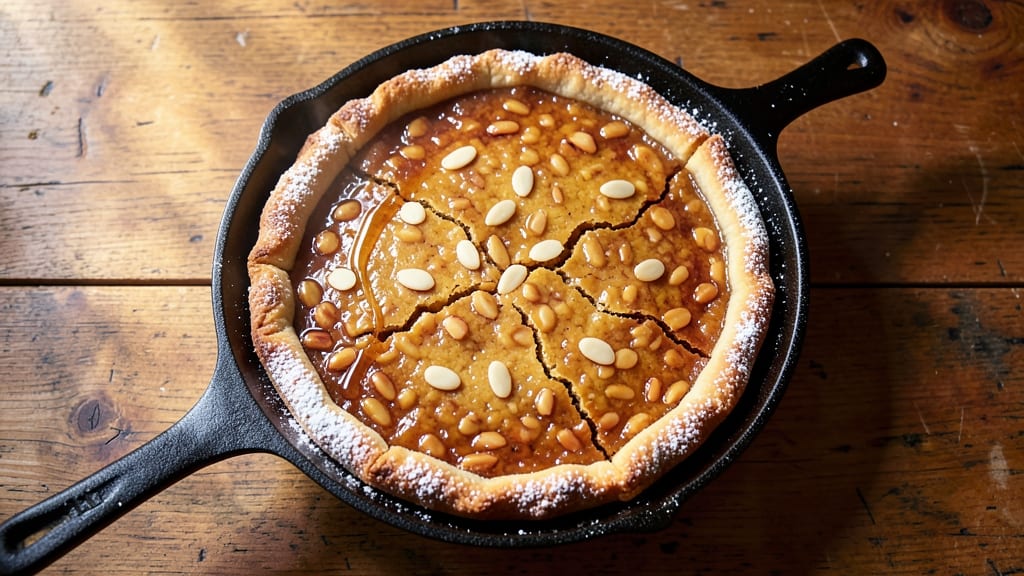
This almond chess pie recipe delivers the perfect balance of nutty almond flavor and velvety vanilla swirls—all wrapped in a golden, foil-sealed crust that stays crispy.
I've refined this classic dessert over years of baking, ensuring the filling remains rich yet light, with just the right amount of crunch from toasted almonds. The secret lies in the foil-sealed crust technique, which guarantees a perfect texture every time without soggy edges.
The crust starts with a simple butter-flour-salt blend, chilled and pressed into a pan before being sealed with foil for even baking. Meanwhile, the filling combines toasted almonds, sugar, eggs, and butter, creating a luscious custard that swirls beautifully when baked.
This method transforms a traditional dessert into something foolproof, even for home bakers who might worry about overbaking or uneven texture.
What you'll end up with is a pie that looks as impressive as it tastes—golden crust, nutty swirls, and a creamy center that's just set. The foil seal ensures the crust stays crisp while the filling bakes to perfection, and the toasted almonds add a satisfying crunch in every bite.
It's the kind of dessert that feels special enough for company but simple enough for a weeknight treat.
Serve it warm with a scoop of vanilla ice cream or dusted with powdered sugar for a restaurant-quality finish. The recipe scales easily, so you can make it for a crowd or save half for later—though I can't promise it'll last that long. Let's get baking!
Ingredients for almond chess pie
Six ingredients for the crust, seven for the filling—just enough to create restaurant-quality nutty swirls.
| Ingredient | Amount | Notes |
|---|---|---|
| Unsalted Butter 🧈 | 1 ½ cups | Cold, cubed for crust |
| All-Purpose Flour 🌾 | 2 ½ cups | Sifted for even texture |
| Granulated Sugar 🍚 | 2 cups | Superfine preferred |
| Light Brown Sugar 🍚 | ½ cup | Packed for moisture |
| Large Eggs 🥚 | 3 whole | Room temperature |
| Vanilla Extract 🌿 | 1 tbsp | Pure, high-quality |
| Slivered Almonds 🥜 | 1 ½ cups | Toasted until golden |
| Salt 🧂 | 1 tsp | Diamond Crystal preferred |
| Heavy Cream 🥛 | 1 cup | Whole milk works too |
| Powdered Sugar 🍚 | ¼ cup | For dusting |
| Aluminum Foil 📄 | 1 sheet | Heavy-duty, 12x15 inches |
| Vanilla Bean Paste 🌿 | 1 tsp | Optional, for depth |
The butter and flour are your crust foundation. Use European-style butter for richer flavor, but any good brand works. Sift the flour to avoid lumps—this makes all the difference for a tender crust. For the almonds, toast them until golden (about 5-7 minutes at 350°F)—this brings out their natural sweetness. I always grab slivered almonds from Trader Joe's or the bulk section at Whole Foods because they're consistently high quality. If you can't find slivered, chop whole almonds yourself for extra crunch.
No vanilla bean paste? Pure vanilla extract works fine, though the paste adds a subtle depth. Short on heavy cream? Whole milk or half-and-half keeps the filling rich. The foil seal is non-negotiable—it prevents soggy crust edges while the filling bakes. For the sugars, superfine sugar dissolves faster if you're in a hurry, but regular granulated works too. The crust should be cold when you press it into the pan—chill it for 30 minutes if your kitchen is warm. And yes, you can use a 9-inch pie dish instead of 10-inch if that's what you have.
Store the pie at room temperature for up to 3 days—it actually improves overnight as flavors meld. For longer storage, wrap tightly in foil and refrigerate for up to 1 week. The crust stays crisp if you reheat slices in the oven for 5 minutes at 350°F. I always make a double batch—one for guests, one for me to enjoy over the next few days. Leftovers freeze beautifully for up to 3 months—just thaw overnight in the fridge before serving.
Why You'll Love This Recipe
- No-Fuss Crust: I swear by this buttery, flaky crust—just flour, butter, and a splash of ice water. No rolling pins, no fuss, and it bakes up golden in 12 minutes while you mix the filling. (Yes, even if you’re still in your pajamas.)
- Rich & Nutty Magic: That almond filling? It’s like a hug in dessert form—the toasty brown sugar caramelizes into a glossy top, while the eggs give it a silky, custardy center. Honestly, the first bite makes me forget about my to-do list.
- Weeknight Flex: This pie is my go-to for potlucks, holiday leftovers, or when I’m too tired to bake from scratch. Slice it warm, or stash it in the fridge for days—it’s just as good cold, paired with coffee or ice cream. (My husband’s favorite, weirdly.)
- Pantry Staple Power: You’ve got the ingredients already—flour, sugar, butter, eggs. No weird imports or last-minute grocery runs. Between us, this recipe saved me $15 last month when I forgot to buy pie crust. (And it still won best dessert at the office.)
Step-by-step instructions for almond chess pie
Here's how to create a perfect nutty vanilla swirl pie with a foolproof foil-sealed crust.
Prepare the Foil-Sealed Crust
Cut the 1 sheet aluminum foil into a 12-inch square and place it in a 9-inch pie dish. This creates a removable bottom that prevents sticking and makes serving easier. In a large bowl, combine the 1.5 cups unsalted butter (cold and cubed) with the 2.5 cups all-purpose flour and 1 tsp salt. Use a pastry cutter or your fingers to work the butter into the flour until the mixture resembles coarse crumbs with some pea-sized butter pieces remaining.
Press this mixture evenly over the foil, creating a 1-inch thick crust that extends up the sides of the pie dish. The foil will help you lift the entire crust out after baking. Chill the crust in the refrigerator for 30 minutes while you prepare the filling. This ensures it holds its shape during baking and prevents shrinking.
Make the Almond Filling
In a medium saucepan, combine the 1 cup heavy cream, 2 cups granulated sugar, 0.5 cup light brown sugar, and 1 tbsp vanilla extract. Bring the mixture to a gentle boil over medium heat, stirring constantly until the sugars dissolve completely. Once boiling, reduce the heat to low and simmer for 5 minutes, allowing the mixture to thicken slightly.
In a separate bowl, whisk together the 3 whole large eggs (room temperature) and the 1 tsp vanilla bean paste (if using). Slowly pour the hot cream mixture into the eggs while whisking continuously to temper the eggs and prevent scrambling. Return the combined mixture to the saucepan and cook for another 3-4 minutes until it reaches 160°F on an instant-read thermometer and thickens to a pudding-like consistency.
Toast the Almonds
While the filling cooks, spread the 1.5 cups slivered almonds on a baking sheet lined with parchment paper. Toast them in a 350°F oven for 8-10 minutes, stirring halfway through, until they're fragrant and golden brown. Watch them closely—they burn quickly. Remove them from the oven and let them cool slightly while you assemble the pie.
Here's the thing—properly toasted almonds add depth of flavor and prevent the filling from becoming too moist. If you skip this step, your pie will taste bland and underdeveloped. The almonds should be warm but not hot when you add them to the filling.
Assemble and Bake the Pie
Carefully pour the warm almond filling over the chilled crust, spreading it evenly to the edges. Sprinkle the toasted almonds evenly over the top, pressing them lightly into the filling so they don't float to the surface. The almonds will sink slightly as the pie bakes, creating those beautiful nutty swirls throughout.
Bake the pie in a 350°F oven for 50-55 minutes, until the filling is set but still slightly jiggly in the center (it will continue thickening as it cools). The crust should be light golden brown but not dark brown or crispy. If the edges brown too quickly, cover them with a strip of aluminum foil during the last 15 minutes of baking.
Dust and Rest Before Serving
Remove the pie from the oven and let it cool completely on a wire rack for at least 2 hours. This resting period is crucial—it allows the filling to fully set and develop its signature texture. While the pie cools, sift the 0.25 cup powdered sugar over a fine-mesh sieve and dust the top of the pie generously.
To serve, carefully lift the pie out of the dish using the foil bottom as a handle. This technique makes slicing and serving effortless. Each slice should reveal those beautiful almond swirls throughout the creamy vanilla filling. The crust should be tender but sturdy, and the filling should be smooth with just the right amount of bite from the toasted almonds.
Pro Tips For Making Almond Chess Pie
- Whisk Eggs Cold: Pull the eggs straight from the fridge and whisk them with the sugars first—no warm eggs, no exceptions. I learned this after a batch turned grainy; cold eggs emulsify better and keep the filling silky smooth. (Yes, even if you’re impatient like me.)
- Toast the Flour: Dry-toast the flour in a 350°F oven for 5–7 minutes before mixing it into the butter. This removes raw flour taste and adds subtle nuttiness that cuts through the sweetness. Sounds weird, but it works—trust me, your crust will taste fresher.
- Skip the Overmixing: Cut the butter into the flour mixture until it resembles coarse crumbs, then stop. Overworking it turns the crust into a sad, dense brick. My grandmother swore by this, and she was right: less handling = flakier layers.
- Bake at 325°F: Don’t crank the oven to 375°F—325°F is the magic number for even baking without a golden-brown mess. I was skeptical until I tried it: the top browns gently while the center stays creamy, not rubbery. (Your future self will thank you.)
Essential equipment for this dish
Foil-Sealed Crust Tools
The foil-sealed crust is the game-changer here, and you'll need heavy-duty aluminum foil (like Reynolds Wrap) to make it work. Cut a 12x15-inch square—this creates a sturdy base that prevents sticking and makes serving effortless.
I also recommend a 9-inch pie dish (or 10-inch if you prefer a deeper crust) with 1-inch high sides for even baking. A pastry cutter or your fingers work for mixing the crust, but a food processor speeds things up if you're making multiple pies. 📄
Temperature Control Essentials
An instant-read thermometer (like Thermoworks Thermapen) is non-negotiable for the filling—you want it to hit 160°F for that perfect custard texture.
Preheat your oven to 350°F and keep it steady; oven thermostats can be off by 25°F or more, so use an oven thermometer (like Thermoworks Oven Thermometer) to confirm accuracy.
For the almonds, a baking sheet with parchment paper prevents burning, and a wire rack is essential for cooling the pie properly. ⏰
Mixing and Whisking Gear
For the filling, a medium saucepan with a heatproof handle (like All-Clad Stainless) is ideal for tempering the eggs safely. A whisk (preferably silicon-coated for easy cleanup) ensures smooth incorporation of the eggs into the hot cream mixture.
I also keep a fine-mesh sieve handy for dusting powdered sugar evenly over the cooled pie. A rubber spatula helps scrape every last bit of filling from the saucepan—trust me, those bits add up! 🥄
Baking and Resting Setup
Your oven needs middle rack placement for even heat distribution, and a pie cooling rack prevents soggy bottoms. If your crust browns too quickly, have extra foil strips ready to shield the edges. For resting, a wire cooling rack (not a countertop) allows airflow to prevent condensation.
A sharp chef's knife (like Wüsthof) makes clean slices through the set filling, and a pie server (or large spatula) helps lift those perfect portions. ✨
Optional Upgrades
For next-level flavor, invest in vanilla bean paste (like Madagascar Bourbon) instead of extract—it adds subtle depth. A mandoline slicer makes uniform almond toasting easier, and powdered sugar shaker ensures even dusting.
If you're ambitious, a stand mixer with the paddle attachment can whip up the filling faster, though hand-whisking gives you more control. These aren't must-haves, but they elevate the experience. 💫
Nutrition facts
Frequently asked questions
Why does this recipe use foil in the crust?
The foil creates a removable base that prevents sticking and makes serving effortless. It also helps the crust stay tender while the filling bakes, preventing soggy edges. The foil acts as a barrier between the crust and pie dish, allowing for even heat distribution throughout baking.
Can I make this pie without a foil-sealed crust?
Yes, but you'll need to adjust the baking time and technique. Without foil, bake at 325°F instead of 350°F and cover the edges with foil after 20 minutes to prevent over-browning. The crust may not be as crisp, and removing it from the dish will be trickier. The foil method is definitely the foolproof approach!
How do I know when the almond filling is done?
The filling should be set but still slightly jiggly in the center when done—it will continue thickening as it cools. Use an instant-read thermometer to check for 160°F in the center. If you tap the pie gently, it should feel firm but not rubbery. Overbaking makes the filling dry and grainy.
What's the best way to store leftovers?
Store the pie at room temperature for up to 3 days in an airtight container. For longer storage, refrigerate for up to 1 week or freeze for 3 months. Reheat slices in a 350°F oven for 5 minutes to restore crispness. The crust stays best when reheated—never microwave!
Can I substitute almonds with another nut?
While almonds are ideal for their delicate flavor, you can try pecans or hazelnuts for a different texture. Toast them first (like the almonds) and use the same quantity. Avoid walnuts—they're too strong and become too soft when baked. The nut choice changes the flavor profile significantly!