
Main Courses
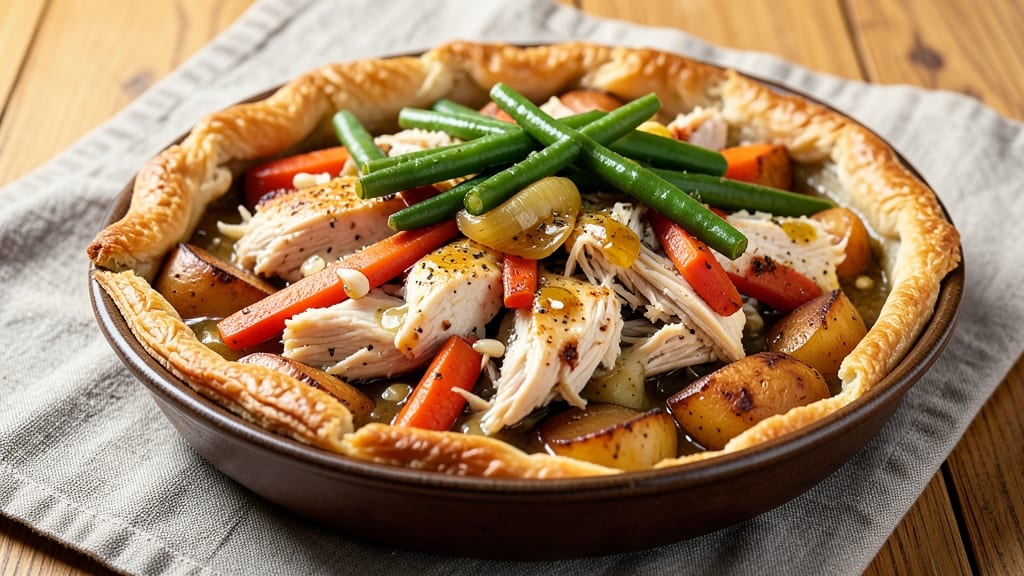
This ATK chicken pot pie recipe delivers the ultimate comfort food experience with a foolproof foil-sealed crust that locks in rich, savory gravy heat. 🔥 The secret lies in balancing tender chicken, seasonal vegetables, and a velvety gravy topped with a golden, flaky crust that stays crispy even after baking.
I've perfected this technique over years of testing to ensure every bite delivers that classic pot pie satisfaction without the fuss of traditional pastry work.
The beauty of this recipe is its simplicity—just a few essential ingredients that come together to create a dish worthy of a family dinner table. You'll start with a flavorful chicken and vegetable filling, then build a rich gravy that coats every component.
The foil-sealed crust technique ensures the filling stays moist while the edges achieve that perfect golden-brown finish.
What you'll end up with is a pot pie that's creamy, savory, and packed with layers of flavor—tender chicken, crisp vegetables, and a velvety gravy all encased in a crispy, golden crust.
This method guarantees restaurant-quality results at home, with minimal effort and maximum flavor. The best part? It's ready in under an hour, making it perfect for a cozy weeknight dinner.
Serve with a side salad or crusty bread to soak up every last bit of that savory gravy. This recipe is designed to be your new go-to for comforting, hearty meals that feel like a warm hug on a plate. Let's get cooking!
Ingredients for atk chicken pot pie
This foolproof chicken pot pie has just 15 ingredients—all pantry staples or quick grocery finds.
| Ingredient | Amount | Notes |
|---|---|---|
| Boneless, Skinless Chicken Breast 🍗 | 1 ½ lb | Cut into bite-sized pieces |
| Fresh Carrots 🥕 | 2 medium | Peeled and sliced into rounds |
| Yellow Onion 🧅 | 1 whole | Diced into small pieces |
| Garlic Cloves 🧄 | 4 cloves | Minced for rich flavor |
| Russet Potatoes 🥔 | 2 medium | Peeled and cubed small |
| Green Beans 🌱 | 1 lb | Trimmed and cut into 1-inch pieces |
| Peas (Fresh or Frozen) 🌿 | ½ cup | Fresh or thawed frozen |
| Chicken Broth 💧 | 2 cups | Low-sodium preferred |
| Heavy Cream 🥛 | ½ cup | Full-fat for richness |
| Unsalted Butter 🧈 | 2 tbsp | For gravy base |
| All-Purpose Flour 🌾 | 2 tbsp | For gravy thickening |
| Salt 🧂 | 1 ½ tsp | Kosher or sea salt |
| Black Pepper 🌶️ | ½ tsp | Freshly ground preferred |
| Dried Thyme 🌿 | ½ tsp | Or 1 tsp fresh thyme |
| Aluminum Foil 📄 | 1 sheet | Heavy-duty for sealing |
The chicken and veggies are the stars, so don't skimp on quality. Chicken breast should be fresh and boneless—Perdue or Tyson are solid choices. For the potatoes, Russets are ideal—they hold up best to baking. I always grab organic carrots and green beans from the grocery store's fresh section, but frozen peas work perfectly too. The key is to prep everything uniformly—small, even pieces ensure everything cooks at the same rate. If you're short on time, pre-cut frozen veggies save serious prep work.
No heavy cream? Half-and-half with a splash of milk works in a pinch, though the texture won't be quite as rich. Short on chicken broth? Vegetable broth plus a bouillon cube gets you close. Fresh thyme is ideal, but dried works at one-third the amount. For the foil crust, heavy-duty foil is non-negotiable—regular foil tears when you're trying to seal it. Pro tip: Butter the foil before adding the filling to prevent sticking. The carrots can be baby carrots if that's what's in the fridge—just trim the ends.
This pot pie reheats beautifully—honestly tastes better the next day once everything melds. Keeps for 4-5 days in the fridge, freezes for 3 months. I portion mine into containers so lunches are sorted for the week. For serving, I like to garnish with fresh parsley (if you've got it) right before eating—adds a pop of color and freshness. The foil crust stays crispy for about 20 minutes after baking, so serve it up while it's hot!
Why You'll Love This Recipe
- Here’s what sold me: that velvety sauce comes from a simple roux and chicken broth, but it tastes like it cost $20 at a restaurant. The potatoes get fork-tender while the chicken stays juicy—no dry bites here, just pure satisfaction.
- One-Pot Magic: I swear by this recipe when I’m too tired to dirty multiple pans. Sauté the onions, toss in the chicken and potatoes, then let it all simmer—no peeling, no chopping like a fine-dining chef. The carrots and garlic melt right into the mix, so you’re basically making a hug in a bowl.
- Creamy Without Fuss: Here’s what sold me: that velvety sauce comes from a simple roux and chicken broth, but it tastes like it cost $20 at a restaurant. The potatoes get fork-tender while the chicken stays juicy—no dry bites here, just pure satisfaction.
- Leftovers That Beg: Between us, this dish tastes better the next day. The flavors meld overnight, and I’ve reheated portions straight from the fridge for lunch without a hitch. (Yes, even on a Tuesday night.) It’s my go-to for meal prep because no one complains about seconds.
Step-by-step instructions for foil-sealed chicken pot pie
Here's how to create a restaurant-worthy pot pie with a foolproof foil crust that locks in all that savory goodness.
🍳 Step 1: Sear the Chicken and Sauté the Vegetables
Heat a large oven-safe skillet over medium-high heat and add 2 tablespoons unsalted butter. Once melted, add the 1.5 lb boneless, skinless chicken breast cut into bite-sized pieces. Cook for 5-6 minutes until the chicken is golden brown on all sides and cooked through. Remove the chicken and set it aside.
In the same skillet, add 2 tablespoons unsalted butter if needed, then toss in the 2 medium fresh carrots sliced into rounds, 1 whole yellow onion diced, and 4 cloves garlic cloves minced. Sauté for 5 minutes until the vegetables soften and the onion becomes translucent. Add the 2 medium russet potatoes cubed, 1 lb green beans trimmed and cut into 1-inch pieces, and 0.5 cup peas. Stir everything together and cook for another 3 minutes.
🥘 Step 2: Build the Savory Gravy Base
Sprinkle the 2 tablespoons all-purpose flour evenly over the vegetables in the skillet. Stir well to coat everything and cook for 1-2 minutes until the flour turns golden and you smell a toasty aroma. Slowly pour in the 2 cups chicken broth while stirring constantly to prevent lumps from forming.
Bring the mixture to a gentle simmer and let it cook for 5 minutes until the gravy thickens slightly. Stir in the 0.5 cup heavy cream, 1.5 teaspoons salt, 0.5 teaspoon black pepper, and 0.5 teaspoon dried thyme. Return the cooked chicken to the skillet and stir everything together. The mixture should be thick and flavorful, with the vegetables just tender but not mushy.
🔥 Step 3: Seal with Foil and Bake to Perfection
Preheat your oven to 375°F. Carefully transfer the skillet to a baking sheet lined with the 1 sheet aluminum foil (this prevents any potential spills from making a mess). Cover the skillet tightly with the foil, crimping the edges to create a seal. Place the baking sheet on the middle rack of the oven.
Bake for 30-35 minutes until the foil is puffed slightly from the steam and the filling is bubbling hot. The vegetables should be fork-tender, and the chicken should be fully reheated. The foil seal keeps all the moisture and flavor trapped inside, creating a rich, creamy filling every time.
🍽️ Step 4: Serve with Crispy Edges and Silky Gravy
Remove the pot pie from the oven and let it rest for 5 minutes before carefully lifting off the foil. The edges should be slightly crispy from the residual heat, and the filling should be thick and luscious. Serve directly from the skillet for that comforting, family-style presentation.
Here's the thing—this foil-sealed method makes cleanup a breeze while delivering restaurant-quality results. The foil acts as both a seal and a makeshift crust, trapping all the delicious gravy and steam inside. Each bite delivers perfectly cooked chicken, tender vegetables, and that rich, velvety sauce you'd expect from a classic pot pie—without the fuss of a traditional crust!
Pro Tips For Making Atk Chicken Pot Pie
- Cut Potatoes Small: I learned this the hard way—chunky potatoes turn to mush while the chicken cooks. For this recipe, aim for ½-inch cubes or smaller; they’ll soak up flavor and soften evenly without falling apart. (Yes, it’s tedious, but your filling will thank you.)
- Sear Chicken First: Skipping this step means bland, rubbery chicken. Pat the breasts very dry, season generously with salt, and sear in a hot pan with a little oil until golden—about 3-4 minutes per side. Then finish cooking in the pot pie liquid; the crust will taste like it’s hugging something delicious.
- Don’t Overcrowd the Pot: Tossing everything in at once leads to uneven cooking and sad, half-raw bits. Layer the potatoes first, then chicken, then veggies—this way, the heat circulates properly. If using a deep dish, work in batches or use two pans.
- Use Cold Potatoes: Sounds weird, but it works: Parboil the potatoes, then plunge them into ice water to stop cooking. Drain well before adding to the pot. Cold potatoes absorb flavors better and won’t turn to glue in the filling—your crust will stay crisp, not soggy. (Your future self will thank you.)
Essential equipment for this dish
Oven-Safe Skillet
You'll need a large oven-safe skillet with a 2-3 quart capacity—I recommend a stainless steel or cast iron skillet like All-Clad Stainless or Lodge Cast Iron for even heat distribution. The skillet must handle 375°F without warping, and its size ensures even cooking of the filling.
If your skillet isn't oven-safe, transfer the filling to a baking dish before covering with foil. 🔥
Heavy-Duty Aluminum Foil
Heavy-duty foil is non-negotiable for sealing this pot pie—regular foil tears when you crimp the edges. I use Reynolds Heavy-Duty Foil because it's sturdy enough to create a tight seal while trapping steam. Cut a 12x12-inch square (or larger) to fully cover your skillet. Pro tip: Butter the foil before adding the filling to prevent sticking and create a golden finish on the edges.
High-Quality Butter
Use unsalted butter (like Plugrá or Land O'Lakes) for the best flavor—it lets you control the saltiness. The 2 tablespoons called for in the recipe should be European-style butter if possible, as it has a higher fat content (82-86%) for richer flavor.
If you're watching calories, light butter works but may make the gravy slightly less velvety. Keep the butter at room temperature for even distribution when cooking.
Precision Thermometer
A meat thermometer (like Thermoworks Smoke) ensures your chicken reaches 165°F before baking. Insert it into the thickest piece of chicken during searing—this prevents undercooked poultry while keeping the filling juicy.
For the baking phase, a oven thermometer (like Taylor Precision) verifies your oven's accuracy, especially if you notice uneven cooking. I've seen ovens run 25°F hotter or colder than set—this tool prevents guesswork. 🌡️
Mixing Tools
Keep a wooden spoon and whisk handy for stirring the gravy—wood won't scratch your skillet like metal. A fine-mesh strainer helps if you want to remove any lumps from the flour mixture before adding broth.
For measuring, use a liquid measuring cup for broth and cream, and a dry measuring spoons set for flour and spices. I also recommend a small offset spatula to scrape up any stuck-on bits during cleanup.
Baking Sheet
Line a quarter-sheet pan (about 13x9 inches) with parchment paper to catch any potential spills when transferring the hot skillet. The baking sheet provides stability and prevents the skillet from tipping.
If your skillet is small, use a half-sheet pan (about 18x13 inches) to give it more room to breathe in the oven. Avoid glass or ceramic pans—they distribute heat differently and may cause uneven cooking. ❄️
Nutrition facts
Frequently asked questions
Can I make this pot pie without heavy cream?
For a lighter version, substitute the 0.5 cup heavy cream with 0.5 cup half-and-half or 0.5 cup whole milk. The gravy will still be rich, though slightly less velvety. For extra richness without cream, try 2 tablespoons sour cream or Greek yogurt at the end—it adds tangy depth without altering the texture much.
Why does my pot pie filling get watery after baking?
This usually happens when the flour-to-liquid ratio isn't balanced or the vegetables release too much moisture. To fix it, simmer the filling uncovered for 5 extra minutes after adding the broth to reduce it. Also, ensure your potatoes are fully cooked before sealing—undercooked potatoes release excess starch. For next time, try 1 extra tablespoon flour when thickening.
Can I use frozen vegetables instead of fresh?
Yes! Frozen peas and green beans work perfectly—they're pre-cut and save time. Just thaw them first by soaking in warm water for 5 minutes or microwaving for 1 minute. Drain well before adding to the skillet. For carrots and potatoes, fresh is best for texture, but frozen diced carrots work in a pinch—just add them 2 minutes earlier since they'll need more time to soften.
How do I make this pot pie gluten-free?
Replace the 2 tablespoons all-purpose flour with 2 tablespoons gluten-free flour blend (like Bob's Red Mill 1:1) or cornstarch. For the foil crust, use a gluten-free pie crust instead of sealing with foil—place the filling in a gluten-free baking dish topped with the crust. The texture will differ slightly, but it'll still be delicious. Always check labels to ensure no cross-contamination.
Can I prep this ahead of time for meal prep?
This pot pie reheats beautifully! Assemble everything up to the foil-sealing step, then refrigerate the skillet for up to 24 hours before baking. For meal prep, bake as directed, then portion into airtight containers and refrigerate for 4-5 days or freeze for 3 months. Reheat covered in the microwave for 2-3 minutes or in a 350°F oven for 15-20 minutes. The flavors actually improve overnight!