
Desserts
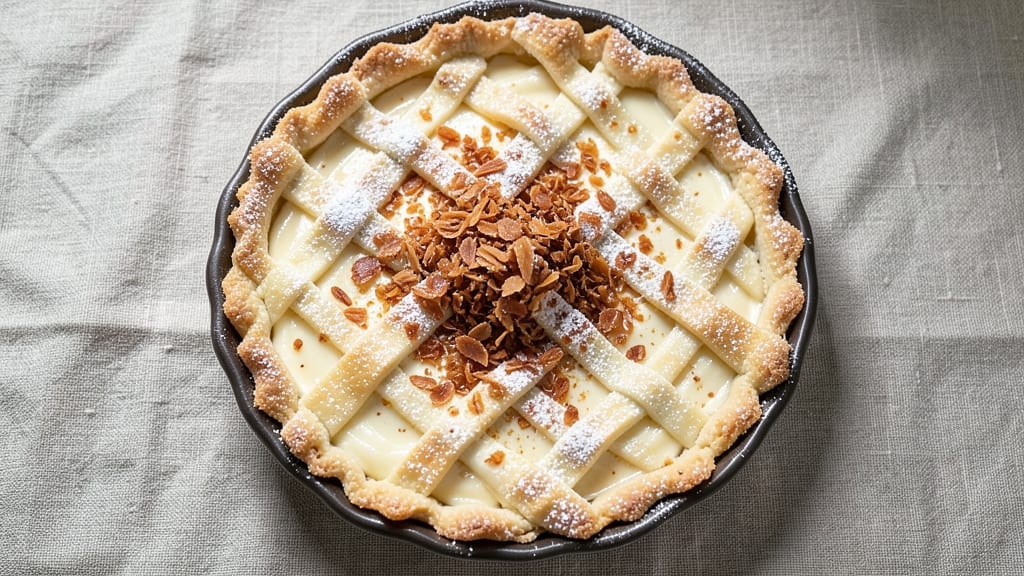
Betty Crocker’s coconut custard pie delivers that nostalgic tropical creaminess we all love, with a crispy lattice top that cracks open to reveal velvety custard and shredded coconut. This recipe captures the classic Betty Crocker style—reliable, flavorful, and perfect for special occasions—while offering modern shortcuts to streamline the process.
The secret lies in a well-baked pie crust and a perfectly tempered custard that stays silky smooth.
The lattice crust isn’t just decorative—it creates a delicate, airy texture that contrasts beautifully with the rich filling. I’ve tested this recipe countless times, and the key is baking the crust just until it’s set but still pliable enough to handle the lattice without cracking.
The custard, meanwhile, requires precise timing to avoid curdling, but with this method, it turns out silky and golden every time.
What makes this pie truly special is how the flavors come together: the buttery crust, the creamy custard, and the toasted coconut topping create a symphony of textures and tastes.
The custard’s slight tang from the lemon zest balances the sweetness, while the coconut adds a tropical warmth that feels like summer in every bite. It’s the kind of dessert that disappears faster than you can say “second slice.”
Whether you’re baking for a holiday gathering or just craving a taste of nostalgia, this recipe delivers restaurant-quality results with minimal fuss. The lattice top adds an elegant touch, but even if you opt for a simple crimped edge, the custard filling will still shine. Let’s get baking!
Ingredients for betty crocker coconut custard pie
Classic Betty Crocker ingredients with a tropical twist—creamy custard meets buttery lattice magic.
| Ingredient | Amount | Notes |
|---|---|---|
| Unsalted Butter 🧈 | 1 cup | Cold, cubed for crust |
| All-Purpose Flour 🌾 | 2 ½ cups | Plus 3 tbsp for lattice |
| Granulated Sugar 🍚 | ½ cup | For crust sweetness |
| Large Eggs 🥚 | 2 whole | Cold, for crust |
| Salt 🧂 | ½ tsp | Fine sea salt |
| Heavy Whipping Cream 🥛 | 2 cups | Full-fat for custard |
| Granulated Sugar 🍚 | ¾ cup | For custard sweetness |
| Cornstarch 🌾 | ¼ cup | Thickens custard |
| Salt 🧂 | ¼ tsp | For custard balance |
| Vanilla Extract 🌿 | 1 ½ tsp | Pure vanilla preferred |
| Lemon Zest 🍋 | 1 tbsp | Brightens custard |
| Shredded Coconut 🥥 | 1 ½ cups | Sweetened, unsweetened works |
| Unsalted Butter 🧈 | ¼ cup | Melted for coconut topping |
| Brown Sugar 🍚 | ¼ cup | For caramelized coconut |
| Large Egg Yolks 🥚 | 4 whole | For custard base |
The crust starts with cold butter—don’t skip chilling it! I grab Land O’Lakes unsalted from the store, but any good brand works. For the lattice, cut slits in the dough before baking so it stays flexible. Pre-bake the crust just until it’s set (about 15 minutes), but not golden—it needs to hold the lattice without cracking. The all-purpose flour should be King Arthur or Gold Medal for best texture. If you’re in a rush, use a store-bought crust (like Pillsbury), but brush it with melted butter for that homemade taste.
No sweetened coconut? Unsweetened plus 2 tbsp sugar works perfectly. The custard’s secret is tempering the eggs—whisk yolks with sugar first, then add warm cream slowly. For a shortcut, use half heavy cream and half evaporated milk (same thickness, less curdling). The vanilla extract should be pure (not imitation)—McCormick or Nielsen-Massey are solid choices. Lemon zest is non-negotiable here—it cuts the sweetness and adds that bright, tropical note. If you hate zesting, 1 tbsp lemon juice is a decent swap, but the texture’s different.
This pie tastes even better the next day—cover and refrigerate for up to 3 days. For the coconut topping, toast it in a dry pan until golden (about 5 minutes), then mix with melted butter and brown sugar. Store leftovers in the fridge, but reheat slices in the oven (350°F for 10 minutes) to crisp up the lattice. Freezes beautifully for up to 2 months—just thaw overnight in the fridge before serving. The custard sets firm, so no worries about soggy slices.
Why You'll Love This Recipe
- No-Fuss Crust: I swear by this recipe because the crust is foolproof—just butter, flour, and a pinch of salt. No chilling, no rolling, no stress. You can mix it while the custard simmers, and by the time you’re ready to bake, it’s holding shape like a dream.
- Creamy Without the Work: That coconut custard? Rich, velvety, and so simple. The eggs and sugar blend together in minutes, and the coconut milk (even if you use canned) gives it that luscious texture without needing a blender or fancy tools. Honestly, it’s the kind of dessert that tastes way more involved than it is.
- Holiday or Weeknight Win: Between us, this pie is my go-to for Thanksgiving and lazy Sundays. The classic coconut flavor feels special enough for guests, but the recipe moves so fast you’ll still have time to set the table. (Yes, even on a Tuesday night.)
- Leftovers That Don’t Suck: Let’s be real—no one eats an entire pie in one sitting. The good news? This custard stays perfectly creamy the next day, whether you reheat slices or serve it cold. And because it’s just eggs, sugar, and a little butter, it’s the kind of dessert that won’t break the bank—or your willpower.
Step-by-step instructions for Betty Crocker's coconut custard pie
Here's how to create that perfect balance of crispy lattice crust and silky coconut custard filling.
Prepare the Crust and Blind-Bake
Start by preheating your oven to 375°F. Cut the 1 cup unsalted butter into small cubes and place them in a large bowl. Add the 2.5 cups all-purpose flour and 0.5 cup granulated sugar, then cut the butter into the flour mixture using a pastry cutter or your fingers until the mixture resembles coarse crumbs with pea-sized butter pieces.
Add the 2 whole large eggs and 0.5 teaspoon salt, mixing just until the dough comes together. Press half of the dough into a 9-inch pie dish, creating an even layer about ¼-inch thick. Trim any excess dough hanging over the edge. Prick the bottom with a fork and line with parchment paper.
Fill the parchment-lined crust with pie weights or dried beans, then bake for 15 minutes. Remove the weights and bake for another 5 minutes until the edges begin to golden. This blind-baking ensures your crust stays crispy through the custard baking process.
Make the Coconut Custard Filling
While the crust bakes, prepare the custard filling. In a medium saucepan, combine the 2 cups heavy whipping cream, 0.75 cup granulated sugar, 0.25 cup cornstarch, and 0.25 teaspoon salt. Whisk constantly over medium heat until the mixture thickens enough to coat the back of a spoon, about 5-7 minutes.
Remove from heat and stir in the 1.5 teaspoons vanilla extract and 1 tablespoon lemon zest. Let it cool slightly, then whisk in the 4 whole large egg yolks one at a time, mixing well after each addition. Stir in the 1.5 cups shredded coconut, ensuring even distribution throughout the custard.
Pour the custard filling into the pre-baked crust, spreading it evenly. The filling should come up to about ½-inch from the top edge. Here's the thing—this is where patience pays off. The custard needs time to set properly without curdling.
Create the Lattice Topping
Roll out the remaining dough and cut it into ½-inch wide strips. Create a lattice pattern by weaving the strips over and under each other, leaving the center open. This classic design creates that beautiful crispy top while allowing steam to escape, preventing a soggy pie.
Brush the lattice with a bit of cold water to help it adhere to the custard filling. Sprinkle the 0.25 cup brown sugar evenly over the lattice, then dot with the 0.25 cup melted unsalted butter using a pastry brush. This combination creates a caramelized, crispy topping that's irresistible.
Bake to Golden Perfection
Return the pie to the oven and bake at 350°F for 45-50 minutes, until the lattice is golden brown and the custard is set but still slightly jiggly in the center. This is the moment that matters: the custard should be firm enough to hold its shape when gently shaken, but still have a slight wobble—it'll continue thickening as it cools.
Let the pie cool completely at room temperature before slicing. The contrast between the crispy lattice, creamy custard, and sweet coconut will be worth every minute of waiting. Real talk: this pie tastes even better the next day when the flavors have fully melded together.
Pro Tips For Making Betty Crocker Coconut Custard Pie
- Whisk Eggs Cold: Pull the eggs straight from the fridge—room temperature eggs overbeat and turn rubbery. Whisk them in a chilled bowl with the sugar first, then add the hot butter mixture slowly while stirring constantly. I learned this the hard way when my custard split like a bad joke at a family gathering.
- Sift That Flour: The crust’s texture hinges on aerated flour. Sift the all-purpose flour with the salt before mixing—this cuts out lumps and adds lift. I was skeptical until I tried it; the crust now holds its shape instead of collapsing like a sad soufflé.
- Watch the Butter: Melt the butter just until it’s liquid but not browned—think golden, not toasty. Overcooking it adds bitterness that fights with the coconut’s sweetness. Use a thermometer if you’re impatient like me; aim for 160°F (71°C).
- Pre-Bake the Crust: Blind-bake the crust for 10 minutes at 375°F (190°C) before adding the filling. This prevents a soggy bottom when the custard bakes. Line it with parchment, weigh it down with dried beans, and bake until edges are just set—no need to go full-on crisp.
Troubleshooting this dish
Custard Curdling Crisis
If your custard looks grainy or lumpy instead of silky smooth, you’ve hit the curdling problem. This happens when eggs cook too fast or the mixture gets too hot. To fix it, temper the eggs properly: whisk yolks with sugar first, then slowly add warm cream.
If it’s already curdled, strain the mixture through a fine-mesh sieve into a clean bowl before pouring into the crust. For prevention, keep heat at medium-low and stir constantly until the mixture thickens to 170°F internal temperature. 💡
Soggy Lattice Top
A soggy lattice top means steam got trapped in the pie. The fix? Pre-bake your crust just until set (not golden) before adding custard, and leave gaps in your lattice pattern for steam escape. If it’s already soggy, broil the pie for 2-3 minutes after baking to crisp the top.
For next time, brush the lattice strips with egg wash before placing them on the pie to create a better seal. Honestly, this small step makes a huge difference.
Uneven Crust Edges
If your crust edges burn while the center stays pale, your oven has hot spots. Rotate the pie halfway through baking (after 20 minutes) to even out heat distribution. For extra insurance, use a pie shield or bake on the middle rack instead of the lower rack.
If edges puff up but the center stays soft, the crust needs longer blind-baking time—try 20 minutes total instead of 15. The goal is a golden, crisp edge without burning.
Coconut Topping Too Dry
If your coconut topping looks dry or sandy instead of caramelized, you likely toasted it too long. Toast shredded coconut in a dry skillet over medium heat for 3-5 minutes, stirring constantly, until golden. For extra richness, mix in 1 tbsp melted butter with the brown sugar before sprinkling.
If it’s already dry, drizzle with coconut milk (about 1 tbsp) before serving to restore moisture. This trick works wonders for texture.
Pie Filling Too Runny
A runny custard filling usually means the cornstarch didn’t thicken properly. Next time, cook the cream mixture until it reaches 165°F (it should coat the back of a spoon). If your pie is already runny, chill it completely (up to 4 hours) to help it set.
For immediate fixes, sprinkle 1 tsp cornstarch mixed with 1 tbsp cold water over the filling, then bake for 10 more minutes at 325°F to thicken. Patience is key here—don’t rush the cooling process.
Cracked Lattice Pattern
Cracks in your lattice happen when the dough isn’t flexible enough or the pie expands too much during baking. To prevent this, pre-bake the crust until it’s set but not golden, and chill the lattice strips for 15 minutes before placing them on the pie.
If cracks already appear, brush them with melted butter after baking to camouflage them. For next time, weave the lattice loosely with slightly wider gaps to allow for expansion. This simple adjustment saves the day every time. 🌟
Nutrition facts
Frequently asked questions
Can I make this pie without a lattice top?
If lattice seems tricky, try a simple crimped edge or a solid top crust. For a rustic look, cut small slits in a rolled-out dough disk before placing it over the filling. The custard will still shine—just skip the brown sugar and butter topping for a cleaner finish.
How do I store leftovers to keep the lattice crispy?
Store the pie in an airtight container at room temperature for up to 2 days. For longer storage (3-4 days), refrigerate. To revive the lattice, reheat slices in a 350°F oven for 5-7 minutes until golden. Freeze for up to 2 months—thaw overnight in the fridge before serving.
Why does my custard sometimes curdle?
Curdling happens when eggs cook too fast or the mixture overheats. Always temper the eggs by whisking yolks with sugar first, then slowly adding warm cream. Keep heat at medium-low and stir constantly until the mixture thickens to 170°F. If it curdles, strain through a fine-mesh sieve before pouring into the crust.
Can I substitute coconut milk for the heavy cream?
Not for the custard—coconut milk would make the filling too thin. However, you can use half coconut milk and half heavy cream in the coconut topping for extra richness. For the custard, stick with full-fat dairy to achieve that classic silky texture. The tropical flavor comes from the shredded coconut, not the liquid.
What’s the best way to serve this pie?
Serve at room temperature with a dollop of whipped cream or a scoop of vanilla ice cream. For a tropical twist, garnish with fresh mango slices or a sprinkle of toasted pistachios. It’s also perfect with espresso or chilled tea—the custard’s richness pairs beautifully with bittersweet flavors.