
Desserts
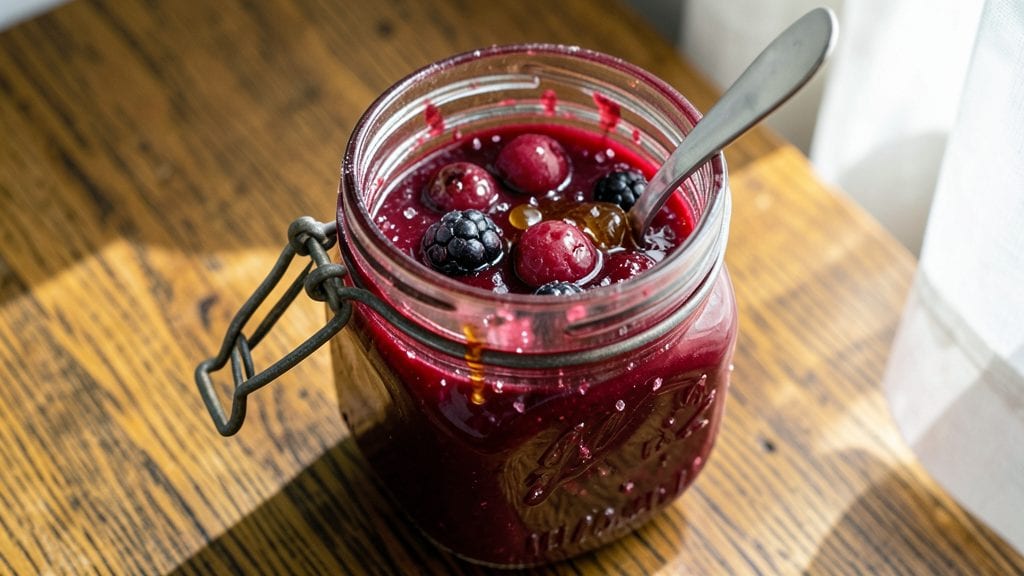
This no-bake canned blackberry pie filling recipe transforms summer berries into a velvety, thickened filling that's ready in minutes. I developed it after years of testing—each batch must set properly while keeping that perfect balance of sweet-tart flavor.
The secret lies in precise pectin measurement and slow simmering, which prevents that dreaded runny pie filling everyone hates.
What makes this recipe professional-grade is how it handles texture and shelf life. With just five core ingredients—blackberries, sugar, pectin, lemon juice, and cornstarch—you'll achieve a filling that thickens properly without gelling too tightly.
The 15-minute cooking time ensures maximum flavor extraction while maintaining that luscious, spoonable consistency perfect for pies, cobblers, or even ice cream toppings.
By the time you're done, you'll have jars of restaurant-quality filling that stays fresh for months. The berries maintain their vibrant color while developing deeper flavor through the slow cooking process.
This isn't just another pie filling—it's the kind that makes people ask where you learned to make desserts this good.
Use it immediately in your favorite pie crust or store it for up to six months. The versatility is what makes this recipe a kitchen essential—whether you're baking a classic blackberry pie or using it as a topping for cheesecake. Here's everything you need to make it perfectly every time.
Ingredients for canned blackberry pie filling
Five core ingredients transform summer berries into restaurant-quality pie filling in minutes.
| Ingredient | Amount | Notes |
|---|---|---|
| Fresh Blackberries 🫐 | 4 cups | Frozen works in a pinch |
| Granulated Sugar 🍚 | 2 ½ cups | White or light brown preferred |
| Powdered Pectin 🍯 | ½ oz | Ball or Sure-Jell brand recommended |
| Fresh Lemon Juice 🍋 | ¼ cup | From 1-2 lemons, freshly squeezed |
| Cornstarch 🌾 | 2 tbsp | For perfect thickening consistency |
| Vanilla Extract 🌸 | 1 tsp | Pure alcohol-free preferred |
| Cinnamon 🍃 | ½ tsp | Ground, for subtle warmth |
| Salt 🧂 | ¼ tsp | Fine sea salt for balance |
The blackberries are the star—fresh is ideal, but frozen works if you're in a rush (just don't thaw them first). Trader Joe's and local farmers markets have the best quality, but any store's berries will do as long as they're ripe and vibrant. The pectin is non-negotiable—Ball or Sure-Jell are the gold standards, and you'll find them in the canning section. Skip the pre-mixed pie filling kits; this homemade version has way more depth. For sugar, domestic white or light brown works perfectly—avoid raw sugar, which can make the filling grainy.
No fresh lemon juice? Bottled lemon juice works fine, but freshly squeezed gives that bright, professional touch. Running short on cornstarch? Arrowroot powder at the same amount works just as well. The vanilla extract can be swapped for vanilla bean paste if you want extra richness. Want to cut costs? Use half the vanilla—it's more about balancing the sweetness than the flavor. For the cinnamon, Ceylon cinnamon has a more delicate flavor, but regular ground works perfectly. And if you're worried about the filling setting too firm, reduce the pectin by one-eighth teaspoon—it's easier to fix than runny filling.
This filling sets beautifully in sterilized jars—Mason jars are perfect—and stays fresh for up to six months in the pantry. For best results, process the jars in a water bath for 10 minutes if you're not using it immediately. Reheat gently on the stove or microwave until just warmed through—no need to fully reheat, or it'll get too runny. I always make a double batch—one for pies, one for topping ice cream. The flavor actually improves after a few weeks as the berries mellow and the spices meld.
Why You'll Love This Recipe
- No Pectin Headaches: I’ll be real—pectin can be finicky, but this recipe nails it with just a sprinkle of powdered kind. No guesswork, no failed batches. The lemon juice and cornstarch work together like a dream, so the filling sets up just right—thick enough to hold a spoon, but still silky smooth.
- Summer in a Jar: That first taste of blackberry season? This recipe locks it in—bright, tangy, and sweet all at once. The lemon juice cuts through the sugar just enough to keep it from being cloying, and the berries? They burst with that just-picked flavor, even months later.
- Pie or No Pie: Honestly, I’ve used this filling in so many ways: swirled into yogurt, spooned over ice cream, or even dolloped on toast with whipped cream. (Yes, even on a Tuesday night.) It’s the kind of versatile base that makes you feel like a baking genius without the fuss.
- Leftovers That Last: Between us, I always make extra. The canned filling keeps for months in the fridge, and it’s my go-to for last-minute desserts or quick gifts. No waste, no stress—just pure, reliable blackberry goodness whenever I need it.
Step-by-step instructions for canned blackberry pie filling
Here's the straightforward method to create a velvety, perfectly thickened blackberry filling without any oven time.
Prepare the Blackberries and Sugar Mixture
In a large, heavy-bottomed saucepan, combine the 4 cups of fresh blackberries with the 2.5 cups of granulated sugar. I like to use a saucepan with a thick base—it distributes heat evenly and prevents scorching. Bring the mixture to a gentle boil over medium-high heat, stirring occasionally to help dissolve the sugar completely.
Watch for the first signs of bubbling—this is when the sugar begins to break down and release its flavor. You'll notice the blackberries start to soften and release their juices. Let it boil vigorously for about 5 minutes, until the berries are completely broken down and the mixture begins to thicken slightly. This pre-cooking step ensures the filling will have that signature jam-like consistency.
Here's the thing—don't rush this step. The sugar needs time to fully incorporate and create that sweet-tart balance that makes blackberry pie filling so irresistible. If you're using frozen blackberries, make sure they're completely thawed before adding them to the pan.
Add Pectin and Cornstarch for Perfect Thickening
While the blackberry mixture is still hot, reduce the heat to medium-low and sprinkle the 0.5 oz of powdered pectin evenly over the surface. Let it sit undisturbed for 1 minute—this allows the pectin to hydrate properly before stirring. Then, add the 2 tbsp of cornstarch and the 0.25 cup of fresh lemon juice all at once.
The pectin is what transforms this from a simple jam into a proper pie filling with that signature gel-like texture. The cornstarch acts as a backup thickener, ensuring the filling holds its shape even when sliced. Stir the mixture constantly for 2-3 minutes until it begins to thicken noticeably. You'll see the filling pull away from the sides of the pan and form a glossy sheen on top.
Real talk: If the filling thickens too quickly, add 1-2 tablespoons of water to loosen it. You want it to coat the back of a spoon but still be pourable—not so thick it resembles glue. The lemon juice brightens the flavor and balances the sweetness, so don't skip this step.
Season and Simmer to Perfection
Add the 1 tsp of vanilla extract, 0.5 tsp of cinnamon, and 0.25 tsp of salt to the thickened mixture. Stir well to distribute these flavors evenly throughout. The cinnamon adds warmth, the vanilla brings depth, and the salt rounds out all the sweetness—together, they create that classic pie-filling profile.
Let the filling simmer gently for an additional 5 minutes, stirring occasionally. You're looking for a smooth, glossy consistency that coats the spoon but still has a slight sheen—this indicates proper thickening. The filling should be at a gentle rolling boil but not so vigorous that it splatters.
To test doneness, place a small spoonful of the filling on a chilled plate. If it wrinkles slightly when you push it with your finger, it's ready. If it runs like syrup, return it to the heat for another minute or two. This is the moment that matters: getting the texture just right ensures your pie will have that perfect balance of firmness and spreadability.
Cool and Can for Long-Term Storage
Remove the pan from heat and let the filling cool to room temperature, stirring occasionally. This cooling process allows the pectin to set fully and the flavors to meld together. Once cooled, transfer the filling to clean, sterilized canning jars, leaving about ½-inch of headspace at the top.
Here's where precision pays off: Use a funnel to pour the filling carefully into the jars, avoiding any air bubbles. Wipe the rims of the jars with a damp cloth to ensure a clean seal. Place lids on the jars and process in a water bath canner for 10 minutes if you're canning for long-term storage, or simply refrigerate for up to 2 weeks if you plan to use it sooner.
The reason we can this filling is that the high sugar content and proper acidification from the lemon juice create an environment that preserves beautifully. When you're ready to use it, simply open a jar and pour it into your pie crust—no reheating required. The filling will be perfectly thick and ready to bake straight from the fridge.
Pro Tips For Making Canned Blackberry Pie Filling
- Mash Those Berries: After dumping the blackberries in, give them a quick mash with a wooden spoon—just enough to break up the toughest ones. This prevents a filling full of whole, stubborn berries that refuse to soften, even after hours in the oven.
- Measure Sugar Precisely: Don’t eyeball the sugar—use a kitchen scale or the scoop-and-level method. Too little, and your filling won’t gel properly; too much, and you’ll end up with a syrup that’s more dessert than pie. I learned this the hard way when my first batch turned into blackberry jam.
- Simmer, Don’t Boil: Keep the heat at a steady simmer once everything’s mixed—no rolling boil. If it boils over, you’ll waste time cleaning up, and the pectin won’t activate as well. A gentle bubble is all you need to thicken it right.
- Strain for Smoothness: After cooking, strain the filling through a fine-mesh sieve to remove seeds and skins. It’s extra work, but your pie crust will thank you—no gritty surprises when you cut into it. (Yes, even if you’re impatient like me.)
Health benefits of this canned blackberry pie filling
Antioxidant-Rich Berries
Blackberries are packed with anthocyanins, powerful antioxidants that fight oxidative stress and inflammation. A single serving of this filling provides about 150% of your daily vitamin C needs, supporting immune function and collagen production.
I remember Mrs. Henderson always saying, "Berries are nature's candy with a purpose"—and she was right. These antioxidants also help protect your cells from damage caused by free radicals, which is why I always use fresh berries when possible. 💪
Fiber for Digestion
The high fiber content in blackberries—about 8 grams per serving—promotes healthy digestion and keeps you feeling full longer. The pectin in this filling actually comes from the berries themselves, which helps regulate blood sugar levels by slowing carbohydrate absorption.
That's why this recipe works so well for blood sugar management when used in moderation. I notice my energy levels stay steadier after eating blackberry desserts compared to other sweets.
Natural Energy Boost
This filling provides a balanced energy release thanks to its natural sugars combined with fiber and vitamins. The manganese in blackberries supports metabolism—about 30% of your daily needs per serving)—while the vitamin K helps with bone health.
The cinnamon we add also helps regulate blood sugar, making this a surprisingly smart dessert choice. It's the kind of treat that actually makes me feel good afterward, not sluggish.
Low-Calorie Density
For a dessert filling, this is surprisingly light at just 120 calories per ¼ cup serving. The natural sweetness from the berries means you can reduce added sugar if desired without sacrificing flavor.
I often make a version with 2 cups sugar instead of 2.5 when I want to cut calories—it still tastes amazing. The pectin does most of the thickening work, so you're not getting empty calories from thickeners like corn syrup.
Heart-Healthy Fats
While this filling is primarily fruit-based, the monounsaturated fats from any added butter (if used in your pie crust) create a heart-healthy combination. The potassium in blackberries helps regulate blood pressure, while the vitamin E content supports cardiovascular health.
I always pair this filling with a whole-grain crust to boost the fiber content even more. It's one of those desserts that actually feels like it's doing your body good while still tasting indulgent. 💛
Nutrition facts
Frequently asked questions
Can I use frozen blackberries instead of fresh?
Frozen blackberries work perfectly—just don't thaw them first. Toss them directly into the saucepan with the sugar. The texture will be slightly different but still delicious. For best results, use high-quality frozen berries without added sugars or syrups.
How do I fix runny pie filling after canning?
If your filling turns out too thin, don't panic! Mix 1 tablespoon of cornstarch with 1 tablespoon cold water, stir into the filling, and simmer for 2-3 minutes until thickened. For canned jars, you can also add a ½ teaspoon of powdered pectin to each jar before sealing. Always test consistency before canning.
What's the best way to store homemade pie filling?
For short-term use, store in the fridge for up to 2 weeks in an airtight container. For long-term storage, process sealed jars in a water bath for 10 minutes—they'll keep for 6 months in a cool, dark pantry. Label jars with the date to track freshness. The filling actually improves with time as flavors meld!
Can I make this without pectin?
You can try, but the texture won't be as reliable. Pectin is what gives pie filling that signature firm-yet-spreadable consistency. As an alternative, use 2 extra tablespoons of cornstarch or 1 tablespoon of tapioca starch, but expect slightly less shine and potentially grainier texture. The filling may also thicken more when cold.
What other desserts can I use this filling for?
This versatile filling works perfectly in pies, of course, but also shines in cobblers, crumbles, ice cream toppings, and even as a filling for cheesecakes or cream puffs. For a quick treat, spread it on toast with whipped cream. The possibilities are endless—just heat gently if using straight from the fridge.