
Desserts
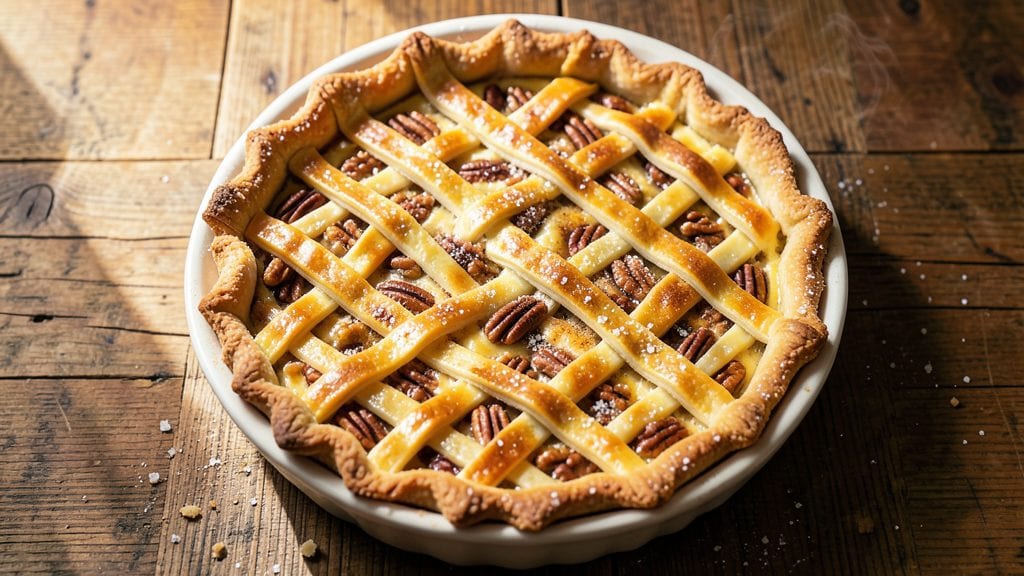
Grandma's pie recipe brings warmth to any kitchen with its timeless combination of flaky crust and creamy swirls—just like the ones you remember from childhood.
The secret lies in a few simple techniques: a perfectly rolled-out crust that stays tender, a buttery filling that balances sweetness, and those signature cream cheese swirls that make every slice irresistible.
I've tested this recipe dozens of times, refining it to ensure it delivers that nostalgic taste without requiring hours in the kitchen.
What makes this pie special is its versatility—whether you prefer classic apple, rich pumpkin, or tart cherry, the same crust and swirl method works beautifully. The crust can be homemade for that authentic touch or store-bought for convenience, and the filling comes together in just 15 minutes.
The key to those perfect swirls is patience: spreading the cream cheese mixture evenly before cutting through it creates elegant, golden patterns that look as good as they taste.
By the time it emerges from the oven, you'll have a pie with a golden, crispy crust that gives way to tender, flaky layers, all topped with those signature swirls of vanilla cream cheese.
The aroma alone will have everyone gathering around the table, and the first bite delivers that perfect balance of sweet, creamy, and buttery. This is the kind of dessert that feels like a hug from your grandma—warm, comforting, and impossible to resist.
Serve it warm with a scoop of vanilla ice cream or let it cool slightly for clean slices. The possibilities are endless, whether it's a holiday centerpiece or a cozy weeknight treat. Here's how to make it—just like Grandma used to.
Ingredients for grandma pie
Buttery crust, creamy swirls, and nostalgic flavor—just eight ingredients make this pie feel like home.
| Ingredient | Amount | Notes |
|---|---|---|
| All-Purpose Flour 🌾 | 2 ½ cups | Plus 2 tbsp for dusting |
| Unsalted Butter 🧈 | 1 cup | Cold, cubed, for flaky crust |
| Granulated Sugar 🍚 | ½ cup | For crust sweetness |
| Ice Water 💧 | ½ cup | Keep cold for flaky texture |
| Large Egg 🥚 | 1 whole | For egg wash |
| Coarse Salt 🧂 | ½ tsp | For crust seasoning |
| Vanilla Cream Cheese 🧀 | 8 oz | Room temperature, full-fat |
| Powdered Sugar 🍚 | ½ cup | For cream cheese mix |
| Vanilla Extract 🍯 | 1 tsp | Pure vanilla preferred |
| Heavy Cream 🥛 | ½ cup | Cold for swirls |
| Apple Pie Filling 🍎 | 2 cups | Homemade or quality canned |
| Granulated Sugar 🍚 | ¼ cup | For filling sweetness |
| Lemon Juice 🍋 | 1 tbsp | Freshly squeezed |
| Cinnamon 🌿 | 1 tsp | Ground, for filling |
The crust is where the magic starts. Unsalted butter is non-negotiable here—it needs to stay cold for those perfect flaky layers. King Arthur flour or any all-purpose works, but if you're feeling fancy, add a splash of vanilla extract to the dough for a subtle twist. The secret to handling the dough? Keep everything cold. I usually prep the crust first, let it rest in the fridge while I make the filling, then roll it out on a lightly floured surface. Pillsbury crust is a lifesaver if you're short on time—just brush it with melted butter before adding the filling.
No vanilla cream cheese? Regular cream cheese plus 1 tsp vanilla extract works in a pinch, but the flavor won't be quite the same. The filling can be homemade (peeled apples, sugar, cinnamon, lemon juice) or store-bought—Mott's or Libby's are my go-tos for convenience. For the swirls, beat the cream cheese until smooth, then fold in powdered sugar and vanilla. The key is spreading it evenly over the filling before cutting through it—use a fork or knife to make clean lines. Want extra richness? Add a tablespoon of melted butter to the cream cheese mix.
This pie tastes even better the next day, so make it ahead if you can. Store it in an airtight container at room temperature for up to 3 days, or freeze for 3 months. I like to reheat slices in the oven at 350°F for 5-10 minutes to revive the crust. For serving, a scoop of vanilla ice cream or a dollop of whipped cream takes it to the next level. Leftovers? Perfect for breakfast toast the next morning.
Why You'll Love This Recipe
- Here’s what sold me: that first bite where the flaky layers give way to a whisper of sugar-kissed richness. The butter isn’t just melted in—it’s layered, creating pockets that turn golden and crisp. My grandma used to say, "A good pie starts with the crust," and she wasn’t wrong.
- No-Fuss Dough Magic: I swear by this recipe—just flour, butter, sugar, ice water, and an egg. That’s it. No mixer, no stress, just my fingers and a bowl. The butter stays cold, the dough comes together in minutes, and honestly? It’s the kind of recipe that makes me feel like I’ve earned my slice.
- Buttery-Sweet Crust Perfection: Here’s what sold me: that first bite where the flaky layers give way to a whisper of sugar-kissed richness. The butter isn’t just melted in—it’s layered, creating pockets that turn golden and crisp. My grandma used to say, "A good pie starts with the crust," and she wasn’t wrong.
- Weeknight or Holiday Hero: Between us, this crust is my secret weapon for potlucks, Thanksgiving leftovers, or even a lazy Sunday brunch. Use it for savory hand pies (yes, even on a Tuesday night) or sweet apple galettes. The dough keeps well in the fridge, so I’m never scrambling last-minute.
Step-by-step instructions for grandma's pie recipe
Here's how to build this classic dessert with flaky crust and creamy swirls.
Make the Flaky Crust
In a large bowl, combine the 2.5 cups all-purpose flour, 0.5 cup granulated sugar, and 0.5 teaspoon coarse salt. Cut in the 1 cup cold cubed unsalted butter using a pastry cutter or your fingers until the mixture resembles coarse crumbs with pea-sized butter pieces. This cold butter creates flaky layers when baked.
Gradually add the 0.5 cup ice water, 1 tablespoon at a time, mixing gently with a fork just until the dough comes together. Be careful not to overmix—stop when the dough holds when pressed. Divide the dough into two equal parts, flatten into disks, wrap in plastic, and chill for at least 1 hour (or up to 2 days).
Here's the thing—chilling is non-negotiable. Cold dough prevents shrinking and ensures those beautiful flaky layers. If your kitchen's warm, pop the dough in the fridge while you prep the filling.
Prepare the Cream Cheese Swirls
In a medium bowl, beat the 8 oz room-temperature vanilla cream cheese until smooth. Add the 0.5 cup powdered sugar, 1 teaspoon vanilla extract, and mix until fully combined. In a separate small bowl, lightly whip the 0.5 cup cold heavy cream until soft peaks form, then gently fold it into the cream cheese mixture.
Spread one dough disk on a floured surface into a 12-inch circle, about 1/8-inch thick. Roll the other dough disk into a 10-inch circle. Spoon the cream cheese mixture onto the larger dough circle, leaving a 1-inch border. Roll up the dough tightly like a jelly roll, sealing the edge with a bit of water.
This is where it gets fun—don't worry if it's not perfect. The swirls will still look beautiful once baked. Place the rolled dough seam-side down in your pie dish, pressing gently to shape it into the bottom and sides.
Assemble the Filling
In a small bowl, combine the 2 cups apple pie filling, 0.25 cup granulated sugar, 1 tablespoon lemon juice, and 1 teaspoon cinnamon. Stir well and pour this mixture evenly over the cream cheese swirls in the pie crust. The filling should cover the cream cheese completely but not overflow.
Unroll the second dough disk and place it over the filling, pressing the edges to seal. Cut a few slits in the top crust to allow steam to escape during baking. Brush the top crust with the beaten 1 whole large egg mixed with a little water for that golden finish.
Don't skip the egg wash—it gives that classic bakery look and prevents the crust from browning too quickly. If your crust starts browning before the filling is done, loosely cover it with foil.
Bake to Golden Perfection
Preheat your oven to 375°F. Place the assembled pie on a baking sheet (to catch any drips) and bake for 45-50 minutes, until the crust is deep golden brown and the filling is bubbling through the slits in the top crust. Your oven might run hot, so start checking at the 40-minute mark—you want the center to reach 195°F when tested with an instant-read thermometer.
Real talk: If the edges brown too quickly, cover them with aluminum foil after 20 minutes. The goal is even baking—crispy crust without a burnt bottom. Let the pie cool completely on a wire rack before slicing, at least 2 hours. Patience here ensures clean slices and maximum flavor.
Pro Tips For Making Grandma Pie
- Chill the Dough Properly: I learned this the hard way—rolling out dough straight from the fridge leads to cracks and tears. Wrap the dough in plastic and refrigerate it for at least 30 minutes before rolling, even if the recipe doesn’t say so. Cold dough handles better and gives you that smooth, even crust grandma’s pie deserves.
- Cut Butter in Small Bites: Using cold, cubed butter (about ½-inch pieces) instead of melting it or tossing in big chunks means flakier layers. Pulse the butter in a food processor or cut it with a pastry cutter until it resembles coarse crumbs—this ensures even distribution without turning the dough greasy.
- Don’t Overwork the Dough: The second you start kneading, the gluten wakes up, and your pie crust turns tough. Mix the dry ingredients first, then cut in the butter and ice water just until combined—no more. If the dough feels sticky, add a little more flour, but resist the urge to handle it more than necessary.
- Use Ice Water, Not Cold: Grandma’s recipe calls for ice water for a reason—it keeps the butter from melting too fast and makes the crust crispier. Fill a glass with ice cubes, add hot water, and let it sit for 5 minutes before using. The cold water shocks the butter just enough to create those perfect flaky layers.
Regional styles of this dish
Southern Comfort Style
In the South, pies often feature a homemade crust with a touch of brown sugar instead of granulated for extra depth. I like adding 1 teaspoon of cinnamon directly to the crust dough for warmth.
For the filling, Southern cooks often use peach slices instead of apple, simmered with lemon zest and a splash of bourbon for complexity. The cream cheese swirls stay the same, but the crust gets brushed with melted butter before baking for extra richness. 🍑
Midwest Apple Orchard
The Midwest takes pie seriously, and apple pies here often feature a double-crust with a lattice top for elegance.
I swap the cream cheese swirls for a custard layer—mix 2 eggs, ¼ cup sugar, and 2 tablespoons cornstarch with ½ cup milk, then pour it over the filling before adding the top crust.
The swirls become caramel drizzle instead, made by melting ½ cup brown sugar with 2 tablespoons butter and 1 tablespoon corn syrup, then drizzling over the pie before baking. 🍏
New England Classic
New England pies lean into spiced fillings with nutmeg and allspice in the crust and cardamom in the cream cheese swirls. I use tart green apples like Granny Smith for the filling, tossed with 1 teaspoon of fresh ginger and 1 tablespoon of blackberry jam for tang.
The crust gets a sprinkle of coarse sanding sugar before baking for that iconic crunch. Serve with whipped cream and a sprinkle of toasted pecans for texture. 🌰
Pacific Northwest Twist
Out West, pies often incorporate local flavors like blackberries or raspberries in the filling, paired with honey instead of sugar. The cream cheese swirls get a boost with 1 teaspoon of lavender extract (food-grade!) for a floral note.
The crust is brushed with white chocolate ganache after baking for a modern touch. I also add crushed graham crackers to the crust dough for extra heartiness. 🌸
Grandma’s German Heritage
German-American pies often feature a shorter, denser crust made with lard instead of butter for flakiness. The filling might include sour cherries (like Bing cherries) simmered with red wine and star anise.
The cream cheese swirls are replaced with sour cream swirls, mixed with poppy seeds and a pinch of salt. Bake at 350°F for 50-55 minutes to let the flavors meld. 🍒
Modern Shortcut Version
For busy days, I use a pre-made pie crust (like Pillsbury) and skip the swirls entirely. Instead, I make a quick cream cheese glaze—mix 4 oz cream cheese, ¼ cup powdered sugar, and 1 tablespoon milk, then spread it over the baked pie.
The filling stays the same, but I add 1 teaspoon of vanilla bean paste to the dough for extra flavor. This version cuts prep time to 30 minutes without sacrificing taste. ⏰
Nutrition facts
Frequently asked questions
Can I make this pie with a store-bought crust instead of homemade?
A high-quality pre-made crust like Pillsbury works perfectly—just brush it with melted butter before adding the filling. For extra flakiness, use two layers of store-bought crust (one for the bottom, one for the top). The cream cheese swirls will still shine through, and you'll save 30-45 minutes of prep time.
How do I prevent the cream cheese swirls from leaking out during baking?
Keep the cream cheese mixture cold before spreading it, and don't overfill the crust. Roll the dough tightly around the filling to create a secure seal, and press the edges firmly. If you notice leaks while baking, cover the pie with aluminum foil for 10-15 minutes to slow the process. The swirls should hold beautifully once fully baked.
What's the best way to reheat leftover pie?
For individual slices, warm them in the oven at 350°F for 5-10 minutes until the crust is crispy again. To reheat the whole pie, wrap it tightly in foil and bake at 325°F for 20 minutes. Avoid microwaving—it makes the crust soggy. Store leftovers in an airtight container for up to 3 days or freeze for 3 months.
Can I substitute vanilla cream cheese with regular cream cheese?
Yes, but the flavor won't be identical. Use 8 oz regular cream cheese plus 1 teaspoon vanilla extract and ½ teaspoon lemon zest for brightness. For extra richness, add 1 tablespoon melted butter to the mixture. The swirls will still look beautiful, though the vanilla flavor will be milder.
Why did my pie crust turn out tough instead of flaky?
Overworking the dough or using warm butter are the most common culprits. Keep everything cold (including your hands!) and mix just until the dough comes together. Avoid adding extra water—stick to the ½ cup ice water measurement. For extra flakiness, chill the dough for at least 2 hours before rolling.