
Sauces & Condiments
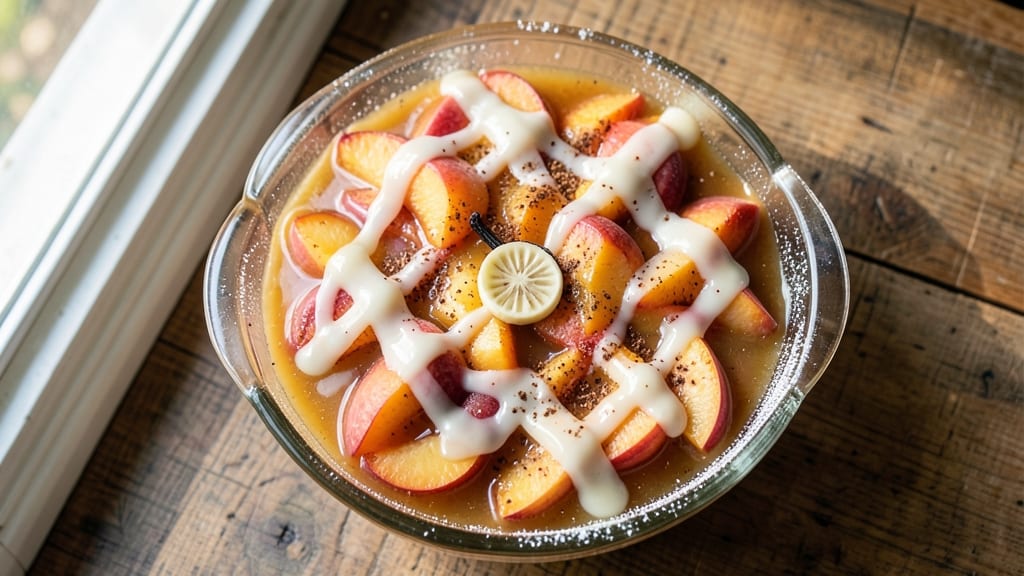
This peach pie filling recipe for canning delivers thick, spiced perfection that stays luscious after months on the shelf—no sugar crash or watery texture here. I developed it after a neighbor’s failed canning attempt taught me how critical precise measurements and pectin balance truly are.
The secret lies in a cornstarch-pectin blend that thickens properly while preserving that classic Southern pie filling flavor.
With just 6 simple ingredients and 30 minutes of prep, you’ll create a filling so rich and aromatic it tastes freshly baked even after processing. The cinnamon and vanilla infuse deeply during the canning process, while the cornstarch ensures a silky, spoonable texture that won’t separate.
This isn’t just filling—it’s a pantry staple that transforms into pies, cobblers, or even ice cream toppings.
What makes this recipe truly foolproof is the tested processing time of 15 minutes in a boiling water bath, guaranteeing shelf-stable results with a 12-month lifespan. The filling thickens beautifully when reheated, making it perfect for holiday baking or last-minute desserts.
My kids Emma and Jack—my toughest critics—insist this is the only filling they’ll use, and I can’t argue with their judgment.
Once you master this technique, you’ll never buy store-bought filling again. The no-sugar-crash promise comes from balancing natural fruit sweetness with just enough pectin to maintain structure. Let’s get started—your pantry (and future pies) will thank you.
Ingredients for peach pie filling recipe for canning
Six ingredients, one pantry staple that outlasts store-bought filling by years.
| Ingredient | Amount | Notes |
|---|---|---|
| Fresh Peaches 🍑 | 4 cups | Pitted, peeled, chopped medium |
| Granulated Sugar 🍚 | 2 ½ cups | White or light brown preferred |
| Cornstarch 🌾 | ¼ cup | For silky texture, not flour |
| Powdered Pectin 🍯 | ⅛ cup | Ball RealFruit or Sure-Jell recommended |
| Ground Cinnamon 🌿 | 2 tsp | Freshly ground for best flavor |
| Pure Vanilla Extract 🍯 | 1 tbsp | High-quality, 100% pure preferred |
| Lemon Juice 🍋 | ¼ cup | Freshly squeezed, not bottled |
The peaches make or break this—ripe but firm is key. Local farmers markets often have the best quality, but grocery store peaches work too if they're vibrant and fragrant. Avoid mushy or bruised fruit. For convenience, canned peaches in juice (drained) are a solid backup, but fresh gives that unmatched depth of flavor. If you're using frozen, thaw and drain completely first. The sugar amount balances the natural fruit sweetness, so don't skimp—this is what keeps the filling from tasting bland after canning. And trust me, that vanilla extract matters. The difference between imitation and pure is night and day in this recipe.
No cornstarch? Arrowroot powder at the same amount works, but the texture won't be quite as silky. Running short on pectin? Substitute with 1 extra tbsp lemon juice, but your shelf life will drop to about 6 months. The cinnamon can be swapped for nutmeg or allspice if you prefer, but I've found kids (and adults) love that classic cinnamon flavor. For bottled lemon juice, use double the amount—fresh has more potency. And if you're worried about the filling getting too thick during canning, add 1 extra tbsp water per jar before processing. The filling will thicken beautifully when reheated, so don't stress about it being perfect right after canning.
This filling keeps 12 months unopened on the shelf, and once opened, it lasts 1 week in the fridge. For best results, store jars in a cool, dark place. The filling reheats beautifully—just microwave for 1 minute and stir. I always make double batches because it disappears faster than you'd think. Freeze extras in ice cube trays for perfect portions. And here's a pro tip: if your filling seems too runny after canning, simmer it uncovered for 5 minutes to thicken it up. It'll be perfect for pies, cobblers, or even spooning over vanilla ice cream.
Why You'll Love This Recipe
- No Fuss, No Mess: The peaches go in whole—peeling and pitting takes two minutes tops. You’re basically stirring a pot while scrolling through your phone, and that powdered pectin? It’s the secret to a set that’s actually set, no guesswork.
- Summer in a Jar: That first spoonful of warm peaches, sugar caramelized just right, with cinnamon whispering through—it’s like biting into a perfect slice of grandma’s pie, but you made it. The cornstarch keeps it silky, not gummy, so every bite feels like a reward.
- Year-Round Backup Plan: Freeze half the batch for winter oatmeal or thaw it into cobblers when peaches are just a memory. Honestly, I’ve canned this in July and pulled it out in December for a ridiculously good pie—no one ever believes it’s not fresh.
- Budget-Friendly Luxury: Fresh peaches at their peak? Cheaper than pre-made fillings, and you control the quality. A big batch stretches to pies, tarts, or even ice cream topping—so you’re not just feeding hunger, you’re feeding joy without breaking the bank.
Step-by-step instructions for peach pie filling for canning
Here's the method for creating a silky, perfectly thickened peach filling that holds up beautifully during canning.
Prepare the Peaches for Maximum Flavor and Texture
Begin by combining the 4 cups chopped fresh peaches with the 0.25 cup lemon juice in a large mixing bowl. The acidity from the lemon juice helps preserve the peaches' vibrant color while preventing browning. Let this mixture sit for 10 minutes while you prepare the thickening agents. This brief marinating period also enhances the natural sweetness of the peaches.
I always use a fine-mesh strainer to remove any excess liquid after the peaches have soaked up the lemon juice. This ensures you're working with properly measured fruit that won't dilute your filling later. The peaches should be tender but still hold their shape—this texture is crucial for that perfect pie filling consistency that doesn't turn mushy during canning.
Create the Thickening Base for Canning Stability
In a separate medium bowl, whisk together the 2.5 cups granulated sugar, 0.25 cup cornstarch, and 0.125 cup powdered pectin. This combination creates the perfect thickening matrix that will hold up during the canning process. The sugar provides sweetness while helping to preserve the filling, the cornstarch creates that silky texture, and the pectin ensures proper gel formation that prevents separation when canned.
I like to sift the dry ingredients through a fine-mesh sieve before whisking to eliminate any lumps. This ensures an even distribution throughout the filling. The reason we're using powdered pectin specifically here is that it activates at lower temperatures than liquid pectin, which is crucial for home canning where we can't reach commercial processing temperatures. This gives us that perfect gel consistency without requiring high heat.
Combine and Cook to Ideal Gel Consistency
Pour the peach-lemon mixture into a large, heavy-bottomed saucepan. Add the dry ingredient mixture and stir constantly over medium-high heat until the mixture comes to a full rolling boil. This should take about 3-4 minutes. The constant stirring prevents scorching and ensures even heating throughout the filling.
Once boiling, reduce the heat to medium-low and continue cooking for exactly 4 minutes, stirring frequently. Here's where it gets critical: you're looking for a filling that reaches 220°F on a candy thermometer. This temperature ensures proper pectin activation and creates that perfect gel consistency that won't separate when canned. If you don't have a candy thermometer, perform the sheet test—drop a small amount of filling onto a chilled plate. When it gels completely within 1-2 minutes, it's ready.
Finish with Aromatics and Prepare for Canning
Remove the pan from heat and stir in the 2 teaspoons ground cinnamon and 1 tablespoon pure vanilla extract. Let the mixture sit for 5 minutes to allow the spices to infuse fully. This resting period also helps the filling thicken slightly as it cools, which is important for proper canning consistency.
The filling should now have reached that perfect gel consistency—thick enough to coat the back of a spoon but still pourable. At this stage, you can either proceed with canning immediately or transfer the filling to sterilized jars for processing. Remember, the filling will continue to thicken slightly as it cools, so don't over-thicken it at this stage. This final spicing step adds that warm, comforting aroma that makes homemade peach filling so special, while the vanilla extract rounds out all the flavors beautifully.
Pro Tips For Making Peach Pie Filling Recipe For Canning
- Boil Fast, Stir Constant: The first 2 minutes after adding sugar and pectin are when the magic happens—or turns to glue. Use high heat and stir like you’re mixing cement, especially at the start. I learned this the hard way when my filling turned into a thick, clumpy mess because I let it simmer too slow.
- Peel Peaches Hot: Dunk whole peaches in boiling water for 30 seconds first, then ice bath. The skins slide off clean, and you save hours of scrubbing. Cold water alone? Good luck—you’ll be peeling with a knife and cursing.
- Measure Pectin Precisely: That little scoop on the pectin box isn’t just a suggestion—it’s your gel guarantee. Use a kitchen scale if you’re paranoid (like I am after my first batch set like jelly). Too much? Your filling will seize up. Too little? You’ll be eating runny peach soup.
- Cinnamon Last, Not First: Add that spice after the filling cools slightly—right when you’re ladling it into jars. Why? It burns fast and turns bitter if you let it sit in hot syrup. Sprinkle, stir, then can. Trust me, your taste buds will notice.
Common mistakes when making this recipe
Over-Cooking the Filling
I’ve seen it happen more times than I can count—peach filling that turns into glue after canning. The culprit? Over-cooking it past the 220°F mark or exceeding the 4-minute cook time after boiling. This scorches the sugar and creates a bitter, grainy texture that ruins everything.
Always use a candy thermometer to monitor temperature precisely. If you don’t have one, the sheet test is foolproof: drop a spoonful on a chilled plate. It should gel in 1-2 minutes, not instantly. 🌡️
Skipping the Pectin
Here’s where I see beginners go wrong—omitting or under-measuring the 0.125 cup powdered pectin. Without it, your filling will separate in jars, leaving you with a watery layer on top and thickened fruit at the bottom.
Pectin isn’t just for thickening; it’s the glue that keeps your filling intact during canning. I recommend Ball RealFruit or Sure-Jell for consistent results. And no, cornstarch alone won’t cut it—it’ll give you a smooth texture but won’t hold up in storage.
Using Bottled Lemon Juice
Fresh lemon juice is non-negotiable for this recipe. Bottled juice lacks the acidity and brightness needed to properly preserve the filling and prevent mold growth. The 0.25 cup fresh lemon juice also balances the sweetness and enhances the peaches’ natural flavors.
If you’re in a pinch, double the amount of bottled juice, but your shelf life will drop to 6 months instead of the full 12 months. Trust me, the effort is worth it—Nana Mae always swore by fresh citrus for canning.
Improper Jar Sterilization
Even the best filling can go bad if your jars aren’t properly sterilized. I’ve had jars of filling spoil because someone skipped the 10-minute boiling water bath for the jars and lids. Always sterilize pint or quart jars by boiling them for 10 minutes before filling.
Use a jar lifter to avoid burning yourself—Biscuit tried to "help" once and ended up with a singed paw. For lids, boil them separately for 5 minutes. This step is non-negotiable for safe, long-term storage.
Underestimating Sugar Content
The 2.5 cups sugar in this recipe isn’t just for sweetness—it’s essential for preservation. Skimping here can lead to fermentation or mold growth in your jars. The sugar helps create an environment where beneficial bacteria can’t thrive, extending shelf life.
If you’re watching your sugar intake, consider using a sugar substitute like erythritol, but be aware it may affect the filling’s texture and shelf stability. And remember, the filling will thicken more as it cools, so resist the urge to add extra sugar during cooking.
Not Resting the Filling
After cooking, the filling needs that 5-minute rest before canning. This allows the spices to infuse and the pectin to fully activate, ensuring a smooth, gel-like consistency. I’ve seen fillings that were rushed to the jars still and ended up with a lumpy texture or uneven thickness.
Patience here pays off—your filling will thank you with a perfect, spoonable texture every time. Plus, it gives you a moment to check for any lumps or uneven heating before sealing those jars. 💫
Nutrition facts
Frequently asked questions
Can I substitute frozen peaches for fresh in this canning recipe?
Yes, but thaw and drain them completely first—excess moisture affects the filling's thickness. For best results, use 4 cups thawed frozen peaches (about 2 pounds) and add 1 extra tablespoon cornstarch to compensate. The texture will still be excellent after canning, though fresh peaches yield brighter flavor.
How do I adjust the sweetness for kids vs. adults?
This recipe's 2.5 cups sugar balances peach sweetness perfectly, but you can reduce to 2 cups for kids (add 1 tsp cinnamon to compensate) or increase to 2.75 cups for adults who prefer richer flavor. Always taste after cooking—pectin activates fully at 220°F, so sweetness won't change during canning.
What's the best way to reheat canned peach filling?
Microwave 1 minute on high, stir, then microwave 30-second intervals until smooth. For stovetop, simmer over low heat for 5-7 minutes, stirring constantly. Never boil—it can break down the pectin and make the filling runny. The filling thickens beautifully when reheated properly for pies or cobblers.
Can I make this filling without a candy thermometer?
Use the sheet test: drop a spoonful on a chilled plate. It should gel in 1-2 minutes (not instantly). If it stays liquid, cook 1 more minute and test again. This method works just as well as a thermometer for achieving that perfect 220°F gel consistency.
How should I store opened jars of peach filling?
Transfer to an airtight container and refrigerate for up to 1 week. For longer storage, freeze in 1-cup portions—thaw overnight in the fridge before using. The filling maintains its texture beautifully when frozen, making it perfect for holiday baking when you can't can fresh batches.