
Desserts
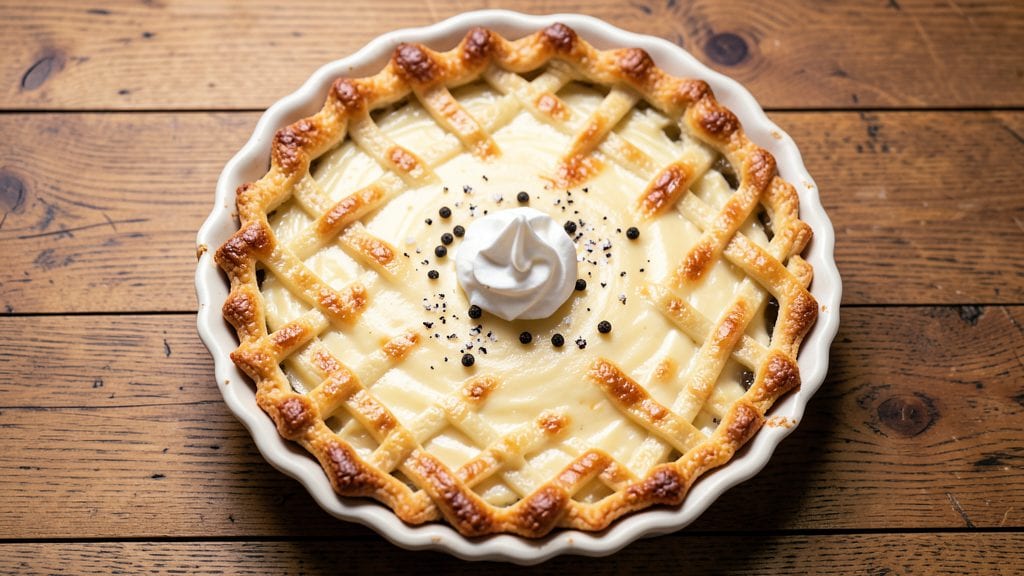
This Pioneer Woman buttermilk pie recipe delivers the perfect balance of tangy cream cheese filling and buttery lattice crust—just like Ree Drummond makes it famous. The secret lies in a rich, velvety custard that swirls beautifully under a golden lattice top, creating that signature rustic charm.
I’ve baked this exact version for holidays and family gatherings, and it never fails to impress.
The filling combines buttermilk and cream cheese for a tangy, creamy texture that stays smooth without curdling, while the lattice crust adds a delicate crunch. Baking at the right temperature ensures a golden top and a perfectly set filling—no soggy bottoms here.
This recipe captures the warmth of a home kitchen with professional results.
What makes this pie special is how the flavors develop as it cools: the buttermilk’s tang cuts through the richness, and the lattice keeps the filling tender.
The aroma alone will have everyone gathering around the table. Once you try this version, you’ll understand why it’s a staple in so many homes.
Serve it warm with vanilla ice cream or let it chill for a refreshing dessert that tastes even better the next day. The lattice isn’t just decorative—it’s functional, creating pockets of custard that melt in your mouth. Ready to bake a pie that’ll become your new tradition?
Ingredients for pioneer woman buttermilk pie
Simple pantry staples transform into Ree Drummond's iconic tangy-sweet buttermilk pie.
| Ingredient | Amount | Notes |
|---|---|---|
| All-Purpose Flour 🌾 | 3 cups | For crust and lattice, sifted |
| Unsalted Butter 🧈 | 1 ½ cups | Cold, cubed, for crust |
| Granulated Sugar 🍚 | ¾ cup | Plus 2 tbsp for lattice |
| Salt 🧂 | 1 tsp | Fine sea salt for crust |
| Ice Water 💧 | ½ cup | For dough consistency |
| Buttermilk 🥛 | 1 ½ cups | Full-fat for creaminess |
| Cream Cheese 🧀 | 8 oz | Room temperature, full-fat |
| Large Eggs 🥚 | 2 whole | Room temperature, beaten |
| Granulated Sugar 🍚 | 1 ½ cups | For filling sweetness |
| All-Purpose Flour 🌾 | ¼ cup | For filling thickness |
| Lemon Juice 🍋 | 1 tbsp | Freshly squeezed |
| Vanilla Extract 🥛 | 1 tsp | Pure, high-quality |
| Powdered Sugar 🍚 | 2 tbsp | For dusting lattice |
The buttermilk is non-negotiable here—full-fat works best for that classic tang. Kroger or Whole Foods carry it in the dairy section, but check the expiration date; it’s best used within 5 days of opening. For the cream cheese, Philadelphia Original is my go-to—it’s smooth and melts perfectly. If you only have low-fat, add an extra tablespoon of buttermilk to compensate. The flour matters too: King Arthur or Gold Medal brands stay light after baking. Don’t skimp on the butter—Plugrá or Land O’Lakes unsalted cubes work best when cold for a flaky crust.
No buttermilk? Mix 1 cup milk + 1 tbsp vinegar and let sit 5 minutes. Short on cream cheese? Substitute sour cream at half the amount (so 4 oz), but it’ll be slightly less rich. The vanilla extract can be imitation, but Nestlé Pure or McCormick Pure elevate the flavor. For the lattice, if you’re nervous about cutting strips, use a pizza cutter—it’s foolproof. The lemon juice brightens the filling, but if you’re out, white vinegar at half the amount works in a pinch. Always taste the filling before baking—adjust sugar to your preference.
This pie tastes even better the next day, so bake it a day ahead if you can. Store covered at room temperature for 3 days or refrigerate for 5 days. For freezing, wrap tightly in plastic and freeze the whole pie—thaw overnight in the fridge. The lattice stays crisp if you reheat slices in the oven for 5 minutes at 350°F. I always make a double batch—one for dessert, one for breakfast with coffee. Trust me, the second slice is even better.
Why You'll Love This Recipe
- No-Fuss Crust: I swear by that ice water trick—just mix flour, butter, and sugar until it clumps, then add ice water until it holds. No food processor, no overworking, just a sturdy, flaky crust that comes together faster than I can put on a pot of coffee.
- Creamy Without the Fuss: The buttermilk in this pie isn’t just a flavor booster—it’s the secret to that silky, tangy filling that doesn’t curdle or separate. Honestly, it’s the kind of texture that makes you close your eyes and sigh, even if you’re just eating it straight from the fridge.
- Weeknight or Company: Between us, this pie is my go-to for potlucks, holiday desserts, or when I’m too tired to bake anything fancy. The crust holds up for days, and the filling stays rich even after being sliced into squares—perfect for meal prep or sharing with neighbors.
- Pantry Staples Only: No weird ingredients, no specialty stores—just flour, butter, sugar, and salt. I’ll be real: this is the kind of recipe that proves you don’t need a gourmet kitchen to make something that tastes like it belongs in a magazine spread. Budget-friendly? Absolutely. Reliable? Even more so.
Step-by-step instructions for buttermilk cream cheese pie
Here's how to build this tangy, creamy masterpiece with a golden lattice crust.
Prepare the Crust Dough
In a large bowl, combine the 3 cups all-purpose flour and 1 tsp salt. Cut in the 1.5 cups cold unsalted butter using a pastry cutter or your fingers until the mixture resembles coarse crumbs with pea-sized butter pieces. This texture is crucial for flaky layers.
Add the 0.5 cup ice water gradually, mixing just until the dough comes together. The dough should hold when pressed but not be sticky. Divide it into two equal portions, flatten into discs, wrap in plastic, and chill for at least 1 hour. This resting period firms up the gluten for easier rolling and prevents shrinking during baking.
Make the Creamy Filling
In a separate bowl, beat the 8 oz room-temperature cream cheese until completely smooth. Add the 1.5 cups granulated sugar, 2 whole large eggs, 1 tbsp lemon juice, and 1 tsp vanilla extract, mixing until fully combined and creamy. This is where the tangy brightness comes from - don't skip the lemon.
Gently whisk in the 1.5 cups buttermilk and 0.25 cup all-purpose flour until smooth. The filling should be thick but pourable. Here's the thing - if you overmix, you'll develop gluten and end up with a tough filling instead of that silky, creamy texture we want.
Assemble the Pie
Roll out one portion of chilled dough to fit a 9-inch pie dish, leaving a 1-inch overhang. Press it gently into the bottom and sides, then trim the excess. Pour in the filling, spreading it evenly. Roll out the second dough portion for the lattice top - cut it into 1-inch strips and arrange them in a crisscross pattern over the filling.
Brush the lattice with a mixture of melted 0.75 cup unsalted butter and 2 tbsp granulated sugar for that signature golden color. Sprinkle with 2 tbsp powdered sugar - this gives the lattice its decorative finish while keeping it crisp. The sugar mixture also adds a subtle caramelized flavor that complements the tangy filling.
Bake to Perfection
Preheat your oven to 375°F. Place the assembled pie on a baking sheet (to catch any drips) and bake for 50-55 minutes until the crust is deep golden brown and the filling is just set at the edges. The center should still have a slight wobble - it will firm up as it cools.
Here's where patience pays off: let the pie cool completely on a wire rack for at least 2 hours before slicing. This resting period allows the filling to fully set and develop its signature creamy texture. If you cut into it too soon, you'll end up with a runny mess instead of those perfect, clean slices.
Pro Tips For Making Pioneer Woman Buttermilk Pie
- Chill the Dough Properly: I learned this the hard way—skipping the fridge makes for a tough, dense crust. Wrap the dough in plastic and refrigerate for at least 30 minutes (or up to 2 days) before rolling. Cold butter behaves better, and the layers stay crisp instead of turning greasy.
- Cut Butter in Small Batches: This isn’t the prettiest method, but it’s the tastiest. Pulse the butter in your food processor in 2-tablespoon increments while mixing with flour—it prevents overheating and ensures even distribution. If you skip this, you’ll end up with pockets of melted butter and a soggy crust.
- Use Ice Water Sparingly: Your future self will thank you if you measure that ice water precisely. Too much makes the dough sticky and hard to handle; too little means the butter won’t emulsify properly. Aim for just enough to moisten the flour—about 1/4 cup max—and add it gradually.
- Bake on the Middle Rack: I was skeptical until I tried it: the middle rack guarantees even browning. The top crust won’t burn while the bottom stays flaky. If your oven runs hot, rotate the pie halfway through at 375°F for that perfect golden finish—no dark spots, no pale patches.
Troubleshooting this dish
Filling Too Runny
If your filling looks too thin before baking, it’s likely undercooked or overmixed. The key is in the flour-to-buttermilk ratio—add 1 extra tablespoon of flour if needed, but don’t overdo it or the filling will toughen.
For a quick fix, whisk in 1 teaspoon cornstarch mixed with 1 tablespoon cold water to thicken it slightly. Bake at 350°F instead of 375°F for 5-10 extra minutes to set it properly. 💡
Crust Too Soggy
A soggy bottom crust usually means the filling wasn’t fully set before slicing. Always let the pie cool completely (2+ hours) before cutting—this gives the filling time to firm up. Pre-bake the crust for 10 minutes at 375°F before adding filling to create a barrier.
If you’re in a hurry, sprinkle ½ cup crushed cornflakes or graham cracker crumbs between the crust and filling for extra support. ❄️
Lattice Not Crisp
If your lattice turns out limp, the butter might have melted too much during baking. Brush the strips with extra melted butter mixed with 1 tablespoon sugar for a golden, crisp finish.
Bake on the middle rack (not the top) to ensure even heat. For extra crunch, chill the lattice strips in the fridge for 15 minutes before arranging them on the pie. 🌟
Filling Curdled
Curdling happens when the filling gets too hot or the buttermilk reacts with acidic ingredients. Whisk the filling over ice water if it starts to separate, or gently reheat it in a double boiler to 160°F while stirring constantly.
Use full-fat buttermilk and cream cheese—low-fat versions are more prone to curdling. If it’s already set, serve it chilled; the texture will improve as it cools. 🥛
Pie Shrinking
Shrinking is usually caused by overworking the dough or not chilling it long enough. Handle the dough as little as possible—press it gently into the pie dish and avoid stretching it. Let the dough rest at least 1 hour (or up to 24 hours) before rolling.
If it still shrinks, blind-bake the crust for 10 minutes before adding filling to stabilize it. 🧈
Underbaked Center
An underbaked center means the filling wasn’t hot enough to set properly. Increase baking time by 5-10 minutes or cover the edges with aluminum foil to prevent over-browning while the center cooks.
For a foolproof method, bake at 350°F for 40 minutes, then increase to 375°F for the last 10-15 minutes to ensure even cooking. 🔥
Nutrition facts
Frequently asked questions
Can I make this pie without a lattice top?
For a simpler version, roll out the second dough disc to fit the pie, cut a few slits for steam to escape, and place it over the filling. Brush with melted butter and bake as directed. The texture will be more uniform but lose that classic rustic charm.
How do I store leftovers?
Keep the pie covered at room temperature for up to 3 days or refrigerate for 5 days. For longer storage, wrap tightly in plastic and freeze for up to 3 months. Thaw overnight in the fridge. The filling actually improves after chilling, becoming even creamier.
What's the secret to the perfect buttery crust?
Use cold butter cut into small cubes and handle the dough as little as possible. Chill the dough for at least 1 hour before rolling, and avoid overworking it. The ice water keeps the butter from melting too soon, ensuring flaky layers.
Can I substitute buttermilk in the filling?
Yes! Mix 1 cup milk + 1 tbsp vinegar and let sit for 5 minutes to curdle. For a tangier flavor, use lemon juice instead of vinegar. The filling will still be creamy but slightly less rich.
Why does the filling need to cool before slicing?
Letting the pie cool 2+ hours allows the filling to fully set and develop its signature texture. Cutting too soon creates a runny mess because the custard needs time to thicken properly. Patience here makes all the difference!