
Main Courses
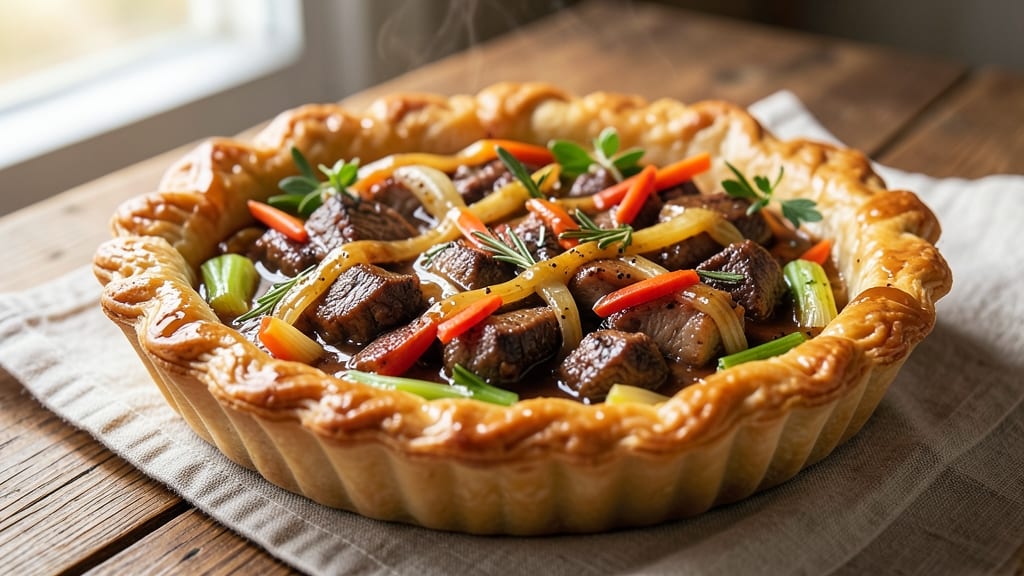
This pork and beef pie recipe delivers the ultimate comfort food experience—tender braised meat swimming in rich gravy, all encased in a golden, flaky crust. 🔥 The secret lies in slow-cooking the meat until it practically melts, then finishing it with a crisp, buttery pastry that holds up to every forkful.
I developed this recipe during a particularly chilly Atlanta winter when I needed something hearty enough to feed a crowd but simple enough to pull together after a long day at the smoker.
The filling starts with a perfect balance of pork shoulder and beef chuck—tough cuts that become fork-tender when braised just right. A blend of aromatic vegetables and herbs infuses the meat with deep, savory flavors, while a touch of Worcestershire sauce adds that signature umami punch.
The crust? You can go all-out with homemade puff pastry or take the shortcut with quality store-bought dough—both work beautifully, though I’ll admit my cast iron collection makes homemade feel like a labor of love.
What you’ll end up with is a pie that looks like it belongs in a Southern grandmother’s kitchen but tastes even better than the memories.
The gravy clings to every bite of meat, the crust achieves that perfect balance of crisp and tender, and the aroma alone will have your kitchen smelling like a holiday feast. This is the kind of dish that disappears faster than you can say "second helping."
Serve it with a crisp green salad or steamed vegetables to round out the meal, or enjoy it just as it is—straight from the oven with a cold glass of sweet tea.
The best part? Leftovers reheat beautifully, making this the ultimate make-ahead meal for busy weeks. Let’s get to work.
Ingredients for pork and beef pie
These hearty ingredients bring comfort food magic to your table with tender meat and golden crust.
| Ingredient | Amount | Notes |
|---|---|---|
| Pork Shoulder 🐖 | 1 ½ lb | Bone-in for best flavor |
| Beef Chuck Roast 🥩 | 1 ½ lb | Pre-cut into 1-inch cubes |
| Yellow Onion 🧅 | 1 whole | Chopped into wedges |
| Carrots 🥕 | 4 medium | Peeled and cut into chunks |
| Celery Stalks 🥬 | 3 whole | Chopped into 1-inch pieces |
| Garlic Cloves 🧄 | 4 cloves | Minced for depth of flavor |
| All-Purpose Flour 🌾 | 2 tbsp | For thickening gravy |
| Worcestershire Sauce 🍶 | 1 tbsp | For umami depth |
| Beef Broth 💧 | 2 cups | Low-sodium preferred |
| Dried Thyme 🌿 | 1 tsp | Or 1 tbsp fresh thyme |
| Bay Leaves 🌿 | 2 whole | Remove before serving |
| Black Peppercorns 🌶️ | 1 tsp | Freshly cracked |
| Salt 🧂 | 1 ½ tsp | Kosher or sea salt |
| Unsalted Butter 🧈 | ½ cup | Cold for crust |
| Puff Pastry 🥧 | 1 sheet | Store-bought or homemade |
The meat cuts are everything here. Pork shoulder and beef chuck are the stars—bone-in for extra flavor, pre-cut for convenience. Grab them from the butcher counter if you can; they’ll often trim it just right. Costco or Kroger usually have pre-cubed beef chuck in the freezer section, which saves time. For the pork, look for a cut with good marbling—it’ll stay juicier during the long braise. The celery, onion, and carrots should be fresh (the good stuff, not the pre-chopped kind). If you’re feeling fancy, Trader Joe’s has organic veggie packs that work perfectly.
No Worcestershire sauce? Soy sauce or a splash of balsamic vinegar gets you close. Fresh thyme is ideal, but dried works at one-third the amount. The flour needs to be all-purpose—none of that self-rising nonsense. For the pastry, Pepperidge Farm puff pastry is my go-to shortcut, but homemade is worth it if you’ve got the time. The butter matters here—use European-style if you can find it. The gravy will be richer for it. As for the broth, low-sodium is key so you can control the seasoning.
This pie reheats beautifully—just cover it with foil and warm in a 350°F oven for 20 minutes. Leftovers keep for 4 days in the fridge or 3 months frozen. I always make a double batch because it disappears fast. For serving, a simple green salad or steamed green beans cuts through the richness. And trust me, the aroma alone will have your whole house smelling like a holiday feast.
Why You'll Love This Recipe
- Minimal Chopping Required: I swear by the "sweat and brown" method for onions, carrots, and celery—just rough chop, toss them in a pot with a splash of water, and let them soften while I handle the meat. No fancy dicing, no knife skills required.
- Layered Richness: That combo of tender pork shoulder and beef chuck? It’s like a hug for your taste buds. The carrots and celery add just enough sweetness to balance the savory meat, and the onions? They melt into the gravy like a dream.
- Weeknight Meal Prep Hero: Between us, this pie is my secret weapon for busy nights. Make it on Sunday, and you’ve got hearty lunches for the whole week—just reheat and serve. (Yes, even on a Tuesday night when you’re running late.)
- Budget-Friendly Feast: Pork shoulder and beef chuck stretch so far when braised together, and the veggies bulk it up without breaking the bank. Honestly, it’s the kind of meal that makes grocery day feel like a win.
Step-by-step instructions for savory meat pie
Here's how to build a rich, golden pie with tender meat and velvety gravy.
🍳 Step 1: Brown the Meat for Maximum Flavor
Heat a large Dutch oven over medium-high heat and add the 1.5 lb pork shoulder and 1.5 lb beef chuck roast (cut into 1-inch cubes). Brown the meat in batches for 5-6 minutes per side until deeply golden. This step builds incredible flavor through the Maillard reaction—don't skip it!
As the meat browns, you'll smell those amazing caramelized aromas developing. Remove the meat to a plate and set aside. In the same pot, add the 1 whole yellow onion (wedges), 4 medium carrots (chunks), and 3 whole celery stalks (chopped). Cook for 5 minutes until softened, stirring occasionally. You're creating the flavor base that will infuse your gravy.
👨🍳 Step 2: Build the Gravy Foundation
Add the 4 cloves minced garlic and cook for 30 seconds until fragrant. Sprinkle in the 2 tbsp all-purpose flour and stir vigorously for 1 minute to remove any raw flour taste. Slowly whisk in the 2 cups beef broth, 1 tbsp Worcestershire sauce, 1 tsp dried thyme, 2 whole bay leaves, 1 tsp black peppercorns, and 1.5 tsp salt.
Return the meat and vegetables to the pot. Bring to a simmer, then reduce heat to low and cover. Let it cook for 2 hours until the meat is fork-tender and the liquid has reduced slightly. Here's the thing—this slow cooking transforms tough cuts into melt-in-your-mouth pieces. The gravy should coat the back of a spoon but still be spoonable.
🥘 Step 3: Prepare the Puff Pastry Topping
While the filling simmers, roll out the 1 sheet puff pastry on a lightly floured surface to 12x10 inches (about ⅛-inch thickness). Brush the top with a thin layer of melted 0.5 cup unsalted butter—this creates a beautiful golden crust. Fold the pastry in half like a book, then fold it in half again to make a compact rectangle. Slice this into 6 strips (each about 2 inches wide).
Here's where it gets fun—arrange the strips in a lattice pattern over the meat filling in your Dutch oven. The overlapping pattern creates stunning visual contrast while allowing the pie to breathe. Press the edges gently to seal, but don't overwork the pastry or it'll shrink.
🔥 Step 4: Bake to Golden Perfection
Transfer the Dutch oven to a 425°F preheated oven. Bake for 25-30 minutes until the pastry is deep golden brown and puffed in places. The filling should bubble gently through the lattice. I know it's tempting to peek, but resist—every time you open the oven, you risk losing that beautiful rise.
When the pastry reaches that glorious golden color, remove from the oven and let it rest for 10 minutes. This resting period lets the juices redistribute, ensuring every bite is moist and flavorful. The pie will be hot, so handle with care—those lattice strips are delicate when fresh.
🍽️ Step 5: Serve Warm with Fresh Gravy
Remove the 2 whole bay leaves before serving. The gravy should be rich and velvety, perfectly coating each tender piece of meat. If it's too thick, whisk in a splash of hot water or broth. For extra flair, sprinkle with chopped fresh parsley or a crack of black pepper.
Cut into wedges and serve immediately while still warm. Each bite delivers perfectly seasoned meat with that buttery, flaky pastry contrast. The lattice pattern makes it look impressive without requiring advanced pastry skills—trust me, your guests will think you spent hours on this!
Pro Tips For Making Pork And Beef Pie
- SEAR THE MEAT FIRST: Don’t skip browning the pork shoulder and beef chuck—this isn’t just for looks. A deep caramelized crust locks in flavor and prevents the filling from tasting bland. Use a hot pan with 1 tablespoon of oil per side, and don’t rush it; 5-7 minutes per side until it’s dark golden. (Yes, it’ll make your kitchen smell like a pub.)
- CHOP VEGETABLES UNIFORM: Carrots and celery should be cut into ½-inch chunks, onions into ¼-inch dice—no random sizes. Big pieces stay crunchy and undercooked, while small ones turn to mush. A sharp knife and steady hand make this easier, but if you’re in a hurry, a food processor (pulse setting) works. Just don’t skip this—your pie’s texture depends on it.
- DON’T OVERFILL THE PASTRY: I learned this the hard way—stuffing a pie crust too tightly leads to a soggy bottom or a burst crust. Fill it only ⅔ full, then fold the edges neatly to seal. If the filling looks too much, chill it 15 minutes first. (Your crust will forgive you.)
- USE COLD BUTTER ON CRUST: Cut cold butter into the pie dough in small cubes—don’t melt it first. This creates flaky layers that stay crisp, not greasy. Work quickly but gently; overworking the dough makes it tough. (I know, it’s tedious, but trust me—it’s worth it.)
Essential equipment for this dish
Dutch Oven Essentials
Your Dutch oven is the workhorse of this recipe—it needs to be 5-6 quarts with a tight-fitting lid. I swear by my Le Creuset Signature (it’s heavy but worth it), but All-Clad Stainless or Lodge Cast Iron work beautifully too.
The lid must seal perfectly to create steam during baking, which helps develop that golden lattice crust. If yours has a warped lid, replace it—this pie demands even heat distribution. 🔥
Pastry Tools Matter
For the lattice crust, you’ll need a sharp chef’s knife (I use my Wüsthof Classic) and a rolling pin (my French-style one from Sur La Table is perfect). A pastry brush (like West Bend’s silicone one) helps apply that melted butter evenly.
Pro tip: Chill your rolling pin in the freezer for 10 minutes before rolling—it prevents the pastry from sticking and makes cutting those clean strips easier.
Precision Measuring
Use a digital kitchen scale for the meat—1.5 lbs each is critical for balance. My OXO Good Grips scale is my go-to. For the flour and butter, use a quart measuring cup (like Pyrex’s) for accuracy.
The Worcestershire sauce and thyme should be measured with a small spoon (I keep a Penzeys Spice measuring set handy). Precise measurements ensure the gravy isn’t too thick or thin, and the crust doesn’t turn out greasy.
Butter Quality Counts
Don’t skimp on the unsalted butter—use European-style (like Plugrá or Kerrygold) for its higher fat content. It’s worth the splurge for that golden, flaky crust. Store it in the freezer until ready to use—it’s easier to slice when cold.
For the melted butter on the lattice, warm it in a small saucepan over low heat until completely liquid but not hot. Too much heat = burnt pastry. ✨
Optional Upgrades
For extra crispiness, invest in a pie bird (a Wilton one works) to vent steam during baking. If you’re making this often, a pastry wheel (like Jamie Geller’s) makes cutting those lattice strips effortless.
And for leftovers, a glass storage container (like Pyrex) keeps the pie fresh for days. Trust me, these small tools make all the difference in restaurant-quality results at home.
Nutrition facts
Frequently asked questions
Can I substitute other meats in this recipe?
You can experiment with substitutions, but pork shoulder and beef chuck are ideal for their rich flavors and tenderizing properties. For a chicken version, use 2 lbs boneless chicken thighs (dark meat stays juicier) and reduce cooking time to 45 minutes after browning. For a vegetarian option, swap the meat for mushrooms, lentils, and chickpeas—just adjust seasonings to compensate for the lack of umami.
How do I prevent the pastry from getting soggy?
Prevent soggy pastry by creating a barrier between the filling and crust. After browning the meat, spread a thin layer of egg wash (1 egg beaten with 1 tbsp water) over the filling before adding the lattice. For extra insurance, sprinkle dried breadcrumbs or crushed cornflakes on top of the filling before placing the pastry strips. Bake as directed, and the result will be a crisp lattice every time.
Can I make this pie ahead of time?
This pie reheats beautifully. Assemble the pie up to 24 hours ahead, cover tightly with plastic wrap, and refrigerate. Bake straight from the fridge (no need to thaw) at 425°F for 35-40 minutes, adding 5-10 minutes to the baking time. For freezing, bake the pie completely, then cool to room temperature. Wrap tightly in foil and freeze for up to 3 months. Reheat covered with foil at 350°F for 30 minutes.
What's the best way to cut the lattice crust neatly?
Use a sharp chef's knife and a pastry wheel for clean cuts. Chill the pie for 10 minutes after baking to firm up the crust. Start by cutting the pie into 6 equal wedges (like a clock face), then use the pastry wheel to trim the lattice edges straight. For extra presentation, brush the cut edges with melted butter and sprinkle with coarse salt before serving.
Can I use a different type of crust?
While puff pastry creates that signature flaky texture, you can adapt this recipe. For a pie crust, press a single round into the Dutch oven, crimp the edges, and cut a few slits for steam to escape. For a shortcrust, bake it blind for 15 minutes before adding filling. If using phyllo dough, brush layers with butter and bake at 375°F for 20 minutes—just reduce oven temp slightly to avoid burning.