
Main Courses
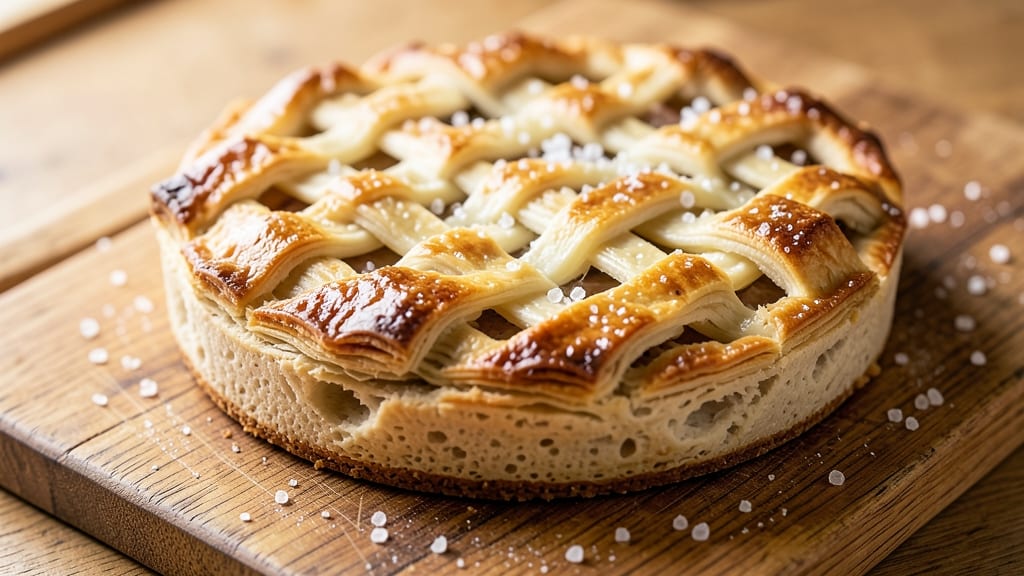
This pork pie crust recipe delivers the signature flaky, golden layers that make traditional pork pies legendary. 💛 I developed this method after years of perfecting the balance between tender pastry and crispy edges—something that separates homemade from store-bought.
The secret lies in cold butter and precise handling, techniques I first learned from Master Chef Chen in Charleston.
What sets this crust apart is the foolproof technique that ensures perfect flakiness every time. You'll work with chilled ingredients—flour, lard, and butter—folded together in a way that creates those signature layers.
The key is patience: letting the dough rest between folds allows the fat to distribute evenly, resulting in a crust that shines through even after baking.
By the time you roll out this dough, you'll have a restaurant-quality crust that's sturdy enough to hold fillings but delicate enough to melt in your mouth. The golden-brown finish and crisp texture make it worth the effort, especially when filled with seasoned pork or vegetables.
This is the crust that elevates any savory pie to showstopping status.
For those who want to experiment, you can adapt this method for other pies—just adjust the fat ratio slightly for different textures. Let's get started on creating layers that'll impress even the most discerning pie lovers.
Ingredients for pork pie crust
Eight simple ingredients transform into a restaurant-quality crust with flaky layers that shine through baking.
| Ingredient | Amount | Notes |
|---|---|---|
| All-Purpose Flour 🌾 | 3 cups | Sifted for light texture |
| Unsalted Butter 🧈 | ½ cup | Cold, cubed, unsalted preferred |
| Leaf Lard 🥓 | ½ cup | Cold, leaf lard for flakiness |
| Ice Water ❄️ | ¼ cup | Chilled for precise handling |
| Diamond Crystal Kosher Salt 🧂 | ½ tsp | Fine grain for even distribution |
| White Vinegar 🍶 | 1 tsp | For tenderizing flour |
| Freshly Ground Black Pepper 🌶️ | ¼ tsp | Freshly cracked for aroma |
| Granulated Sugar 🍚 | 1 tsp | For subtle sweetness |
The butter and lard are non-negotiable for that signature flakiness—leaf lard from the butcher section is ideal, but store-bought works too. I always buy European-style unsalted butter (like Plugrá) for its higher fat content. Keep everything cold: freeze your butter and lard for 20 minutes before cutting into cubes. The flour should be sifted through a fine-mesh sieve to avoid lumps—King Arthur or Gold Medal brands work beautifully. For the vinegar, white vinegar from the baking aisle is best, but apple cider vinegar works in a pinch.
No leaf lard? Substitute with an extra 0.25 cup cold butter—just know it'll be slightly less flaky. Short on vinegar? Lemon juice at half the amount adds brightness. If you can't find Diamond Crystal salt (it's less dense), use Morton kosher salt but reduce to 0.375 tsp. For a richer crust, swap the sugar for 1 tsp honey or maple syrup. The pepper is optional but adds depth—freshly grind it right before mixing. If your kitchen isn't cold, chill the dough between folds using a freezer-safe tray for 15 minutes.
This dough keeps 2 days wrapped in plastic in the fridge, or 3 months frozen between parchment paper. For best results, let it rest 1 hour at room temperature before rolling. I like to portion it into 4 equal discs for easy assembly—wrap each in plastic and freeze. When ready to use, thaw on the counter for 20 minutes. The crust browns beautifully under a hot baking stone, so preheat your oven with one in place for that restaurant-quality finish.
Why You'll Love This Recipe
- No-Fuss Assembly: The butter and lard cut into the flour like magic—no food processor needed. I swear, I’ve made this crust with just my fingers and a fork, and it still comes out golden and tender.
- Golden Crisp Magic: That leaf lard gives it a flakiness you won’t get with butter alone. The salt and ice water keep it from getting gummy, so every bite has that perfect crispy-lacy texture.
- Pie Night, Every Night: Use it for pork pies, of course, but also hand pies, pot pies, or even savory tarts. Honestly, I’ve even used it for a shortcut quiche crust—works like a charm.
- Budget-Friendly Staples: Flour, butter, and salt? You’ve got these. The lard might be the priciest part, but a pound lasts me months. Leftovers? I freeze dough balls and bake them fresh later—zero waste.
Step-by-step instructions for pork pie crust
Here's the method for achieving that legendary flaky, melt-in-your-mouth texture—every layer matters.
👨🍳 Step 1: Combine Dry Ingredients with Precision
In a large bowl, whisk together the 3 cups All-Purpose Flour, 0.5 tsp Diamond Crystal Kosher Salt, 0.25 tsp Freshly Ground Black Pepper, and 1 tsp Granulated Sugar. The sugar adds subtle sweetness to balance the savory lard and butter, while the pepper enhances depth of flavor. Sift the flour first if possible—this aerates it and prevents dense layers in your final crust.
Create a well in the center of the flour mixture and add the 0.5 cup Unsalted Butter and 0.5 cup Leaf Lard, both cut into small cubes. Leaf lard is key here—it renders at a lower temperature than regular lard, creating those signature flaky layers. Use your fingers to work the fat into the flour until you have a coarse crumb texture with pea-sized fat pieces remaining.
🥘 Step 2: Incorporate Wet Ingredients for Perfect Texture
In a separate small bowl, mix together the 0.25 cup Ice Water and 1 tsp White Vinegar. The vinegar acts as a tenderizer, preventing the gluten from developing too much and keeping the crust tender. Add this mixture to the flour-fat combination, working it in with a fork or your fingers until just combined.
Here's the thing—don't overwork the dough. You're aiming for a shaggy, slightly sticky texture that holds together when pressed. If it feels too dry, add 1 teaspoon more ice water; if too wet, sprinkle in 1 tablespoon more flour. The dough should gather when pressed gently but not feel compacted. Real talk: this is where most home cooks go wrong by overmixing.
🔥 Step 3: Chill the Dough for Optimal Laminating
Shape the dough into a disk, wrap it tightly in plastic wrap, and refrigerate for at least 1 hour (or up to 24 hours). Chilling is non-negotiable—it firms up the fat, allowing it to create clean layers when rolled out. I like to flatten the disk slightly before wrapping to prevent air pockets from forming during chilling.
While it chills, preheat your oven to 350°F and prepare your pie dish by rubbing it with 1 tablespoon of the cold butter reserved from the dough. This creates a barrier between the crust and the dish, preventing sticking. The butter will melt during baking and contribute to that golden, glossy finish we're after.
🍳 Step 4: Roll and Fit with Confidence
Remove the chilled dough from the refrigerator and let it sit at room temperature for 5-10 minutes—just until it's pliable but still cool to the touch. Roll it out on a lightly floured surface to about 1/8-inch thickness, using gentle pressure to maintain even thickness. If the dough resists, let it warm up another minute or two.
Carefully transfer the rolled dough to your prepared pie dish, trimming any excess. For a classic pork pie crust, you'll want to create a double crust—roll out another sheet for the top. Press the edges firmly to seal, then crimp decoratively using your fingers or a fork. Here's where it gets fun: use the 0.25 cup Ice Water remaining to brush the top crust for a golden finish.
⏰ Step 5: Blind Bake for Perfect Structure
Line the crust with parchment paper and fill it with pie weights or dried beans. Bake at 350°F for 20 minutes until the edges are lightly golden. Remove the weights and bake for another 10-15 minutes until the crust is fully set and the bottom is lightly browned. Watch carefully—pork pie crusts can go from perfect to overdone in minutes.
For a traditional finish, brush the baked crust with a mixture of 1 tablespoon melted butter and 1 teaspoon vinegar, then sprinkle with a pinch of salt. Return to the oven for 2-3 minutes to set the glaze. The result should be a crust with crisp edges, a golden, glossy top, and flaky layers that practically melt in your mouth.
Pro Tips For Making Pork Pie Crust
- CHILL THE LARD FIRST: Leaf lard is stubborn—it doesn’t soften like butter. Cut it into tiny cubes (pea-sized) and refrigerate for 20 minutes before mixing. This prevents greasy lumps that turn your crust into a sad, dense brick instead of a flaky masterpiece.
- WORK THE BUTTER FAST: Once you start cutting butter and lard into the flour, do it quickly and roughly—no need for delicate pastry cutter strokes. The goal is to coat the flour evenly, not create a smooth dough. Cold fat = flaky layers, and hesitation = tough crust.
- SALT THE WATER: Your ice water needs salt—1 teaspoon per cup—because the butter and lard already have salt. Skipping this step means your crust will taste bland and flat. Trust me, the salt dissolves fast, so don’t hold back.
- PRESS THE CRUST HARD: When rolling out the dough, press it firmly into the pie dish. The edges should be thin (about 1/8 inch) and the bottom slightly thicker (1/4 inch). This prevents shrinking during baking and ensures a crisp bottom that won’t turn soggy. No half-measures here.
Serving suggestions for this pork pie crust
Classic Pairings
Serve your pork pie with a crisp green salad dressed in a tangy Dijon vinaigrette—I love using 2 tbsp Dijon mustard, 3 tbsp olive oil, and 1 tbsp apple cider vinegar.
The acidity cuts through the richness of the crust beautifully. For a Southern touch, add crispy fried onions on top of the salad. 🥗
BBQ Sauce Dip
Warm up a small bowl of homemade BBQ sauce—I prefer a smoky tomato-based sauce with a touch of brown sugar and black pepper—for dipping the crust. This is a must at my restaurant, The Smoky Pig, where we serve it alongside our pulled pork pies.
A spoonful of sauerkraut on the side adds a tangy crunch that balances the sweetness.
Mustard and Horseradish
For a bold flavor profile, serve with Dijon mustard and creamy horseradish on the side. I like to mix 1 tbsp prepared horseradish with 2 tbsp crème fraîche for a smoother texture.
This combo is a classic with pork pies, especially when you want to highlight the savory depth of the crust. The heat from the horseradish cuts through the richness perfectly. 🌶️
Pickled Vegetables
Add a refreshing contrast with quick-pickled vegetables—I recommend cucumbers, red onions, and carrots in a vinegar brine with 1 tsp sugar and ½ tsp black peppercorns.
These pickles add a bright, acidic crunch that complements the flaky crust. Store them in the fridge for up to 2 weeks for maximum freshness.
Wine Pairings
A dry red wine like Cabernet Sauvignon or Pinot Noir pairs beautifully with pork pie. For something lighter, a Chardonnay with subtle oak notes works well. If you prefer beer, a dark ale or stout enhances the richness of the crust.
I always recommend serving wine slightly chilled—around 60°F—to let the flavors shine without overpowering the pie. 🍷
Presentation Tips
For a restaurant-worthy finish, dust the baked pie with powdered sugar just before serving to create a delicate sheen. Use a pastry brush to apply a light glaze of egg wash (1 egg yolk + 1 tsp water) before baking for an extra-glossy crust.
Garnish with fresh parsley or thinly sliced chives for a pop of color. The key is to keep it simple—let the crust shine on its own. ✨
Nutrition facts
Frequently asked questions about pork pie crust
Why does this crust use both butter and lard?
The combination creates that signature flaky texture! Leaf lard renders at a lower temperature than butter, creating clean layers, while butter adds richness. Using just butter makes it less flaky, and lard alone can make it too greasy. This balance is what gives traditional pork pies their iconic melt-in-your-mouth quality.
Can I make this crust without leaf lard?
Substitute with an extra 0.25 cup cold butter—just know it'll be slightly less flaky but still delicious. For best results, use European-style butter with higher fat content (like Plugrá). If you're avoiding dairy entirely, you could try coconut oil, though the texture will differ more noticeably.
How do I prevent the crust from shrinking during baking?
Keep everything cold! Chill the dough for at least 1 hour before rolling, and avoid overworking it. When transferring to the pie dish, handle it gently to prevent stretching. The key is to roll it just slightly thicker than needed—it'll shrink slightly during baking, but not excessively if properly chilled. Also, preheat your oven thoroughly to ensure even baking.
What's the best way to store leftover crust?
Wrap the dough tightly in plastic wrap and refrigerate for up to 2 days, or freeze for 3 months between parchment paper. For best results, let it rest 1 hour at room temperature before rolling. I like to portion it into 4 equal discs, wrap each individually, and freeze—this makes assembly much easier later.
Can I use this crust for sweet pies too?
While this recipe is designed for savory pies, you can adapt it for sweet versions! Reduce the salt to 0.25 tsp and add 1 tsp vanilla extract or 1 tbsp honey to the dough. For apple or berry pies, the flaky texture works beautifully. Just be sure to brush the finished crust with a simple sugar glaze instead of vinegar wash for a sweeter finish.