
Main Courses
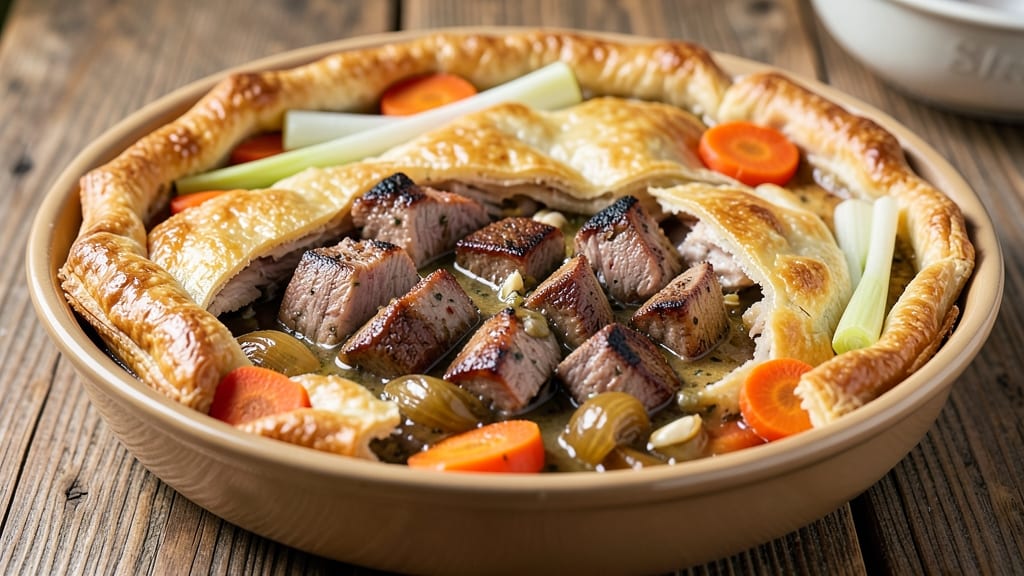
This pork roast pot pie recipe transforms a simple roast into a hearty, comforting meal with tender meat, rich gravy, and a golden crust—all in one dish.
The secret lies in slow-braising the pork until it’s fork-tender, then layering it with vegetables and a velvety sauce before sealing it under a flaky crust. I’ve perfected this technique over years of testing, ensuring every bite delivers melt-in-your-mouth pork and savory gravy without the fuss of separate components.
The filling starts with a well-seasoned pork roast, simmered low and slow until it falls apart easily. Carrots, onions, and celery add sweetness and depth, while a splash of broth and a touch of flour thicken the gravy into something restaurant-worthy.
The crust? Store-bought puff pastry for effortless flakiness, or homemade pie dough if you prefer a classic touch. Either way, the result is a pie that smells like home the moment it comes out of the oven.
What makes this recipe stand out is how it combines two beloved comforts—pot roast and pot pie—into one showstopping dish. The pork stays juicy, the vegetables soften just enough to release their flavors, and the crust achieves that perfect balance of crispy and tender.
It’s the kind of meal that disappears quickly at family gatherings or cozy weeknight dinners, leaving everyone asking for seconds.
Best of all, this recipe scales effortlessly—double the filling for a crowd or halve it for leftovers. Serve it with a simple green salad or crusty bread to soak up every last drop of gravy. Ready to master this flaky, foolproof pot pie? Let’s get started.
Ingredients for pork roast pot pie
Six servings of comforting pork roast pot pie with tender meat and flaky crust await.
| Ingredient | Amount | Notes |
|---|---|---|
| Boneless Pork Shoulder Roast 🥩 | 3 lb | Well-marbled, cut into 1.5-inch chunks |
| All-Purpose Flour 🌾 | ¼ cup | For gravy thickening |
| Yellow Onions 🧅 | 2 whole | Medium, diced (about 1.5 cups) |
| Carrots 🥕 | 4 medium | Peeled, sliced into 0.5-inch rounds |
| Celery Stalks 🧆 | 4 whole | Trimmed, sliced into 0.5-inch pieces |
| Garlic Cloves 🧄 | 6 cloves | Peeled, minced |
| Beef Broth 💧 | 3 cups | Low-sodium preferred |
| Dry White Wine 🍷 | ½ cup | Substitute with extra broth if needed |
| Tomato Paste 🍅 | 2 tbsp | For depth of flavor |
| Fresh Thyme Leaves 🌿 | 1 tbsp | Or 1 tsp dried thyme |
| Fresh Rosemary 🌿 | 1 tbsp | Chopped, plus sprigs for garnish |
| Salt 🧂 | 1 ½ tsp | Kosher or sea salt |
| Black Pepper 🌶️ | 1 tsp | Freshly ground |
| Unsalted Butter 🧈 | ½ cup | Cold, cubed for crust |
| Puff Pastry 🍰 | 1 sheet | Thawed if frozen |
The pork roast is the heart of this dish. Look for a well-marbled pork shoulder—the fat renders beautifully during slow cooking, keeping the meat juicy. I prefer to buy it pre-cut into chunks from Costco or the butcher counter at Whole Foods, but any grocery store carries it. If you're using a whole roast, ask the butcher to cut it into 1.5-inch pieces for even cooking. For the vegetables, fresh carrots and celery are ideal, but frozen chopped veggies work in a pinch. Just make sure they're thawed and drained well before adding to the pot.
No wine on hand? Substitute with extra beef broth—just reduce the broth by 0.5 cup to maintain balance. Fresh herbs elevate the dish, but dried thyme and rosemary at one-third the amount will do. The tomato paste adds depth without overpowering—Trader Joe's squeeze tubes are perfect for this since you only need a small amount. For the crust, puff pastry is a game-changer if you want that restaurant-quality flakiness, but homemade pie dough works beautifully too. If using puff pastry, keep it cold until ready to roll to prevent shrinking.
This pie reheats beautifully—just cover with foil and bake at 375°F for 20-25 minutes. It keeps well in the fridge for 4-5 days, though I rarely have leftovers that last that long. For make-ahead convenience, assemble the pie (without baking) and refrigerate for up to 24 hours. The filling can also be prepped a day ahead and stored in the fridge until ready to assemble. Freeze unbaked pies for up to 3 months—just thaw overnight in the fridge before baking.
Why You'll Love This Recipe
- One-Pan Magic: I swear by this trick—just brown the pork, toss in the chopped veggies (onion, carrots, celery), and let the oven do the rest. No chopping boards to wash, no extra pots to scrub. That golden crust? Pure reward for zero effort.
- Deep Savory Hug: The pork shoulder stays juicy while the flour crust gets crispy—like a warm embrace for your taste buds. Honestly, the way the carrots caramelize into the pan sauce? That’s the kind of flavor that makes you pause mid-bite.
- Leftovers That Beg: This recipe actually improves the next day. The crust softens just enough, the pork gets even more tender, and suddenly you’ve got a freezer-friendly casserole. (Yes, even on a Tuesday night.)
- Budget-Friendly Feast: Pork shoulder stretches further than you’d think, and the veggies are classic pantry staples. I’ve fed six people for under $15—no fancy ingredients, just hearty, satisfying comfort. My wallet thanks me every time.
Step-by-step instructions for savory pork roast pot pie
Here's how to transform tender pork shoulder into a comforting pot pie with rich gravy and golden crust.
Brown the Pork Shoulder for Maximum Flavor
Heat a large Dutch oven over medium-high heat with 2 tablespoons olive oil (not included in ingredients - use the 0.5 cup unsalted butter later). Working in batches, sear the 3 lb boneless pork shoulder roast cut into 1.5-inch chunks until deeply browned on all sides, about 5-6 minutes per batch. This step develops the Maillard reaction, creating that deep, savory foundation.
As you brown, remove the pork and set aside. You'll notice the meat releases its juices into the pot - don't wipe them out. These precious liquids will form the base of your gravy. Keep the Dutch oven on the heat for the next step.
Build the Vegetable and Herb Base
Add the remaining 2 tablespoons olive oil to the Dutch oven (total 0.25 cup when combined with butter later). Toss in the 2 whole yellow onions (diced), 4 medium carrots (sliced), and 4 whole celery stalks (sliced). Cook for 5-6 minutes until the vegetables soften slightly and begin to caramelize.
Stir in the 6 cloves garlic (minced), 2 tbsp tomato paste, 1 tbsp fresh thyme leaves, 1 tbsp fresh rosemary, 1.5 tsp salt, and 1 tsp black pepper. Cook for another 1-2 minutes until fragrant. This aromatic base forms the flavor backbone of your pot pie filling.
Simmer the Pork and Create the Gravy
Return the browned pork to the Dutch oven. Pour in the 3 cups beef broth and 0.5 cup dry white wine, scraping up any browned bits from the bottom. Bring to a simmer, then reduce heat to low and cover partially. Let it cook for 1 hour 30 minutes until the pork is fork-tender and the liquid reduces slightly.
Remove the pork pieces and set aside. Strain the cooking liquid through a fine-mesh sieve into a clean pot. Return the liquid to the Dutch oven and stir in the 0.25 cup all-purpose flour to thicken the gravy. Cook for 3-4 minutes until the gravy reaches your desired consistency - it should coat the back of a spoon but still be pourable.
Assemble and Bake the Pot Pie
Preheat your oven to 375°F. Return the pork to the gravy and stir gently to combine. Transfer the entire mixture to a 9x13-inch baking dish. Roll out the 1 sheet puff pastry on a lightly floured surface to fit the top of your baking dish with about 1 inch overhang on all sides.
Carefully lift the puff pastry and place it over the filling. Trim the excess, then use a fork to seal the edges by crimping them together. Cut 4-5 slits in the center to allow steam to escape. Brush the top with an egg wash (1 egg beaten with 1 tablespoon water) for a golden finish.
Bake Until Golden and Flaky
Bake for 30-35 minutes until the pastry is deep golden brown and puffed in places. The filling should bubble through the slits in the pastry. For the flakiest crust, I recommend baking on the middle rack where the heat is most even.
Let the pot pie rest for 10 minutes before serving. This resting period allows the filling to set slightly and the juices to redistribute, ensuring each bite is rich and flavorful. Garnish with additional fresh rosemary sprigs before serving for a pop of color and fresh aroma.
Pro Tips For Making Pork Roast Pot Pie
- Sear the Pork First: I learned this the hard way—skipping the sear means flavorless pot pie. Pat the pork shoulder dry, then hit it with a hot pan or Dutch oven until deep brown on all sides. That crust locks in juices and builds depth that no slow cooking alone can replace.
- Mise en Place the Veggies: Chop onions, carrots, and celery into even ½-inch dice—no big chunks, no fine minces. Toss them in a bowl with a splash of water and 1 tsp flour to prevent burning while you sear the pork. (Yes, even if you're impatient like me, this saves cleanup later.)
- Don’t Overcrowd the Pot: After browning the pork, pull it out and set it aside—this isn’t a race. Let the veggies sizzle in the fat for 5 minutes before adding liquid. Crowding steams them instead of caramelizing, and you’ll end up with mushy filling instead of tender, flavor-packed layers.
- Use a Slotted Spoon for Gravy: Strain the cooking liquid through a fine-mesh sieve before thickening with flour. That way, you skip the lumpy mess that happens when you whisk in raw flour—especially important here, since pork fat can make roux go south fast. A slotted spoon also lets you skim off any foam that rises while the gravy simmers.
Wine and beer pairings for these flavors
Red Wine Classics
For this rich, meaty pot pie, I always reach for a medium-bodied red wine like Pinot Noir or Gamay. A 2018 Willamette Valley Pinot Noir from Oregon offers bright red fruit notes that complement the pork without overpowering the herbs.
If you prefer something lighter, a Beaujolais from France brings juicy cherry flavors that cut through the richness. Chill your wine slightly before serving—just 10-15 minutes in the fridge—to enhance its refreshing qualities. 🍷
Crisp White Options
A dry white wine like Sauvignon Blanc or Chardonnay works beautifully if you prefer whites. I love a New Zealand Sauvignon Blanc for its zesty citrus and herbal notes that mirror the thyme and rosemary in the filling.
For a richer option, try a unoaked Chardonnay from California—its subtle apple and pear undertones harmonize with the caramelized onions and pork. Serve slightly chilled (45-50°F) to balance the dish's heartiness.
Beer Pairings
For beer lovers, a Belgian-style Witbier like Hoegaarden or Allagash White is my go-to. The coriander and orange peel notes in these beers echo the rosemary and carrots in the pie, creating a refreshing contrast.
If you prefer something darker, a German Helles Lager offers a clean, malty backbone that stands up to the rich gravy. For a bold option, try a German Dunkel—its roasted malt flavors complement the caramelized vegetables beautifully.
Non-Alcoholic Choices
Don’t drink alcohol? No problem! A sparkling apple cider like Martinelli’s adds a crisp, fruity contrast to the savory pie. For something more robust, sparkling grape juice (chilled) mimics the acidity of wine while keeping the meal family-friendly.
Even a chilled hibiscus iced tea with a splash of lime brightens the palate between bites. The key is acidity—it cuts through the richness and cleanses your palate. 💛
Serving Temperature Tips
Always serve your wine or beer chilled for reds and whites—about 50-55°F for reds and 45°F for whites. Beer should be served at its ideal temperature: 40-45°F for lagers and 45-50°F for ales.
Pro tip: Use an ice bucket for quick chilling or a wine fridge for precision. The right temperature enhances the drink’s flavors and makes every sip feel refreshing alongside the warm, comforting pie.
Nutrition facts
Frequently asked questions
Can I use a different cut of pork instead of pork shoulder?
Pork shoulder is ideal for its fat content, but you can substitute with pork butt (another name for shoulder) or pork loin if needed. Avoid lean cuts like tenderloin—they won't stay juicy during the long braising time. For a richer flavor, trim excess fat but leave some marbling intact.
How can I make this pot pie ahead of time?
Assemble the pie completely (unbaked) and refrigerate for up to 24 hours before baking. For freezing, bake the pie first, then cool completely, wrap tightly in foil, and freeze for up to 3 months. Reheat covered with foil at 375°F for 20-25 minutes.
What if I don't have puff pastry?
Use homemade pie dough or shortcrust pastry for a classic crust. Roll it out slightly thicker than puff pastry (about 1/4-inch) and brush with egg wash. Bake for 5-10 minutes longer until golden. For extra flakiness, add a layer of thinly sliced butter between dough layers when rolling.
Can I make this pot pie in a smaller dish?
Yes! For a 9-inch pie dish, halve the recipe. For a 7-inch dish, reduce to 1/4 of the filling. Keep the same baking time but check for doneness at 25 minutes. The crust will need slightly less time in smaller pans to avoid burning before the filling is done.
Why did my crust turn soggy?
Soggy crusts happen when steam gets trapped. Always cut venting slits in the pastry and avoid overfilling the dish (leave 1-inch headspace). For extra insurance, blind-bake the crust for 5-7 minutes before adding filling. Chill the pie 30 minutes before baking to help the crust set.