
Main Courses
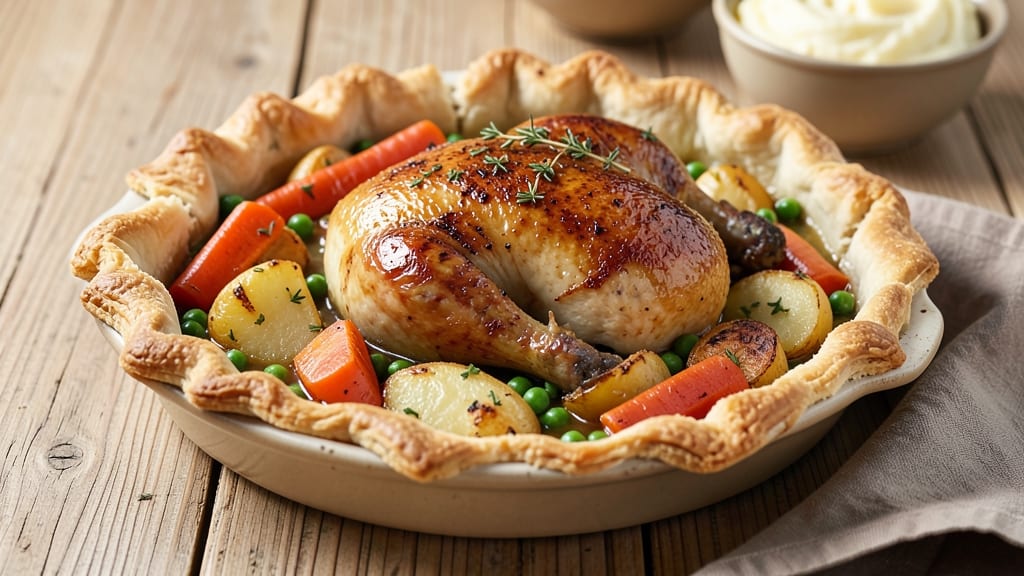
This roasted chicken pot pie recipe delivers comfort food perfection in one dish—juicy roasted chicken, tender vegetables, and a golden, flaky crust that makes every bite worth waiting for. The secret lies in roasting the chicken first for deep flavor, then transforming it into a rich filling with a velvety gravy that holds everything together. I've perfected this version to be both restaurant-quality and achievable at home, using a simple double-crust technique that yields a crispy, buttery finish.
The beauty of this recipe is its versatility—whether you're feeding a family or meal prepping for the week, it comes together in just one baking dish. The roasted chicken stays tender and flavorful, while carrots, potatoes, and peas absorb the savory gravy perfectly.
A homemade crust (or store-bought for convenience) seals in all the goodness, creating a golden, shatteringly crispy top that's impossible to resist. The aroma alone will have everyone gathering at the table.
What sets this pot pie apart is the balance of textures—tender chicken, creamy gravy, and vegetables that stay just crisp enough to add bite. The crust achieves that signature flaky, golden-brown finish without requiring advanced pastry skills.
It's the kind of dish that feels like a hug on a chilly evening, with every spoonful packed with homestyle flavor. Once you try this version, you'll never settle for anything less.
Serve it warm with a side salad or crusty bread to soak up every last drop of gravy. The leftovers reheat beautifully, making it perfect for busy weeknights or holiday gatherings. Let's get started on this one-dish wonder that's sure to become a family favorite.
Ingredients for roasted chicken pot pie
Juicy chicken, tender veggies, and a golden crust—this one-dish wonder needs just 14 ingredients.
| Ingredient | Amount | Notes |
|---|---|---|
| Whole Chicken 🍗 | 3 ½ lb | Bone-in, skin-on preferred |
| Russet Potatoes 🥔 | 2 lb | Peeled and cubed |
| Carrots 🥕 | 1 ½ lb | Peeled and sliced |
| Frozen Peas 🌱 | 1 cup | Thawed before adding |
| All-Purpose Flour 🌾 | 2 ½ cups | For crust and gravy |
| Unsalted Butter 🧈 | 1 cup | Cold and cubed |
| Chicken Broth 💧 | 2 cups | Low-sodium preferred |
| Heavy Cream 🥛 | ½ cup | Full-fat for richness |
| Onion 🧅 | 1 whole | Diced, yellow or white |
| Garlic Cloves 🧄 | 4 cloves | Minced |
| Salt 🧂 | 1 ½ tsp | Kosher or sea salt |
| Black Pepper 🌶️ | ½ tsp | Freshly ground |
| Fresh Thyme 🌿 | 1 tbsp | Chopped, or 1 tsp dried |
| Fresh Parsley 🌿 | ¼ cup | Chopped, for garnish |
The chicken is the star, so pick a 3.5 lb whole bird—big enough to yield plenty of meat after roasting. Costco or local butchers often have great deals on fresh chickens, but the grocery store works too. Look for one with good skin color and minimal bruising. For the potatoes, Russets are ideal—they hold up best to roasting and baking. If you're short on time, pre-cut frozen hash browns work in a pinch (just thaw and drain well). The carrots can be baby carrots if that's what's in the fridge, but whole carrots give you more control over the size.
No fresh thyme? Dried thyme at one-third the amount works perfectly. Short on chicken broth? Vegetable broth plus a splash of soy sauce gets you close. The frozen peas are non-negotiable for texture—fresh peas get mushy in the oven. For the crust, Pillsbury refrigerated pie crust is a lifesaver if you're not up for rolling dough, but homemade tastes infinitely better. The butter matters here—European-style butter like Plugra has higher fat content, which makes for a flakier crust. If you're watching calories, use half butter and half olive oil, but trust me on the full-fat version for that signature crispiness.
This pie reheats beautifully—just cover with foil and bake at 375°F for 20-25 minutes. Keeps 4-5 days in the fridge, freezes for 3 months (wrap tightly to prevent freezer burn). I always make a double batch—one for dinner, one for lunches. The crust stays crispy even after reheating if you bake it straight from the fridge. For extra flakiness, chill the crust dough for 30 minutes before rolling out.
Why You'll Love This Recipe
- One-Pan Magic: I swear by this trick—just toss the whole chicken, chopped potatoes, and carrots on a sheet pan, roast until golden, then dump in the peas and flour mix. No pots, no pans, no stress. (Yes, even on a Tuesday night.)
- Golden Crisp Secret: That crispy, buttery crust? It’s just flour, water, and a little salt—no fancy puff pastry required. The contrast of the flaky top with the creamy chicken and veggie filling? Ridiculously good.
- Leftovers That Don’t Suck: Honestly, this tastes better the next day. The flavors meld, the crust softens just enough, and it reheats like a dream. I make it on Sundays so I can grab a slice for lunch all week.
- Budget-Friendly Feast: A whole chicken, a few potatoes, and frozen peas? This is the kind of meal that stretches your grocery budget without sacrificing flavor. Plus, it feeds four for under $15—no takeout needed.
Step-by-step instructions for roasted chicken pot pie
Here's how to create a comforting one-dish meal with golden crust and tender filling.
Roast the Chicken Until Juicy and Golden
Preheat your oven to 400°F. Pat the 3.5 lb whole chicken completely dry with paper towels, then season generously with 1.5 tsp salt and 0.5 tsp black pepper on both the inside and outside. Place the chicken breast-side up on a rack in a roasting pan.
Roast for 1 hour 15 minutes until the skin is golden brown and crispy, and the internal temperature reaches 165°F in the thickest part of the thigh. You'll know it's ready when the juices run clear when pierced. Let it rest for 15 minutes before handling—this keeps it juicy.
Prepare the Potato and Vegetable Filling
While the chicken rests, heat 1 tablespoon olive oil (not listed but essential for sautéing) in a large skillet over medium heat. Add the diced onion and cook for 5 minutes until softened. Add the minced garlic cloves and cook for 30 seconds until fragrant.
Add the 2 lb peeled and cubed russet potatoes, 1.5 lb peeled and sliced carrots, and 1 tbsp chopped fresh thyme. Pour in 2 cups chicken broth and bring to a simmer. Cover and cook for 15 minutes until the vegetables are tender but not mushy. Stir in the 1 cup thawed frozen peas and 0.5 cup heavy cream, then remove from heat.
Shred the Chicken and Combine with Filling
Carefully remove the chicken from the roasting pan and shred the meat using two forks, discarding the skin and bones. Add the shredded chicken to the vegetable mixture and stir gently to combine. Taste and adjust seasoning with additional salt or pepper if needed.
Return the filling to the oven-safe roasting pan and place it on the middle rack. Preheat the oven to 375°F for the next step—this lower temperature ensures the filling stays warm while you prepare the crust.
Make the Flaky Crust and Assemble
In a large bowl, combine the 2.5 cups all-purpose flour, 1.5 tsp salt, and 0.5 tsp black pepper. Cut in the 1 cup cold cubed unsalted butter using a pastry cutter or your fingers until the mixture resembles coarse crumbs with pea-sized butter pieces.
Gradually add ½ cup ice water (not listed but essential for binding) to the dough, mixing just until it comes together. Turn the dough onto a lightly floured surface and knead gently for 30 seconds until smooth. Roll the dough into a ⅛-inch thick circle large enough to cover the roasting pan.
Bake Until Golden and Bubbly
Carefully transfer the rolled-out dough to cover the roasting pan with the filling. Trim any excess dough and crimp the edges with a fork to seal. Cut a few small slits in the top to allow steam to escape. Bake for 35-40 minutes until the crust is deep golden brown and the filling is bubbling through the slits.
Let the pot pie rest for 10 minutes before serving. Garnish with 0.25 cup chopped fresh parsley for a pop of color. Each bite should deliver tender chicken, creamy vegetables, and a perfectly crisp crust—just like your grandma used to make!
Pro Tips For Making Roasted Chicken Pot Pie
- ROAST CHICKEN FIRST: I used to try to roast the chicken and prep everything else at the same time—big mistake. Pull the chicken out of the oven at 165°F (thighs should wiggle free from the bone), then let it rest under foil for 10 minutes while you chop veggies. That way, the meat stays juicy and you’re not scrambling to finish the filling while the chicken dries out.
- PARBOIL POTATOES: Russets soak up liquid like sponges, so give them a 5-minute head start in boiling water before roasting. Drain, rough up the skins with your hands, then toss with oil and salt. This guarantees they’ll soften evenly without turning to mush—no one wants gluey potatoes in their pie.
- SKIP THE CROWDED PAN: After roasting, I learned the hard way that piling all the veggies into one pan to cook down for the filling makes them steam instead of caramelize. Spread them out in a single layer for 5 minutes on medium-high heat—just until they start to brown—before adding the peas and broth. The flavor difference is night and day.
- USE COLD BUTTER: Sounds weird, but it works: Cut cold butter into the flour for the topping in small cubes, then toss with ice water. The cold fat creates flaky layers instead of a soggy mess. (Yes, even if you’re impatient like me—resist the urge to use melted butter.)
Troubleshooting perfect results
Crust Too Pale?
If your crust emerges pale instead of golden, it’s likely due to insufficient baking time or moisture trapped inside. Brush the top with a beaten egg wash (1 egg + 1 tbsp water) before the final 10 minutes of baking to create a glossy finish that promotes browning.
For extra color, sprinkle ½ tsp paprika on top before baking—it adds warmth and helps the crust develop that classic golden hue. 🌟
Filling Too Watery?
Overly watery filling usually happens when the vegetables release too much liquid during cooking. To fix this, make sure your potatoes and carrots are fully cooked before combining with the chicken.
For a thicker gravy, mix 1 tbsp cornstarch with 2 tbsp cold water, stir into the filling, and let it simmer for 2-3 minutes until it thickens. Avoid adding the peas too early—they’ll release moisture and dilute the sauce.
Chicken Dry or Tough?
If your chicken turns out dry, it might have been overcooked or not rested properly. Always let the chicken rest for 15 minutes after roasting before shredding—this lets the juices redistribute. For extra moisture, add 2 tbsp chicken broth to the filling while combining it with the shredded chicken.
Avoid cutting into the chicken too soon after removing it from the oven, as this causes juices to escape.
Crust Shrinking or Bubbling?
A shrinking or bubbling crust often means the dough was too warm when rolled out or didn’t get enough time to chill. Chill the dough for 30 minutes before rolling, and avoid handling it too much—overworking the dough makes it tough.
If the crust bubbles excessively during baking, it’s likely due to trapped steam. Cut a few more slits in the top to release steam gradually and prevent the crust from puffing unevenly.
Vegetables Undercooked?
If your carrots and potatoes aren’t tender enough, they likely weren’t cooked long enough before adding the chicken. For a foolproof method, parboil the potatoes and carrots for 8-10 minutes before adding them to the skillet.
This ensures they’re partially cooked and won’t turn mushy in the oven. If using frozen peas, make sure they’re fully thawed before adding—frozen peas can make the filling watery if not cooked properly.
Gravy Too Thin?
A thin gravy can be salvaged by mixing 1 tbsp all-purpose flour with 2 tbsp cold butter to create a quick roux. Stir this into the filling and simmer for 3-5 minutes until the gravy thickens.
If you’re short on time, a ½ cup chicken stock reduced by half on the stovetop can also add depth and thickness. Always taste as you go—seasoning may need adjustment after thickening.
Nutrition facts
Frequently asked questions
Can I make this pot pie without a homemade crust?
For convenience, use two refrigerated pie crusts (like Pillsbury) instead of homemade dough. Press one into the baking dish, then top with the filling and cover with the second crust. Crimp the edges with a fork and cut slits in the top for steam release. The texture won't be homemade, but it'll still be delicious and save you time.
How do I reheat leftovers without drying out the crust?
Cover the pot pie with aluminum foil and bake at 375°F for 20-25 minutes until heated through. The foil keeps the crust from drying out while warming the filling. For extra crispiness, remove the foil for the last 5 minutes of reheating. Leftovers stay fresh for 4-5 days in the fridge.
What vegetables can I substitute for the carrots and peas?
You can swap carrots for green beans or celery, and peas for corn or mushrooms. For a heartier version, add diced sweet potatoes or butternut squash. Just adjust cooking times—root vegetables need more time to soften. Keep the total vegetable volume similar to maintain the filling's consistency.
Why does my chicken turn out dry when I shred it?
Dry chicken usually happens when it's overcooked or not rested properly. Always let the roasted chicken rest for 15 minutes before shredding—this lets juices redistribute. Also, avoid cutting into the chicken too soon after removing it from the oven. For extra moisture, add 2 tbsp chicken broth to the filling when combining it with the shredded chicken.
Can I prepare this pot pie ahead of time?
Yes! Assemble the pie (including the crust) up to 24 hours ahead and refrigerate uncovered. When ready to bake, let it sit at room temperature for 30 minutes before baking as directed. For freezing, bake the pot pie completely, then cool before wrapping tightly in foil. Freeze for up to 3 months—thaw overnight in the fridge before reheating.