
Main Courses
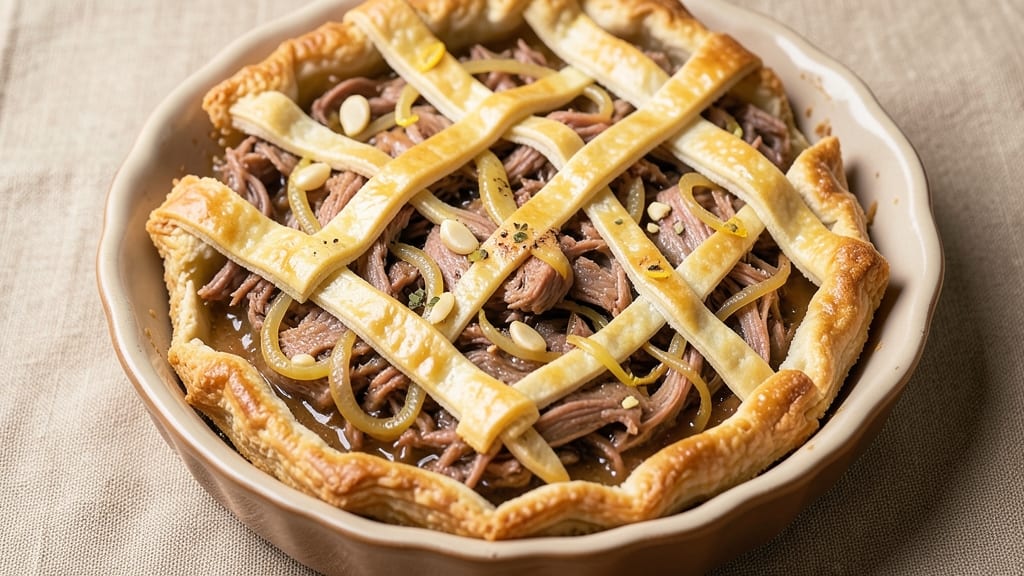
This shredded pork pie recipe brings together the rich traditions of Southern comfort food with the precision of professional baking. The secret to success lies in slow-cooked pork shoulder that practically melts in your mouth, encased in a golden, flaky crust that holds every savory bite.
I've perfected this technique over years of working with heritage pork, ensuring the filling stays moist while the crust achieves that signature crispness.
The process begins with a well-seasoned pork shoulder, braised until tender enough to shred effortlessly. Meanwhile, a simple yet sturdy shortcrust pastry forms the perfect vessel—its buttery layers flaking apart at just the right moment.
The filling is a symphony of flavors: tender pork, rich gravy, and just enough seasoning to enhance without overpowering, all nestled in a crust that's both sturdy enough to hold everything and delicate enough to shatter with every bite.
What you'll end up with is a pie that looks as impressive as it tastes—golden brown edges giving way to tender, flaky layers, all cradling succulent pork that falls apart at the touch of a fork.
The aroma alone will have everyone gathering around your table, and the first bite delivers on that promise of comfort food done right. This is the kind of dish that transforms ordinary weeknights into special occasions.
Perfect for family dinners, holiday gatherings, or impressing guests, this recipe delivers restaurant-quality results without requiring advanced skills. The key is patience—both in the slow cooking of the pork and the careful layering of the pie—and the reward is a dish that tastes like home.
Let's get started on creating something truly memorable.
Ingredients for shredded pork pie
Heritage pork, flaky crust, and rich gravy—this pie delivers Southern comfort with professional precision.
| Ingredient | Amount | Notes |
|---|---|---|
| Pork Shoulder 🐷 | 3 lb | Bone-in for flavor, heritage pork preferred |
| All-Purpose Flour 🌾 | 3 cups | For pie crust, sifted for lightness |
| Unsalted Butter 🧈 | 1 ½ cups | Cold, cubed, for flaky crust |
| Ice Water 💧 | ½ cup | For pie dough elasticity |
| Yellow Onion 🧅 | 1 whole | Diced, for pork seasoning |
| Garlic Cloves 🧄 | 4 cloves | Minced, for pork base |
| Dried Thyme 🌿 | 1 tbsp | Or 1 tbsp fresh, finely chopped |
| Ground Black Pepper 🌶️ | 1 tsp | Freshly cracked for heat |
| Salt 🧂 | 1 ½ tsp | Diamond Crystal preferred |
| Beef Broth 🍲 | 2 cups | Low-sodium for balance |
| Apple Cider Vinegar 🍎 | 1 tbsp | For tenderizing pork |
| Granulated Sugar 🍚 | 1 tbsp | Balances rich flavors |
| Cornstarch 🌽 | 2 tbsp | For gravy thickening |
| Whole Milk 🥛 | ¼ cup | For gravy richness |
The pork shoulder is non-negotiable here. Heritage breeds like Berkshire have more marbling, but any bone-in cut works—just don't skimp. I grab mine from Whole Foods or my local butcher shop when they have it on sale. For the crust, King Arthur flour is my go-to, but any all-purpose will do. The butter needs to stay cold—cut it into cubes and keep it in the freezer until ready to mix. That's how you get those signature flaky layers. And trust me on the vinegar—it's what makes the pork tender enough to shred.
No beef broth? Chicken broth plus 1 tsp soy sauce works in a pinch, but the beef adds depth. Fresh thyme is ideal, but dried works at the same amount—just make sure it's not ancient. The sugar might seem odd, but it balances the richness of the pork. For the gravy, cornstarch is your friend—it thickens without making it gluey. If you're watching calories, use half-and-half instead of milk, but full-fat gives that restaurant-quality mouthfeel. The crust can be made ahead and chilled for up to 2 days—just let it warm to room temp before rolling.
This pie tastes even better the next day—honestly, it's worth baking ahead for holiday gatherings. Store leftovers covered at room temp for up to 4 hours or refrigerate for 3-4 days. For freezing, wrap tightly in foil and freeze the whole pie (unbaked or baked). Thaws overnight in the fridge. The crust stays crispy if reheated at 350°F for 15 minutes. And if someone asks for seconds? You've clearly done it right.
Why You'll Love This Recipe
- No-Fuss Dough: I swear by that ice water trick—it keeps the crust flaky without overworking the butter. Five minutes of mixing, and you’ve got a pie crust that’s actually easier than store-bought.
- Onion Butter Magic: That caramelized onion swirled into the butter? It’s the secret weapon. The pork stays juicy while the crust gets this golden, buttery crunch—like a hug for your taste buds.
- Leftovers for Days: Shredded pork pie reheats like a dream—crispy edges, tender filling, zero dryness. I make one on Sundays, and it’s still the star of lunches by Thursday. (Yes, even with picky eaters.)
- Budget Crowd-Pleaser: Pork shoulder stretches far, and flour/butter are pantry staples. Feed six for under $20, and everyone’s happy—no sad, expensive takeout calls here. (My wallet thanks me weekly.)
Step-by-step instructions for shredded pork pie
Here's how to make a showstopping pork pie with layers of flaky crust and tender, savory filling.
Prepare the Pork Filling
Start by trimming any excess fat from the 3 lb pork shoulder, leaving about ¼ inch of fat cap for flavor. Cut the pork into 2-inch chunks and place them in a large Dutch oven. Add the diced 1 whole yellow onion and minced 4 cloves garlic cloves, stirring to combine.
In a small bowl, mix together the 1 tbsp dried thyme, 1 tsp ground black pepper, and 1.5 tsp salt. Sprinkle this seasoning blend evenly over the pork and onion. Pour in the 1 tbsp apple cider vinegar and 1 tbsp granulated sugar, giving everything a good stir. This helps tenderize the meat and balances the rich flavors.
Place the Dutch oven on the stovetop over medium-high heat and bring the mixture to a simmer. Once bubbling, reduce heat to medium-low, cover, and let it cook for 2 hours. You'll know it's ready when the pork is fork-tender and easily pulls apart.
Make the Flaky Pie Crust
In a large bowl, combine the 3 cups all-purpose flour and 1.5 tsp salt. Cut in the 1.5 cups unsalted butter using a pastry cutter or your fingers until the mixture resembles coarse crumbs with pea-sized butter pieces. This texture is crucial for achieving that signature flaky crust.
Gradually add the 0.5 cup ice water, 1 tablespoon at a time, mixing gently with a fork until the dough just comes together. Be careful not to overwork it—just until it holds when pressed. Shape the dough into a disk, wrap in plastic, and refrigerate for at least 1 hour.
When ready to use, roll out the chilled dough on a lightly floured surface to fit the bottom of your pie dish. Press it gently into the dish, then trim any excess dough hanging over the edges. Set aside while you prepare the filling.
Assemble and Bake the Pie
After the pork has cooked and rested for 10 minutes, shred it using two forks, discarding any large fat pieces. Transfer the shredded pork to a mixing bowl and stir in the 2 cups beef broth to moisten the filling. Taste and adjust seasoning if needed.
Spread the pork mixture evenly into the prepared pie crust. Roll out the remaining dough to form a top crust, then cut a few small slits in the center to allow steam to escape. Brush the top crust with a beaten egg for a golden finish.
Place the pie on a baking sheet to catch any drips and bake at 375°F for 45-50 minutes, until the crust is golden brown and the filling is bubbling. For extra crispiness, broil for 2-3 minutes at the end, watching closely to prevent burning.
Make the Gravy and Serve
While the pie bakes, prepare the gravy by skimming any fat from the Dutch oven juices and placing them in a saucepan. Stir in the 2 tbsp cornstarch and whisk over medium heat until thickened. Gradually add the 0.25 cup whole milk, stirring constantly until smooth and creamy.
Once the pie is out of the oven, let it rest for 10 minutes before slicing. Serve warm with the rich gravy spooned over each slice. The combination of tender pork, flaky crust, and velvety gravy makes every bite irresistible.
Pro Tips For Making Shredded Pork Pie
- Trim the Fat First: Shredded pork pie starts with pork shoulder that’s been trimmed of excess fat—yes, even the stubborn bits near the bone. I used to leave it on, thinking it added flavor, but it just makes the pie greasy and harder to shape. Grab a sharp knife and cut away everything thicker than ¼-inch before you even think about seasoning.
- Pulse the Flour Dry: When mixing the dough, pulse the all-purpose flour in your food processor just until combined—not until it looks like breadcrumbs. Overworking it develops gluten, and your pie crust will turn out tough instead of flaky. Stop when the butter pieces are still visible; the ice water will bind it together without overdoing it.
- Don’t Rush the Chill: The dough needs a solid 30 minutes in the fridge before rolling—no exceptions. I learned this after my first attempt resulted in a pie crust that spread like liquid when it hit the oven. Cold butter = layers. Cold dough = control. Skip this, and you’ll regret it when your crust turns out more like a pancake than a pie.
- Sear the Onion Low: Cook the yellow onion in butter until it’s soft and translucent, not browned. A deep caramelized onion adds sweetness, but in this recipe, you want it to melt into the filling without stealing the spotlight. If it starts to stick, lower the heat—burnt onions make the whole pie taste bitter.
Creative variations of these flavors
Southern BBQ Twist
Swap the beef broth for 2 cups smoked beef broth (I love Stumptown Smokehouse) and add 1 tbsp smoked paprika to the pork seasoning. This gives your pie that signature Carolina BBQ vibe while keeping the tender texture.
Serve with pickled jalapeños and coleslaw for a full BBQ experience. 🔥
Herb-Infused Crust
For a sophisticated touch, mix 1 tbsp finely chopped fresh rosemary and 1 tbsp fresh sage into the pie dough before rolling it out. The herbs infuse the crust with aromatic depth, balancing the richness of the pork.
I find Penzeys Spices has the best dried herb blends if fresh isn't available.
Sweet Potato Topping
Turn this into a dessert-inspired pie by adding a sweet potato mash layer between the crust and filling. Roast 2 cups peeled sweet potato cubes with 2 tbsp brown sugar, 1 tsp cinnamon, and ½ cup butter until tender.
Spread this mixture on the bottom crust before adding the pork filling for a sweet-savory surprise. 🌟
Cheesy Potato Crust
Replace the shortcrust with a cheesy potato crust for a heartier version. Mix 2 cups mashed potatoes with 1 cup shredded cheddar, 1 egg, and ½ cup flour, then press into your pie dish.
Bake for 15 minutes at 375°F before adding the pork filling. This adds a creamy, cheesy contrast to the tender meat.
Spicy Chorizo Boost
Add ½ lb Spanish chorizo, sliced, to the pork during the braising process. The chorizo's smoky, spicy flavor permeates the meat, creating a bold, complex filling. I recommend La Querencia chorizo for its perfect balance of heat and fat. Serve with sour cream for cooling contrast.
Apple-Cheddar Fusion
For a fall-inspired twist, fold 1 cup diced sharp cheddar and ½ cup chopped tart apples into the shredded pork filling. The apples add a bright acidity that cuts through the richness, while the cheese melts into a creamy, flavorful layer.
Top with extra cheddar before baking for a golden, bubbly finish. 🍏
Nutrition facts
Frequently asked questions
Can I use ground pork instead of pork shoulder for this recipe?
No, pork shoulder is essential for this recipe. The bone-in cut with its connective tissue is what gives you that melt-in-your-mouth texture when slow-cooked. Ground pork would dry out during the braising process and wouldn't have the same rich flavor. For a similar texture, consider using pork butt instead—it's essentially the same cut as pork shoulder.
How do I prevent the pie crust from getting soggy?
Preventing a soggy crust comes down to two key steps: pre-baking the bottom crust and using a cornstarch slurry on the filling. Bake the bottom crust for 10 minutes at 375°F before adding the filling. Then, mix 1 tbsp cornstarch with 1 tbsp cold water and brush it lightly over the crust before adding the pork mixture. This creates a barrier that keeps the crust crispy.
Can I make this pie ahead of time?
This pie actually tastes even better the next day. You can assemble it completely (unbaked) and refrigerate for up to 24 hours before baking. For baked pies, let it cool completely, then wrap tightly in plastic wrap and store in the refrigerator for 3-4 days. For freezing, wrap the whole pie (baked or unbaked) in foil and freeze for up to 3 months. Thaw overnight in the fridge.
What's the best way to reheat leftover pork pie?
For the best results, reheat slices in a 350°F oven for 10-15 minutes covered with foil to prevent drying. If you're short on time, use the microwave on 50% power for 1-2 minutes, then finish under the broiler for 1-2 minutes to crisp up the crust. Avoid reheating in the air fryer—it tends to make the crust rubbery rather than crispy.
Can I substitute the shortcrust pastry with puff pastry?
Yes, you can use puff pastry for a lighter, more delicate crust. The key difference is that you'll want to bake it for 5-7 minutes longer at 375°F to fully cook the layers. Since puff pastry is more delicate, consider using a 9-inch pie dish instead of a deep dish to prevent sagging. Brush the top with egg wash and sprinkle with coarse sugar for extra crispiness.