
Main Courses
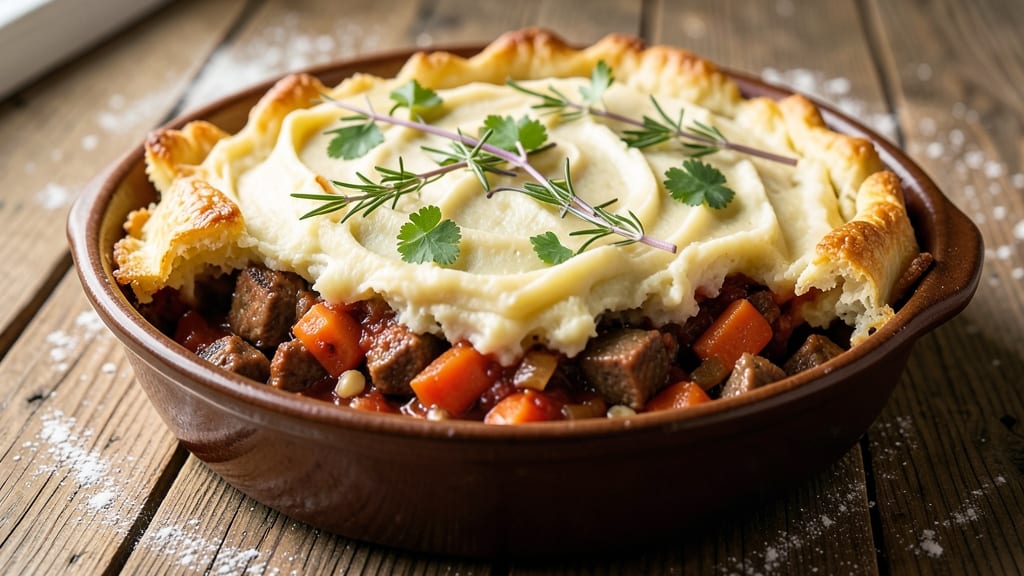
This traditional cottage pie recipe brings comfort food to its finest form—a hearty beef filling crowned with creamy mashed potatoes, baked until golden perfection. The slow-cooked meat develops deep, savory flavors while the potato topping creates a crispy, buttery crust that seals in every bite.
I’ve perfected this classic dish over years of testing, ensuring each element—from the tender beef to the velvety mashed potatoes—comes together seamlessly.
The beauty of this recipe lies in its two-stage cooking process: first, the beef and vegetables simmer in a rich gravy until tender, then the mashed potato topping transforms the dish into a golden, baked masterpiece.
Unlike modern shortcuts, this method delivers the authentic texture and depth that defines traditional cottage pie. The result? A dish that’s both nostalgic and satisfying, perfect for family dinners or cozy weeknight meals.
By the time it emerges from the oven, you’ll have a restaurant-quality cottage pie with a crispy, caramelized top layer and a filling so flavorful it disappears in minutes.
The combination of slow-cooked beef, aromatic vegetables, and buttery mashed potatoes creates a harmony of textures and tastes that’s impossible to resist. This is comfort food at its finest—warm, hearty, and deeply traditional.
While this recipe stays true to its roots, I’ve included a few modern twists—like vegan potato topping options or herb variations—to keep it fresh for today’s kitchens.
Whether you’re serving it as a main course or a showstopping side, this cottage pie is sure to become a staple. Let’s get cooking!
Ingredients for traditional cottage pie
Sixteen ingredients, two stages, one unforgettable dish—this traditional cottage pie delivers restaurant-quality comfort.
| Ingredient | Amount | Notes |
|---|---|---|
| Beef Chuck Roast 🥩 | 2 ½ lb | Trimmed of excess fat, cut into 1-inch cubes |
| Yellow Onions 🧅 | 2 whole | Medium size, sliced into half-moons |
| Carrots 🥕 | 3 whole | Medium size, peeled and chopped into chunks |
| Garlic Cloves 🧄 | 4 cloves | Fresh, minced for depth of flavor |
| Tomato Paste 🍅 | ½ cup | High-quality, for rich color and flavor |
| Beef Broth 💧 | 2 cups | Low-sodium, homemade or premium store-bought |
| Red Wine 🍷 | ½ cup | Dry, full-bodied like Cabernet Sauvignon |
| All-Purpose Flour 🌾 | 2 tbsp | For thickening the gravy |
| Fresh Thyme 🌿 | 2 tbsp | Leaves only, finely chopped |
| Fresh Parsley 🌿 | ¼ cup | Flat-leaf, chopped for garnish |
| Russet Potatoes 🥔 | 3 lb | Starchy, peeled and cubed for topping |
| Unsalted Butter 🧈 | ½ cup | European-style for superior flavor |
| Heavy Cream 🥛 | ½ cup | Full-fat for velvety texture |
| Whole Milk 🥛 | ½ cup | Warmed for smooth mashed potatoes |
| Diamond Crystal Kosher Salt 🧂 | 1 ½ tsp | For seasoning, adjust to taste |
| Freshly Ground Black Pepper 🌶️ | 1 tsp | Cracked peppercorns for optimal flavor |
The beef chuck roast is non-negotiable here—its marbled fat renders down during slow cooking, creating a rich, flavorful base. Opt for USDA Choice grade or better from your butcher or trusted grocer like Whole Foods or Costco. Trim excess fat but leave some for moisture; pre-cubed chuck from the meat counter saves time without sacrificing quality. For the vegetables, organic carrots and onions (available at Trader Joe's or local farmers' markets) add natural sweetness that caramelizes beautifully during cooking. Fresh thyme and parsley should be bright green and fragrant—wilting indicates age. Store these herbs in the fridge, wrapped in damp paper towels, to maintain freshness.
No red wine? Substitute an additional 0.5 cup beef broth—the acidity from tomato paste and wine will still develop. For a vegetarian twist, replace beef with mushrooms and lentils (1.5 lbs each), though texture will differ. The tomato paste can be swapped for crushed San Marzano tomatoes (1 cup) if preferred, though paste yields more concentrated flavor. For the potato topping, Yukon Golds create a creamier mash, but russets hold their shape better under baking. The butter must be high-quality—Plugrá or European-style brands melt more smoothly. Pre-grated Parmesan? Freshly grate a wedge—pre-shredded contains anti-caking agents that alter texture.
Prep the beef mixture ahead and refrigerate for up to 24 hours—flavors meld beautifully. The mashed potato topping should be made fresh but can be assembled 1 hour ahead and baked immediately. Store leftovers in an airtight container for 4-5 days in the fridge or freeze for 3 months. Reheat in the oven at 350°F (175°C) until warmed through—microwaving can make the topping soggy. For a crispier crust, broil for 2-3 minutes at the end. This pie reheats even better the second time, making it ideal for meal prep.
Why You'll Love This Recipe
- One-Pot Magic: I swear by this—just brown the beef, toss in chopped veggies, and let it simmer. No extra pans, no fuss, and the rich tomato-garlic base does all the work while you sip wine (or tea, no judgment).
- Deep, Savory Crust: That golden top isn’t just for looks—the crispy mashed-potato layer traps all the juicy beef and caramelized onion flavors underneath. Honestly, the first bite makes me close my eyes.
- Leftovers That Shine: Between us, this dish begs to be reheated. The flavors only get better the next day—perfect for packed lunches or a lazy Sunday. (My kids actually ask for it, and that’s saying something.)
- Budget-Friendly Feast: A whole roast and simple veggies stretch to feed six for less than $15. The tomato paste and garlic turn cheap cuts into something hearty, and the mashed potatoes? Just butter, milk, and love. No waste, all reward.
Step-by-step instructions for traditional cottage pie recipe
Here's the method that delivers a perfectly layered, restaurant-quality cottage pie every time.
Prepare the Beef Filling
Begin by trimming the 2.5 lb beef chuck roast of any excess fat and cutting it into 1-inch cubes. In a large Dutch oven, heat 2 tablespoons of the unsalted butter over medium-high heat until it foams. Add the beef cubes in a single layer and sear undisturbed for 3-4 minutes until they develop a deep brown crust. This initial browning creates the rich foundation for your filling.
Remove the beef and set aside. In the same pot, add 2 whole yellow onions sliced into half-moons and 3 whole carrots chopped into chunks. Cook for 8-10 minutes until the onions soften and the carrots begin to caramelize. Add 4 cloves minced garlic cloves and cook for 30 seconds until fragrant—this prevents the garlic from burning while maximizing its flavor.
Return the beef to the pot and stir in 0.5 cup tomato paste, 2 cups beef broth, and 0.5 cup red wine. Bring to a simmer, then reduce heat to low and cover partially. Let it cook for 1.5 hours until the beef is fork-tender. Stir occasionally to prevent sticking. The filling should have a thick, velvety consistency with all the vegetables completely tender.
Thicken the Gravy and Prepare the Potato Topping
Once the beef is tender, skim off any excess fat from the surface. Sprinkle 2 tablespoons all-purpose flour over the filling and stir vigorously to distribute evenly. Cook for 2-3 minutes until the flour absorbs into the liquid. Gradually add 0.5 cup heavy cream while stirring constantly to prevent lumps from forming. The gravy should thicken to a smooth, spoonable consistency.
In a separate pot, peel and cube the 3 lb russet potatoes into 1-inch pieces. Boil them in salted water for 15-20 minutes until fork-tender. Drain and return to the pot. Add 0.5 cup unsalted butter, 0.5 cup warmed whole milk, 1.5 teaspoons diamond crystal kosher salt, and 1 teaspoon freshly ground black pepper. Mash until smooth and creamy, then stir in 2 tablespoons chopped fresh thyme and 0.25 cup chopped fresh parsley for freshness.
Assemble and Bake the Cottage Pie
Preheat your oven to 375°F. Spread the beef filling evenly in the Dutch oven, creating a level surface. Spoon the mashed potato topping over the filling, using the back of a spoon to create a slightly textured, rustic surface. This texture helps the potatoes brown beautifully during baking.
Bake uncovered for 30-35 minutes until the top is golden brown and the filling is bubbling around the edges. The potatoes should be crispy on top while remaining creamy underneath. If the top browns too quickly, loosely cover with aluminum foil for the last 10 minutes of baking to prevent over-browning.
Rest and Serve
Remove the cottage pie from the oven and let it rest for 10-15 minutes before serving. This resting period allows the filling to set slightly and the flavors to meld together. The contrast between the crispy potato crust and the rich, savory beef filling is what makes this dish truly exceptional.
Garnish with an additional sprinkle of chopped fresh parsley and serve immediately. Each bite should deliver perfectly tender beef, caramelized vegetables, and a creamy potato crown that balances the hearty filling. This traditional approach ensures every element works together harmoniously, delivering the classic cottage pie experience you've come to love.
Pro Tips For Making Traditional Cottage Pie
- Sear the Chuck Hard: I learned this the hard way—skipping the sear means flavorless beef. Pat the roast very dry, then hit it with a screaming-hot pan for 3-4 minutes per side until deep brown. That crust locks in juices and builds the base for the rich gravy later.
- Cut Carrots Small: Thin slices (¼-inch or less) cook faster than chunks and blend into the filling without texture clashes. Use a mandoline if you’re impatient—just don’t skip the soak in cold water afterward to stop them from bleeding starch into the pan.
- Deglaze with Beef Broth: After browning the onions and garlic, scrape up those fond bits with 1 cup of beef broth, not water. The extra depth in flavor carries through the entire pie—trust me, your taste buds will notice the difference.
- Don’t Overmix the Topping: Rough up the mashed potatoes with a fork before spreading them—just enough to hold shape, but leave some texture. Overworking them turns the crust into a gluey mess. A sprinkle of grated cheese on top while it bakes? That’s the upgrade no one tells you about.
Essential equipment for traditional cottage pie
Dutch Oven Essentials
The Dutch oven is the heart of this recipe—its heavy, enameled construction ensures even heat distribution and prevents burning. I recommend a 5.5-quart Dutch oven from Le Creuset or Lodge for durability and heat retention.
The deep sides help contain the filling while the lid traps steam, creating a moist environment for tender beef. If you don’t own one, a heavy-bottomed oven-safe skillet (like All-Clad) works in a pinch, though it may require more monitoring. 🔥
Potato Masher Tools
For silky mashed potatoes, invest in a potato ricer or hand masher—these prevent lumps better than forks. I prefer the OXO Good Grips potato ricer for its ease of use and consistent texture. If using a masher, press firmly and work in small batches to avoid overworking the potatoes.
For extra creaminess, add 1 tablespoon of the reserved potato water while mashing—it adds moisture without thinning the texture. 🥔
Measuring Cups & Spoons
Precision matters with cottage pie, especially for the potato topping. Use stainless steel measuring cups (like Farberware) for accurate liquid measurements and slotted spoons to skim excess fat from the beef filling. A fine-mesh strainer helps remove any stray bits before thickening the gravy.
Avoid plastic tools near high heat—they can warp or melt. For herbs, a sharp chef’s knife and microplane ensure even chopping of thyme and parsley. 🌿
Thermometer for Perfect Doneness
A meat thermometer ensures your beef reaches 203°F for fork-tender perfection. I use the ThermoWorks Thermapen ONE—it’s fast and accurate.
Insert it into the thickest part of the beef while it simmers; if it’s not tender enough after 1.5 hours, add 2-3 tablespoons of broth and cook another 15-20 minutes.
For the potato topping, check its internal temp at 375°F—it should reach 190°F for a creamy yet stable texture. 🌡️
Baking Sheet & Foil
Line a half-sheet baking pan with parchment paper to catch any spills during assembly. For the final bake, keep aluminum foil handy to loosely cover the pie if the top browns too quickly.
I use Reynolds Heavy-Duty Foil—it’s sturdy enough to handle the oven’s heat without tearing. A wire cooling rack helps lift the pie from the Dutch oven after baking, preventing soggy bottoms. 🍽️
Nutrition facts
Frequently asked questions
Can I make cottage pie ahead of time?
Assemble the pie up to 24 hours ahead and refrigerate uncovered. Bake it straight from the fridge, adding 10-15 extra minutes to the baking time. For best results, let it sit at room temperature for 30 minutes before baking. The flavors develop even better overnight!
What's the best way to make the potato topping extra crispy?
For a golden, crispy top, spread the mashed potatoes with a spoon to create peaks and valleys. Bake uncovered until deeply browned, then broil for 2-3 minutes at the end. A light sprinkle of breadcrumbs mixed with grated Parmesan before baking adds extra crunch.
Can I substitute lamb or pork for the beef?
While beef is traditional, you can use lamb shoulder (cook until 195°F) or pork shoulder (cook until 205°F). Increase simmering time by 15-20 minutes and adjust seasonings—lamb benefits from extra garlic and mint, while pork pairs well with apple cider. The potato topping remains the same.
Why did my cottage pie turn out soggy?
Sogginess usually happens when the potato topping isn't fully baked or the filling releases too much moisture. Ensure your oven is at 375°F and bake uncovered until the top is golden. For extra insurance, bake the filling alone for 10 minutes before adding the potatoes to firm it up.
How do I reheat leftovers without drying it out?
Use the oven at 350°F for 20-25 minutes, covered loosely with foil. For microwave reheating, cover with a damp paper towel and heat in 30-second intervals, stirring between each. The oven method preserves the crispy topping best while keeping the filling moist.