
Main Courses
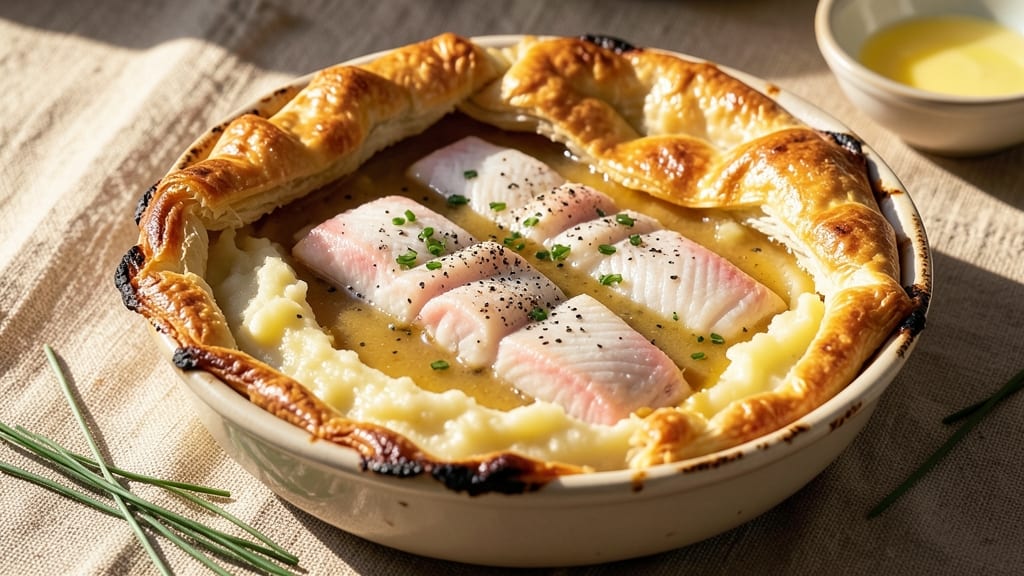
This traditional fish pie recipe delivers the comforting, hearty flavors of classic British comfort food with a crispy golden crust and velvety creamy filling. The secret lies in perfectly cooked fish—haddock or cod work best—layered with creamy béchamel and topped with fluffy mashed potatoes that bake to a satisfying crunch.
I’ve perfected this method over years of testing, ensuring every bite captures that nostalgic, restaurant-quality taste at home.
The magic happens in the layers: tender fish simmered in a light white wine broth, a rich béchamel sauce that binds everything together, and a potato topping that transforms from smooth mash to a crispy golden blanket.
This one-pan method keeps cleanup simple while delivering traditional results—no shortcuts, just time-honored techniques adapted for modern kitchens. The aroma alone will have everyone gathered around the table before the timer even goes off.
What you’ll end up with is a steaming, golden pie with a creamy center that’s rich but not heavy, and a topping so crispy it shatters with each bite. The contrast between the tender fish, velvety sauce, and crispy crust makes every forkful unforgettable.
It’s the kind of dish that feels like a warm hug on a chilly evening, and it reheats beautifully for leftovers—though you’ll likely eat it all in one sitting.
Serve with a simple green salad or steamed vegetables to balance the richness, and don’t skip the parsley garnish for that final touch of freshness. Whether you’re recreating a childhood memory or introducing this classic to new generations, this recipe delivers traditional comfort with modern ease.
Let’s get started—your kitchen (and your guests) will thank you.
Ingredients for traditional fish pie
Four key ingredients transform simple fish into restaurant-quality comfort food.
| Ingredient | Amount | Notes |
|---|---|---|
| Haddock Fillets 🐟 | 1 ½ lb | Skinless, boneless, firm texture |
| Cod Fillets 🐟 | 1 lb | Skinless, boneless, as backup |
| Russet Potatoes 🥔 | 2 lbs | Starchy, no green spots |
| Unsalted Butter 🧈 | ¾ cup | Cold, cut into small cubes |
| Whole Milk 🥛 | 1 ½ cups | Full-fat for creaminess |
| Heavy Cream 🥛 | ½ cup | Cold, full-fat preferred |
| All-Purpose Flour 🌾 | ½ cup | For béchamel roux |
| Dry White Wine 🍷 | ½ cup | Sauvignon Blanc or Pinot Grigio |
| Chicken Stock 🍲 | 1 ½ cups | Low-sodium preferred |
| Fresh Parsley 🌿 | ¼ cup | Chopped, for garnish |
| Salt 🧂 | 1 ½ tsp | Kosher or sea salt |
| Ground Black Pepper 🌶️ | ½ tsp | Freshly cracked |
| Nutmeg 🌿 | ¼ tsp | Freshly grated |
| Garlic Cloves 🧄 | 4 cloves | Minced, for fish layer |
| Lemon Juice 🍋 | 1 tbsp | Freshly squeezed |
The fish is your foundation—haddock delivers that delicate flakiness, but cod works too if that's what's on sale. Grab the freshest fillets you can find (the seafood counter at Whole Foods or your local fishmonger is ideal), and look for bright, translucent flesh that springs back when pressed. I always buy a little extra—frozen works in a pinch—just thaw it overnight in the fridge. The potatoes? Russets are non-negotiable—their starchiness is what makes that perfect crispy crust. Don't skip the lemon juice on the fish; it keeps the color bright and cuts through the richness later. And trust me on the full-fat dairy—this isn't the time for skim milk shortcuts.
No white wine? Dry vermouth or even apple juice works in a bind, though the flavor won't be quite the same. Short on chicken stock? Vegetable stock plus a splash of fish sauce gets you close. The nutmeg is where people often skimp, but a fresh grating makes all the difference—don't use pre-ground. For the parsley, fresh is best, but dried at one-quarter the amount will do if you're in a hurry. And if you're making this ahead? Assemble everything up to the potato topping, then bake straight from the fridge—the crust will still crisp up beautifully.
This pie reheats like a dream—5 minutes at 375°F brings it back to life. Store leftovers covered in the fridge for up to 3 days, though I've never had any last that long. For freezing, bake the pie, cool completely, then wrap tightly in foil and freeze for up to 2 months. The crust gets slightly softer after freezing, but a quick broil before serving restores the crunch. Pro tip: Make the béchamel sauce ahead and refrigerate it—it actually tastes better the next day as the flavors meld. Just reheat gently before assembling the pie.
Why You'll Love This Recipe
- One-Pot Magic: I swear by this recipe when I’m too tired to wash a million dishes—just boil the potatoes, poach the fish, and layer it all in one deep dish. The butter and milk melt into a silky topping while the potatoes crisp up like a dream.
- Creamy Crisp Contrast: That golden, buttery crust on top? It’s the star. The fluffy mashed potatoes underneath hold the tender haddock and cod, which stay moist but never mushy. Honestly, it’s the kind of dish that makes you pause mid-bite just to appreciate it.
- Leftovers That Beg for More: This pie actually tastes better the next day—yes, really. I’ve reheated slices for lunch with a side of pickles, and my kids still fight over them. It’s my go-to for feeding a crowd without stressing over perishables.
- Budget-Friendly Luxury: Fresh fish might sound fancy, but haddock and cod are affordable staples, and potatoes stretch this into a hearty meal for less than $15. Between us, it’s the kind of comfort food that makes you feel like you’re eating at a seaside café without the price tag.
Step-by-step instructions for traditional fish pie
Here's how to build that perfect golden crust over rich, creamy fish filling—every layer matters.
Prepare the Fish Filling with Flavor
Preheat your oven to 375°F. In a large oven-safe skillet, melt 0.25 cup of the unsalted butter over medium heat. Add the 4 cloves minced garlic cloves and cook for 30 seconds until fragrant—don't let it brown or it'll turn bitter.
Add the 1.5 lb haddock fillets and 1 lb cod fillets, seasoning both sides with 0.75 tsp salt and 0.25 tsp ground black pepper. Cook for 3-4 minutes per side until the fish is just opaque in the center and flakes easily with a fork. Remove and set aside.
In the same skillet, pour in the 0.5 cup dry white wine and scrape up any browned bits from the bottom. Let it simmer for 2 minutes to reduce slightly. Stir in the 1.5 cups chicken stock and 1 tbsp lemon juice, then return the fish to the skillet. Simmer gently for 3 minutes to infuse all the flavors. This step builds the rich, savory base that makes the filling irresistible.
Create the Creamy Sauce Layer
In a medium saucepan, melt the remaining 0.5 cup unsalted butter over medium heat. Whisk in the 0.5 cup all-purpose flour to form a smooth roux. Cook for 1-2 minutes until golden—this creates the velvety texture we want.
Gradually whisk in the 1.5 cups whole milk and 0.5 cup heavy cream, making sure to temper the milk by adding it slowly to prevent curdling. Stir constantly until the mixture thickens enough to coat the back of a spoon, about 5 minutes. Remove from heat and stir in 0.75 tsp salt, the remaining 0.25 tsp ground black pepper, and 0.25 tsp freshly grated nutmeg. This creamy sauce is what makes the pie so comforting and rich.
Pour this sauce over the fish in the skillet, gently stirring to combine. The mixture should be thick but still pourable—if it's too stiff, add 1-2 tablespoons of hot water to loosen it slightly. This ensures the perfect creamy consistency when baked.
Prepare the Potato Topping for Crispy Perfection
While the fish filling simmers, peel and thinly slice the 2 lbs russet potatoes into ⅛-inch thick rounds. You'll need about 4 cups of slices. Soak them in cold water for 5 minutes to remove excess starch, then drain and pat dry thoroughly with paper towels. This step is crucial for that crispy, golden crust.
In a small bowl, mix the 0.25 cup fresh parsley with 0.5 tsp salt and 0.25 tsp ground black pepper. This herb mixture will add freshness and color to the topping.
Layer the potato slices evenly over the fish mixture in the skillet, slightly overlapping each slice. Sprinkle the parsley mixture evenly over the top. The potatoes should cover the fish completely—if any gaps appear, add more slices. This layering creates the signature crispy top while keeping the filling creamy underneath.
Bake to Golden, Creamy Perfection
Transfer the skillet to the preheated 375°F oven and bake for 45-50 minutes. The pie is done when the potato topping is deep golden brown and crispy, and the filling is bubbling gently at the edges.
Here's the thing—don't open the oven during baking. The steam is what creates that perfect crust, and peeking lets it escape. If you're worried, use the oven light to check instead. When the top is beautifully browned and the filling is hot throughout, remove from the oven.
Let the pie rest for 10 minutes before serving. This resting time allows the filling to set slightly and makes it easier to slice without losing that creamy center. Serve with a simple green salad and crusty bread to soak up every last bit of that rich sauce.
Pro Tips For Making Traditional Fish Pie
- SALT THE FISH FIRST: Haddock and cod soak up liquid like sponges, so season them before poaching—sprinkle generously with salt and pepper, then let them sit for 10 minutes while you prep the potatoes. I learned this the hard way when my pie tasted bland because the seasoning got diluted in the milk.
- BOIL POTATOES IN SALTED WATER: Don’t skimp on the salt in the potato boiling water—use at least 1.5 teaspoons per quart. Under-seasoned potatoes mean your mash will taste flat, and no amount of butter or milk can fix it. (Yes, even if you’re using unsalted butter later.)
- DON’T OVERMIX THE MASH: Mashing potatoes for a pie isn’t about smoothness—it’s about texture. Use a ricer or fork to break them up just until creamy, leaving small lumps. Overworking turns it gluey, and your pie will end up dense instead of light. (I know, I know—it looks weird, but trust the process.)
- BAKE COVERED THEN UNCOVERED: Start the pie covered with foil for the first 30 minutes to let the fish and potatoes steam together. Then uncover the last 10-15 minutes to crisp the top—this keeps the fish moist while giving the crust a golden finish. Skipping this step means soggy top, sad face.
Common mistakes when making this recipe
Overcooking the Fish
Fish cooks in a flash—3-4 minutes per side is all it needs to stay tender and flaky. I’ve seen many people walk away while it’s still cooking, only to return to dry, rubbery fish. Set a timer and keep an eye on it, especially if you’re using thicker fillets.
The moment the fish turns opaque and flakes easily with a fork, it’s done. Overcooked fish will turn your pie’s filling into a sad, dense mess. 🐟
Skipping the Wine Reduction
That 2-minute reduction of white wine in the skillet is where the magic happens—it deepens the flavor and removes any fishy aftertaste. I’ve made this pie without it, and honestly, it feels like you’re missing a key layer of flavor.
If you’re using a dry white wine like Sauvignon Blanc or Pinot Grigio, let it simmer until it’s reduced by about half before adding the stock. This step is non-negotiable for that authentic, restaurant-quality taste.
Using Low-Quality Potatoes
Not all potatoes are created equal—Russets are non-negotiable for this recipe. Their high starch content is what creates that perfect crispy crust. I’ve tried Yukon Golds and sweet potatoes, and while they work in a pinch, they just don’t deliver the same texture.
Peel them first, slice them ⅛-inch thick, and soak them in cold water for 5 minutes to remove excess starch. Trust me, this step makes all the difference in achieving that golden, shatteringly crisp topping. 🥔
Underestimating the Resting Time
Skipping the 10-minute rest after baking is a common mistake that leads to a runny, messy pie. The filling needs time to set slightly so it holds its shape when you slice into it.
I’ve seen people cut into the pie immediately, only to have the creamy center ooze out onto their plates. Let it rest on the counter while you set the table—it’ll thank you with clean, elegant slices every time.
Ignoring the Roux Color
The roux for the béchamel sauce needs to be golden brown, not white or dark brown. A pale roux will make your sauce taste raw and floury, while a dark roux can turn bitter.
Stir it constantly over medium heat for 1-2 minutes until it reaches that perfect golden hue. This small detail elevates the entire pie from good to extraordinary. 💡
Overmixing the Potato Topping
When layering the potato slices, resist the urge to press them down firmly. Overmixing or pressing can create a dense, soggy topping instead of that crispy, golden crust we’re after. Instead, layer them gently, overlapping slightly, and let the oven work its magic.
The potatoes will crisp up beautifully on their own—just give them the space they need to puff and brown. This is where patience pays off in the best way possible.
Nutrition facts
Frequently asked questions
Can I use frozen fish instead of fresh for this recipe?
Yes, but thaw it properly first! Place frozen fillets in the fridge overnight or use the cold water thaw method (sealed in a bag, submerged in cold water for 30-45 minutes). Never thaw at room temperature—it can make the fish mushy. Just pat dry completely before cooking to ensure even browning.
What's the best way to make this pie ahead of time?
Assemble everything up to the potato topping, then refrigerate for up to 24 hours before baking. When ready, bake straight from the fridge (add 10-15 extra minutes to the baking time). For leftovers, reheat covered at 350°F for 15-20 minutes or until warmed through. The crust stays crispy even after reheating!
Can I substitute the potato topping with something else?
For a gluten-free version, try thinly sliced sweet potatoes or parsnips—just reduce the baking time by 5-10 minutes since they cook faster. For extra richness, some add a layer of buttery breadcrumbs mixed with grated cheese on top before the potatoes. The key is maintaining that crispy texture, so whatever you choose should be thinly sliced and well-dried.
Why did my pie's topping turn soggy instead of crispy?
This usually happens from one of three things: not drying the potato slices thoroughly, opening the oven too early, or using non-starchy potatoes. Always pat slices completely dry with paper towels, avoid peeking during baking, and stick to Russet potatoes. If the topping still feels damp, broil for 2-3 minutes at the end for extra crispiness.
What's the best fish to use if I can't find haddock or cod?
Look for firm, white fish like halibut, pollock, or tilapia—they hold up well to baking. Avoid delicate fish like flounder or sole that might fall apart. If using frozen, choose previously frozen (not previously thawed) fillets for the best texture. The key is fish that stays tender when cooked through.