
Desserts
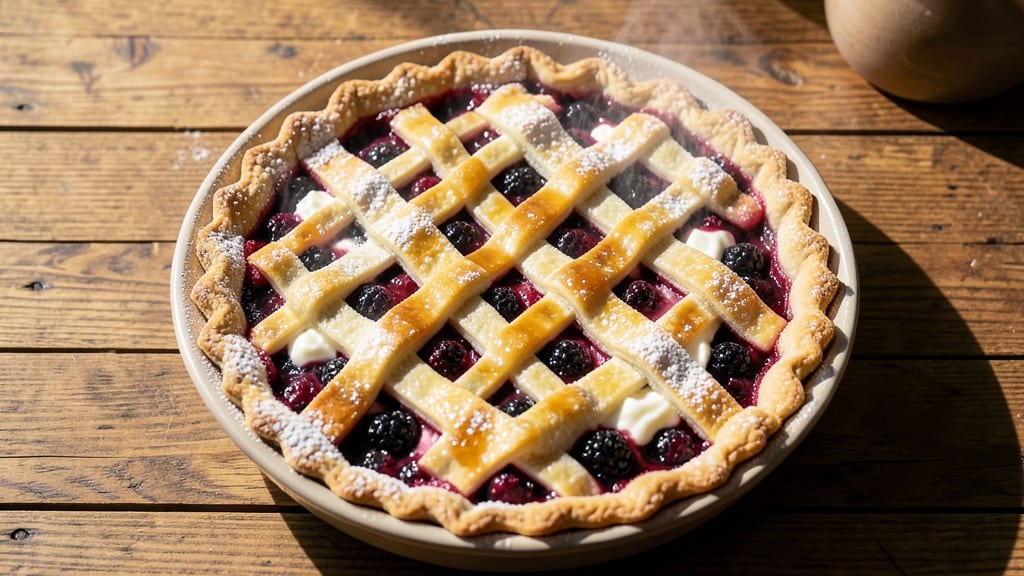
This 9 double crust pie recipe delivers the perfect balance of flaky, golden layers and tender filling—every slice reveals that satisfying crust-on-bottom, crust-on-top symmetry.
The secret lies in a foolproof pie dough that stays crisp yet tender, even after baking, paired with a filling that thickens just enough to create that signature pull-apart texture. I've perfected this technique over years of baking, ensuring the crust doesn't shrink or puff unevenly, no matter the filling.
The beauty of this recipe is its versatility—whether you're making a classic apple pie, rich chocolate cream, or tangy lemon meringue, the same two-crust method guarantees professional results. We'll start with a cold dough technique to prevent shrinking, then blind-bake the bottom crust for a sturdy base.
The top crust gets a decorative cut or lattice pattern for both aesthetics and ventilation, ensuring the filling cooks evenly without soggy edges.
By the time it emerges from the oven, your pie will have a caramelized, golden-brown crust that's crisp on the outside but still tender enough to melt in your mouth. The filling will be perfectly set, with just a slight jiggle in the center—neither undercooked nor rubbery.
This is the kind of pie that makes guests ask for the recipe, and the kind that becomes a holiday tradition.
Ready to master the art of double-crust pies? We'll cover everything from dough preparation to baking techniques, including tips for handling tricky fillings and achieving that restaurant-quality finish. Let's get started.
Ingredients for 9 double crust pie
Nine perfect slices of golden crust-on-bottom, crust-on-top symmetry await with these precise ingredients.
| Ingredient | Amount | Notes |
|---|---|---|
| All-Purpose Flour 🌾 | 6 cups | Sifted for light texture |
| Cold Unsalted Butter 🧈 | 2 cups | Cut into 1/2-inch cubes |
| Ice Water 💧 | ¾ cup | Chilled for dough formation |
| Diamond Crystal Kosher Salt 🧂 | 1 ½ tsp | Adjust to taste |
| Granulated Sugar 🍚 | 2 cups | For filling versatility |
| Cornstarch 🌽 | 2 tbsp | For thickening fillings |
| Fresh Lemon Juice 🍋 | ¼ cup | For tangy fillings |
| Vanilla Extract 🌸 | 1 tbsp | Pure, high-quality |
| Large Eggs 🥚 | 1 whole | For egg wash |
| Granulated White Sugar 🍚 | ¼ cup | For egg wash |
| Heavy Cream 🥛 | ½ cup | For lattice crust |
| Pie Weights or Dried Beans 🥫 | 2 cups | For blind baking |
| Coarse Sugar 🍚 | ¼ cup | For sprinkling |
The foundation starts with all-purpose flour—King Arthur or Gold Medal brands yield the best results for pie crusts due to their high protein content. Cold unsalted butter is non-negotiable; Plugrah or Land O'Lakes work well, but avoid margarine or pre-softened butter. The ice water must be chilled to prevent gluten development, and Diamond Crystal kosher salt (not table salt) ensures proper seasoning without over-salting. For the filling, granulated sugar and cornstarch form the base, while fresh lemon juice and vanilla extract add depth. Pure vanilla extract (not imitation) elevates the flavor—McCormick or Nielsen-Massey are reliable choices. The eggs should be large and cold for the wash, and heavy cream adds richness to lattice patterns.
No King Arthur flour? Bob's Red Mill works equally well, though you may need to adjust water slightly. Butter substitutes like coconut oil (melted and chilled) can replace butter, but texture will differ. Cornstarch can be swapped for arrowroot powder at the same ratio. Lemon juice can be substituted with white vinegar if needed, though flavor will vary. Vanilla extract can be omitted for savory pies, and egg wash can be made with milk and a pinch of salt if eggs aren't available. For lattice crusts, heavy cream can be replaced with milk or water, though it won't be as glossy. Pie weights can be skipped if using dried beans, but ensure they’re clean and dry.
Store dough scraps wrapped in plastic for up to 3 days or freeze for 3 months. Filling ingredients like sugar and cornstarch keep indefinitely in a cool, dry place, while lemon juice and vanilla extract should be refrigerated after opening. Egg wash can be made a day ahead and stored in the fridge. Coarse sugar for sprinkling should be kept in an airtight container to prevent clumping. Blind-baked crusts can be frozen for up to 2 months—thaw at room temperature before filling.
Why You'll Love This Recipe
- Foolproof Crust Magic: Honestly, the butter cut into flour with ice water? That’s the secret—no overworking, no stress. Just press, fold, chill. Even my first attempt didn’t crack.
- Sweet Crisp Perfection: That sugar in the crust? It caramelizes into a golden, buttery edge while keeping the inside tender. One bite and you’ll forget store-bought ever existed.
- Weeknight Hero: Between us, this is my go-to for potlucks, picnics, or even a lazy Sunday. Double crust means no one questions why you brought dessert—it’s always a crowd-pleaser.
- Budget-Friendly Luxury: Five ingredients, zero waste. The butter stays cold, the flour doesn’t overmix, and leftovers? They disappear faster than I can say “second slice.”
Step-by-step instructions for perfect double crust pies
Master the art of symmetrical double crust pies with this precise method.
Prepare the Pie Dough
In a large mixing bowl, combine the 6 cups All-Purpose Flour and 1.5 tsp Diamond Crystal Kosher Salt. Cut in the 2 cups Cold Unsalted Butter using a pastry cutter or your fingers until the mixture resembles coarse crumbs with pea-sized butter pieces. This texture is crucial for flaky layers.
Gradually add the 0.75 cup Ice Water, 1 tablespoon at a time, mixing gently with a fork until the dough just comes together. Avoid overmixing—handle only until combined. Divide the dough into two equal portions, flatten into discs, wrap in plastic, and chill for at least 2 hours or up to 48 hours. Cold dough prevents shrinking and ensures crisp edges.
Roll and Assemble the Bottom Crust
On a lightly floured surface, roll one chilled dough disc into a 12-inch circle, about 1/8-inch thick. Gently transfer to a 9-inch pie dish, trimming any excess dough. Press the edges firmly against the dish to create a clean, even rim. This prevents shrinking during baking.
Preheat your oven to 375°F. Line the bottom crust with parchment paper and fill with 2 cups Pie Weights or Dried Beans. Bake for 15 minutes until the edges begin to set. Remove the weights and parchment, then prick the bottom all over with a fork to prevent puffing. Return to the oven for 5 more minutes to pre-bake.
Prepare the Filling
In a medium saucepan, combine 2 cups Granulated Sugar, 2 tbsp Cornstarch, 0.25 cup Fresh Lemon Juice, 1 tbsp Vanilla Extract, and 0.5 cup Heavy Cream. Cook over medium heat, stirring constantly, until the mixture thickens to a pudding-like consistency—about 5-7 minutes. This filling should coat the back of a spoon smoothly.
Remove from heat and let cool completely before pouring into the pre-baked crust. A warm filling can cause the bottom crust to soften and lose its structure. Spread evenly, leaving a 1/2-inch border for the top crust.
Assemble and Bake the Top Crust
Roll the second dough disc into another 12-inch circle. For a classic lattice, cut the dough into 1-inch strips with a pizza cutter. Arrange 5 strips horizontally across the filling, spacing them 1/2 inch apart. Fold back every other strip, then lay a second row of strips perpendicular to the first, pressing gently to seal. This creates an open, decorative pattern.
Brush the lattice with a beaten mixture of 1 whole Large Egg and 0.25 cup Granulated White Sugar for a golden finish. Sprinkle 0.25 cup Coarse Sugar evenly over the top. Bake at 375°F for 35-40 minutes, until the crust is deep golden brown and the filling is set. Rotate the pie halfway through baking for even color.
Cool and Serve
Allow the pie to cool completely on a wire rack for at least 2 hours before slicing. This resting period lets the filling set properly and prevents a soggy crust. Serve warm or at room temperature, cutting through the lattice for clean, symmetrical slices.
The result should be a pie with a flaky, crisp bottom crust, a perfectly set filling, and a golden, intricate top lattice. Each slice reveals the harmony of textures—crisp, tender, and creamy—all working together in perfect balance.
Pro Tips For Making 9 Double Crust Pie
- Chill the Butter Properly: Pull your unsalted butter straight from the fridge and cut it into ½-inch cubes—don’t let it warm up in your hands. Cold butter creates flaky layers, and once it starts melting, you’re fighting an uphill battle. I learned this the hard way when my first pie crust turned out greasy and dense.
- Use Ice Water Sparingly: Measure your ice water carefully—just enough to moisten the flour-butter mix, not drown it. Too much water makes the dough sticky and tough; too little means it won’t bind. Start with 3-4 tablespoons, then add 1 teaspoon at a time until it just holds together when pressed. (Yes, even if you’re impatient like me.)
- Prevent Overworking the Dough: Handle the dough as little as possible—just enough to shape it into discs. Every extra fold or stretch develops gluten, which turns your flaky crust into a chewy mess. Use your knuckles to press it into the pan instead of your fingers, and resist the urge to roll it out too thin.
- Blind-Bake for Crispness: If your pie filling is wet (like fruit or custard), blind-bake the bottom crust for 10-12 minutes with pie weights or dried beans. This prevents a soggy bottom and ensures the crust stays crisp, even after baking. Skip this, and you’ll end up with a sad, limp crust—trust me.
Creative variations of these flavors
Classic Apple Pie Twist
Swap the lemon filling for a spiced apple filling by combining 6 cups thinly sliced apples (like Granny Smith or Honeycrisp), 1 cup brown sugar, 2 tbsp lemon juice, 1 tsp cinnamon, and ¼ tsp nutmeg.
Simmer for 10 minutes until softened, then drain excess liquid before pouring into the crust. Add a sprinkle of cinnamon-sugar on top for extra warmth. 🍏
Savory Herb & Cheese
Transform this into a savory galette by replacing the filling with 1 cup heavy cream, 1 cup shredded Gruyère, 2 tbsp fresh thyme, and 1 tsp Dijon mustard.
Roll out one crust, spread the mixture, fold edges, and bake at 375°F for 30 minutes. Top with crispy prosciutto for a gourmet touch.
Chocolate Cream Dream
For a decadent chocolate pie, mix 1 cup heavy cream, ½ cup chocolate chips, ¼ cup sugar, and 1 tbsp cornstarch until smooth.
Pour into the crust, chill for 1 hour, then top with whipped cream and raspberries. Bake the crust separately for a no-bake option.
Seasonal Pumpkin Spice
Autumn calls for pumpkin filling: blend 1.5 cups pumpkin puree, 1 cup sugar, ½ cup evaporated milk, 1 tsp pumpkin pie spice, and 1 egg.
Bake at 350°F for 45 minutes. Garnish with pecans and a dusting of powdered sugar for a cozy dessert.
Lattice Variations
Elevate your lattice with herb-infused dough: mix 1 tbsp chopped rosemary or thyme into the dough before rolling. For a braided crust, roll two strips into ropes, twist, and lay over the filling. Brush with egg wash and bake as directed. 🌿
Mini Hand Pies
Cut the dough into 6-inch circles, fill with ¼ cup of your favorite mixture, top with another circle, and crimp edges. Brush with egg wash and bake at 375°F for 20 minutes. Perfect for potlucks or picnics—just double the dough and halve the filling per pie!
Nutrition facts
Frequently asked questions
Why is chilling the dough so important for double crust pies?
Chilling the dough for at least 2 hours prevents shrinking during baking. Cold butter stays firm, creating flaky layers instead of melting and making the crust tough. It also gives you time to work with the dough without it sticking to surfaces or becoming too soft.
Can I use store-bought pie crust instead of homemade dough?
For convenience, use two 9-inch refrigerated pie crusts (like Pillsbury). Just follow the same assembly steps: pre-bake the bottom crust with weights, fill, then add the top crust. Store-bought crusts work best for lattice patterns since they're pre-rolled and consistent in thickness.
What's the best way to prevent a soggy bottom crust?
Pre-baking the bottom crust is key. Blind bake it with weights for 15 minutes at 375°F before adding filling. Also ensure your filling is fully cooled before pouring—warm fillings release moisture that can steam the crust. A 1/2-inch border for the top crust helps too.
How do I fix a cracked or puffed bottom crust?
If the crust puffs during baking, prick it with a fork before returning to the oven. For cracks, brush with extra egg wash and sprinkle with coarse sugar before baking. For prevention, use a 12-inch circle of dough for a 9-inch pie dish—this creates a proper fit without tension. If cracks appear after baking, they're often just surface imperfections that don't affect taste.
Can I make this pie ahead of time?
Yes! Assemble the pie (without baking) up to 24 hours ahead and refrigerate. Bake when ready, adding 5-10 extra minutes if cold. For fully baked pies, cool completely, wrap tightly in plastic, and store at room temperature for 3 days or freeze for up to 3 months. Reheat slices at 350°F for 10 minutes.