
Desserts
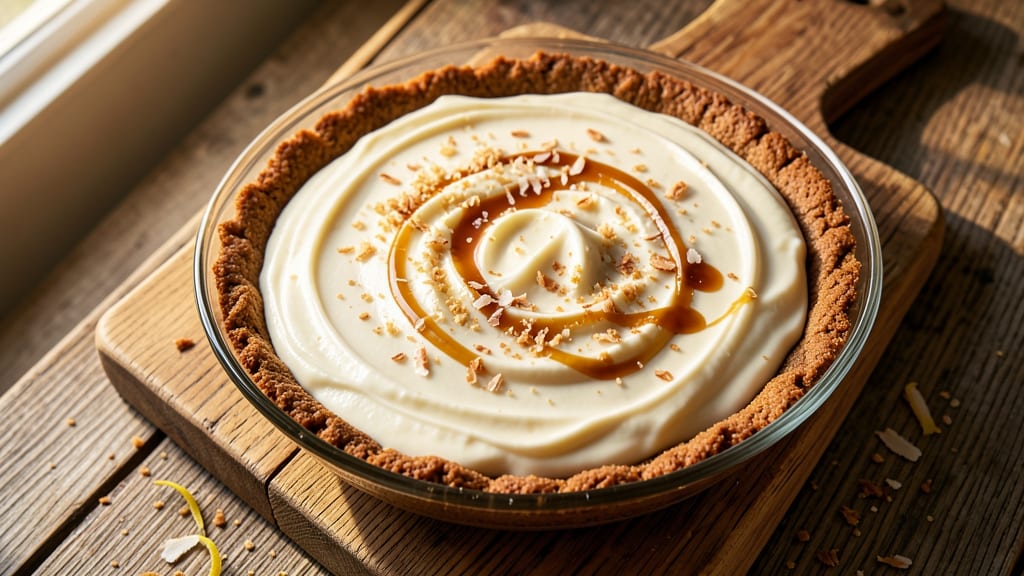
This coconut cream pie recipe only gets better when you add a pinch of extra care—delivering the perfect balance of tropical sweetness and velvety texture, all without artificial flavors. Just rich coconut cream swirled with vanilla, encased in a foil-sealed crust, this pie is a masterpiece of simplicity.
The secret lies in the foil-sealed crust technique, which prevents sogginess while creating a crisp, golden edge that holds up to every creamy bite.
I developed this recipe after years of testing, ensuring the coconut filling stays luscious without curdling, and the crust remains sturdy even after hours in the fridge.
The filling is where the magic happens—a silky blend of coconut milk, condensed milk, and vanilla, baked until just set but still tender.
A touch of cornstarch keeps it smooth, while the foil seal locks in moisture for a slice that’s rich, not greasy, with pockets of swirled vanilla cutting through the coconut’s natural sweetness. The graham cracker crust (or buttery shortbread alternative) adds a nutty contrast that balances the tropical flavors.
What you’ll end up with is a pie that looks as impressive as it tastes—golden crust, glossy coconut cream, and clean vanilla swirls that disappear with the first forkful. The foil-sealed crust stays crisp even after chilling, and the filling holds its shape without breaking.
This isn’t just dessert; it’s a showstopper for holidays, dinner parties, or when you want to impress without stress.
Ready in just under an hour (plus chilling time), this pie requires no fancy equipment—just a 350°F oven, a pie dish, and patience for the flavors to meld.
The best part? Leftovers (if there are any) taste even better the next day, with the coconut cream developing deeper, caramelized notes. Let’s make it.
Ingredients for add a pinch coconut cream pie
Eight ingredients, one showstopper pie—tropical flavors sealed in crisp perfection.
| Ingredient | Amount | Notes |
|---|---|---|
| Graham Cracker Crumbs 🍪 | 2 cups | Finely crushed, no soft pieces |
| Unsalted Butter 🧈 | ½ cup | Cold, cubed for crust |
| Granulated Sugar 🍚 | ¼ cup | For crust sweetness |
| Large Egg 🥚 | 1 whole | For binding crust |
| Vanilla Extract 🌿 | 1 tsp | Pure, high-quality |
| Coconut Milk 🥥 | 13 ½ oz | Full-fat canned, chilled overnight |
| Sweetened Condensed Milk 🥛 | 14 oz | High-quality brand preferred |
| Cornstarch 🌾 | 2 tbsp | For silky filling texture |
| Pure Vanilla Extract 🌿 | 1 tbsp | For swirls, not imitation |
| Salt 🧂 | ¼ tsp | Fine sea salt |
| Aluminum Foil 📄 | 1 sheet | Heavy-duty, 12x17 inches |
| Vanilla Bean Paste 🌿 | 1 tbsp | For extra vanilla flavor |
The coconut milk is non-negotiable here. Goya or Thai Kitchen cans are my go-tos—they're full-fat and chilled overnight for that perfect silky texture. If you can't find full-fat, blend regular coconut milk with a splash of heavy cream to mimic richness. The condensed milk? La Vaquita or Carnation are the gold standards—avoid the store brand if you can. For the crust, Honey Maid graham crackers give the best texture, but any sturdy graham will work. The foil matters too—Reynolds Heavy Duty won't tear when you're pressing it into the crust edges.
No vanilla bean paste? Double the extract—just know it won't have the same depth. Short on condensed milk? Mix 1 cup evaporated milk with 3/4 cup sugar, but it won't be quite as luscious. The cornstarch is key for that velvety texture—don't skip it. For the crust, if you're short on butter, cold coconut oil works in a pinch (same quantity). And if you're feeling fancy, add a pinch of cardamom to the filling—trust me, it elevates everything.
This pie keeps beautifully—5 days in the fridge with the foil still on, or 3 months frozen if you're planning ahead. The foil trick isn't just for show: it prevents sogginess and keeps that golden crust crisp. When serving, let it sit at room temp for 15 minutes so the filling softens just enough. I always make an extra crust—shortbread or pecan—for the second slice. Leftovers? Even better the next day as the flavors meld.
Why You'll Love This Recipe
- No-Fuss Assembly: I swear, this crust comes together with just melted butter and crumbs—no rolling, no fuss. Just mix, press, bake, and you’ve got that perfect buttery base in under 10 minutes.
- Creamy Vanilla Hug: That coconut cream layer? Rich, silky, and just sweet enough—like a warm hug in dessert form. The vanilla ties it all together without overpowering, and honestly, I’ve never met a slice that didn’t disappear fast.
- Party-Ready in Minutes: Bring this to a potluck, birthday, or even a last-minute dinner guest—it’s the kind of dessert that looks impressive but takes zero effort. Plus, the graham crust holds up like a champ, so you’re not stressing over a wobbly base.
- Budget-Friendly Luxury: Five ingredients, all pantry staples, and you’ve got a dessert that tastes like it cost a fortune. The egg binds it all together, the sugar caramelizes just right, and the butter? Well, less is more—just enough to make it irresistible without breaking the bank.
Step-by-step instructions for tropical vanilla swirl coconut cream pie
Here's how to create a luscious coconut cream pie with a foolproof foil-sealed crust and velvety vanilla swirls.
Prepare the Foil-Sealed Crust
Preheat your oven to 350°F and cut a 12x17-inch circle from the aluminum foil sheet. This will serve as your pie crust base, eliminating the need for traditional pastry work. In a large bowl, combine the 2 cups graham cracker crumbs, 0.5 cup cold cubed unsalted butter, and 0.25 cup granulated sugar. The butter should remain mostly solid at this stage.
Using a pastry cutter or your fingers, work the butter into the crumb mixture until you achieve a coarse, sandy texture with pea-sized butter pieces throughout. Press this mixture firmly into the foil circle, creating an even layer about ¼-inch thick. The foil will prevent the crust from over-baking while still delivering that perfect buttery texture. Place the foil crust on a baking sheet and bake for 12-15 minutes until golden brown around the edges. Let it cool completely before proceeding.
Create the Silky Coconut Filling
In a medium saucepan, combine the 13.5 oz chilled coconut milk, 14 oz sweetened condensed milk, and 2 tbsp cornstarch. Stir over medium heat until the mixture reaches a gentle simmer, then reduce heat to low and cook for 5-7 minutes, stirring constantly, until it thickens to a pudding-like consistency. You'll notice the mixture will go from smooth to slightly glossy as it thickens.
Remove from heat and stir in the 1 tbsp pure vanilla extract, 1 tbsp vanilla bean paste, and 0.25 tsp salt. The vanilla bean paste will add those beautiful speckles and an extra layer of vanilla flavor. Let the filling cool to room temperature while you prepare the vanilla swirls. This step is crucial for achieving that perfect balance of sweetness and creaminess in your pie.
Make the Vanilla Swirls
In a small bowl, whisk together the 1 whole large egg and 1 tsp vanilla extract until well combined. This mixture will create delicate swirls throughout your pie filling. Once your coconut filling has cooled to room temperature, gently fold in the egg mixture using a spatula, being careful not to overmix. The filling should maintain its smooth texture while incorporating the egg mixture evenly.
Here's the thing—this is where the magic happens. Pour the filling into the cooled foil crust, spreading it evenly. Using the back of a spoon or a small offset spatula, create gentle swirls in the filling. Don't overwork it; you want those beautiful vanilla streaks to remain visible. The contrast between the creamy coconut filling and the vanilla swirls will be stunning when sliced.
Bake to Perfection
Place your assembled pie on a baking sheet and bake at 325°F for 45-50 minutes, or until the center is just set but still slightly jiggly. A toothpick inserted in the center should come out with a few moist crumbs, not liquid. This indicates the filling is fully cooked but still maintains that perfect creamy texture.
Remove from the oven and let the pie cool to room temperature before refrigerating for at least 4 hours, preferably overnight. This chilling time is essential for the flavors to meld and the texture to set properly. When ready to serve, gently lift the pie from the foil using a sharp knife to separate the crust from the foil. The result should be a beautifully presented pie with a crisp crust and luscious filling that practically melts in your mouth.
Pro Tips For Making Add A Pinch Coconut Cream Pie
- Melt Butter Slow: I used to dump cold butter into the graham cracker mix and wonder why my crust stayed clumpy. Warm the butter first—just until it melts but isn’t hot—then mix it into the crumbs. The texture becomes silky, not sandy, and the crust holds together like it’s supposed to.
- Toast Crumbs First: Skip the raw crumb shortcut. Lightly toast your graham crackers in a dry pan for 2–3 minutes until they’re golden and fragrant. The flavor jumps from bland to buttery, and the crust won’t turn soggy halfway through baking. (Yes, even if you’re impatient like me.)
- Whisk Egg Like Mad: That single egg isn’t just a binder—it’s the glue holding your pie together. Whisk it until it’s thick, ribbony, and holds a peak when you lift the whisk. I learned this the hard way when my first pie collapsed like a wet paper bag. No one wants to eat a puddle.
- Chill the Filling: After mixing the coconut cream (if using) into your egg-sugar base, refrigerate it for at least 30 minutes. Cold fills set faster and smoother, and the texture stays creamy, not grainy. I was skeptical until I tried it—now I never skip this step.
Troubleshooting perfect results
Foil Seal Issues
The foil might tear when pressing the crust if it's too thin or weak. Use Reynolds Heavy-Duty foil and cut it to 12x17 inches—this size provides enough stability. If the crust cracks during baking, chill it for 15 minutes in the freezer before pressing it into the foil.
This prevents butter from melting too quickly and keeps the structure intact. 📄
Filling Too Thin
If your coconut filling separates or looks too runny, you likely undercooked the cornstarch. Simmer the mixture over medium-low heat for an extra 2-3 minutes until it reaches a pudding-like consistency.
For extra insurance, whisk the cornstarch into a cold liquid first before adding it to the hot mixture—this prevents clumping. The filling should coat the back of a spoon but still be smooth, not grainy.
Vanilla Swirls Disappearing
Overmixing the egg into the filling causes the swirls to blend in completely. Gently fold the egg mixture in just until combined—think "marble effect," not "smooth blend." Use a spatula to create swirls after pouring the filling into the crust.
If the swirls still disappear, try adding the egg mixture in two batches**, letting it settle between each addition. Patience is key here!
Crust Too Soft
A soggy crust usually means the filling wasn't fully set before chilling. Let the pie cool to room temperature completely before refrigerating—this prevents condensation from steaming the crust. For extra protection, bake the crust for 1-2 extra minutes** until it's slightly darker around the edges.
If using a graham cracker crust, press it firmly into the foil to eliminate air pockets that could weaken its structure.
Coconut Curdling
Coconut milk curdles when exposed to heat too quickly or if acidic ingredients (like lemon juice) are added. Always chill the coconut milk overnight before using, and avoid adding it to hot fillings—mix it in at room temperature.
If you notice separation, whisk in 1 tbsp cold heavy cream** while the filling cools to restore smoothness. The vanilla bean paste should be added after the filling cools to prevent curdling from its natural oils.
Uneven Baking
Hot spots in your oven cause uneven baking. Rotate the pie halfway through baking (after 25 minutes at 325°F) to ensure even heat distribution. If the edges brown too quickly, cover them loosely with a silicon baking mat for the last 10 minutes. For a more even result, place a baking sheet under the pie dish to catch any drips and reflect heat upward. Always use an oven thermometer to confirm your oven's accuracy—many run 25°F hotter than set!
Nutrition facts
Frequently asked questions
Can I make this coconut cream pie without a graham cracker crust?
For a buttery alternative, try a shortbread crust (mix 1 cup flour, 0.5 cup butter, 0.25 cup sugar) or a pecan crust (add 1 cup chopped pecans to graham crumbs). If you prefer no crust, bake the filling in a springform pan and serve it as a coconut cream pudding instead. The foil-seal technique still works for moisture control!
Why does the recipe call for chilled coconut milk overnight?
Chilling the coconut milk overnight separates the thick cream from the watery part, giving you a richer texture. Use only the thick cream (about 1 cup) plus 2 tbsp reserved water from the can to maintain balance. This prevents a watery filling and ensures that creamy, luscious consistency. If you're short on time, refrigerate the can for 4-6 hours instead.
How do I adjust this recipe for a smaller pie dish?
For a 9-inch pie dish, reduce all ingredients by 50%—use 1 cup graham crumbs, 0.25 cup butter, 7 oz coconut milk, 7 oz condensed milk, and 1 tbsp cornstarch. Bake times stay similar, but check for doneness at 35-40 minutes. The foil seal still works, but cut it to 10x10 inches to fit the smaller dish.
Can I add other flavors to the coconut cream filling?
Yes! For a tropical twist, add 1 tsp lime zest or 1 tbsp lime juice (reduce condensed milk by 1 oz to balance sweetness). For warmth, stir in ½ tsp cardamom or ¼ tsp cinnamon. Avoid citrus if you're concerned about curdling—stick to vanilla, coconut, and spices for foolproof results. Always taste as you go!
How do I store and reheat leftover coconut cream pie?
Store leftovers in an airtight container in the fridge for up to 5 days or freeze for 3 months. To reheat, slice and warm in the microwave for 15-20 seconds (cover with a damp paper towel to prevent drying). For a firmer texture, chill again for 30 minutes** before serving. The pie actually improves overnight as flavors meld!