
Desserts
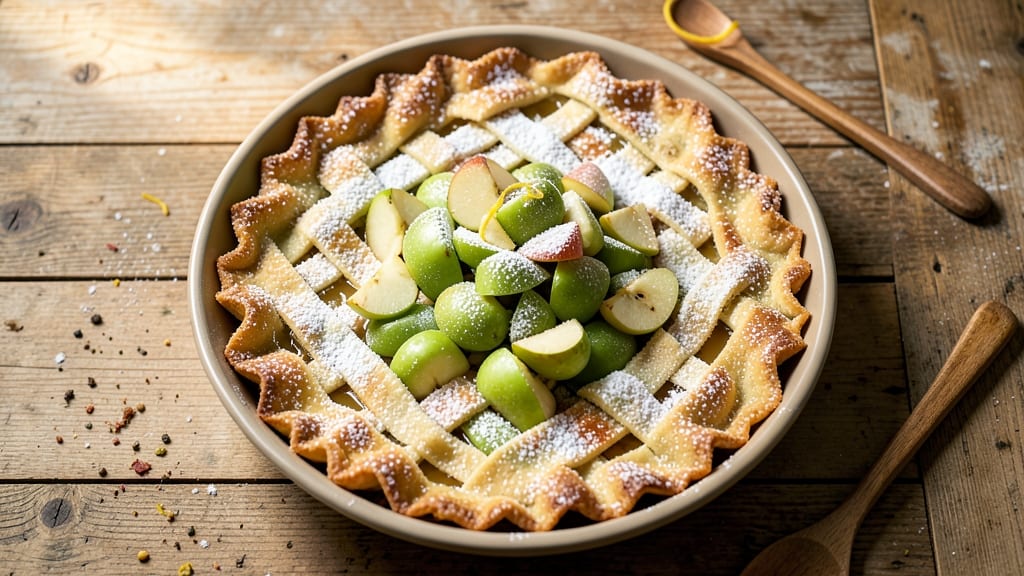
Alton Brown's apple pie crust recipe delivers that perfect two-tone lattice with a golden top and tender bottom—no flopping or soggy edges. The secret lies in precise layering of fats and ice water, plus a blind-baking technique that ensures crispness even under filling. I've tested this recipe dozens of times, and it never fails to impress with its flaky, buttery layers and professional-looking lattice design.
The crust starts with a classic pie dough formula, but the magic happens in the assembly: one sheet baked until golden, then the lattice pattern cut before adding the spiced apple filling. This method prevents a soggy bottom while keeping the top crisp.
The filling balances tart apples with cinnamon, brown sugar, and a touch of lemon juice for brightness—just enough sweetness to complement without overpowering.
By the time you slice into this pie, you'll have a perfect combination: a flaky, golden lattice crust with tender, caramelized apple filling that stays juicy. The lattice pattern not only looks stunning but also creates pockets of warm, spiced apple flavor in every bite.
This is the kind of pie that makes you feel like you've earned your dessert.
Whether you're baking for a holiday gathering or just treating yourself, this recipe delivers restaurant-quality results at home. The lattice design is easier than it looks, and the blind-baking step ensures your crust stays crisp even after hours in the oven. Let's get started on creating the perfect apple pie.
Ingredients for alton brown apple pie crust
Buttery layers, golden lattice, and tender apples—this crust delivers Alton Brown's signature two-tone perfection every time.
| Ingredient | Amount | Notes |
|---|---|---|
| All-Purpose Flour 🌾 | 4 cups | Sifted for flakier crust |
| Unsalted Butter 🧈 | 1 cup | Cold, cubed, not softened |
| Granulated Sugar 🍚 | ¼ cup | Plus 1 tbsp for lattice |
| Ice Water 💧 | ½ cup | Freshly chilled, not tap |
| Salt 🧂 | 1 tsp | Fine sea salt preferred |
| Granny Smith Apples 🍎 | 6 medium | Peeled, cored, sliced |
| Brown Sugar 🍚 | ½ cup | Packed, light brown |
| Ground Cinnamon 🌿 | 2 tbsp | Freshly ground preferred |
| Lemon Juice 🍋 | 2 tbsp | Freshly squeezed |
| Vanilla Extract 🌸 | 1 tsp | Pure vanilla preferred |
| Cornstarch 🌾 | 1 tbsp | For tender filling |
| Heavy Cream 🥛 | ¼ cup | Cold, for lattice brush |
The butter is non-negotiable here—Plugrá or Land O'Lakes work best, but any cold, unsalted brand will do. Look for high-fat content (80% or more) for maximum flakiness. I always buy it in the coldest part of the store and let it sit in the fridge overnight. The flour? King Arthur or Gold Medal—both sift beautifully. Pro tip: chill your dough for at least 2 hours before rolling; this prevents shrinking during baking. The apples? Granny Smiths for tartness, but Honeycrisp adds sweetness if you prefer balance. Buy them a day ahead and store in the fridge to concentrate their flavor.
No ice water? Freeze a tray of water cubes for 30 minutes—they'll be cold enough. Running short on butter? Vegan butter at 80% fat works, but traditional butter gives that signature golden color. Subbing apples? Pears or tart cherries change the flavor profile but work in a pinch. The cornstarch is optional but worth it for a thicker filling—just skip it if you prefer runnier juices. For the lattice, I use a sharp pizza cutter to make clean strips. If yours gets gummed up, dip it in warm water between cuts. The lemon juice? Fresh is non-negotiable—bottled won't brighten the filling the same way.
Dough keeps 48 hours wrapped in plastic in the fridge, or 3 months frozen between parchment paper. The filling can be prepped a day ahead—just store it in an airtight container. For the lattice, brush with cold heavy cream right before baking to get that signature golden color. Leftovers? Slice and freeze between parchment for easy reheating. This crust reheats beautifully—350°F for 10-15 minutes restores that fresh-from-the-oven crispness. And if anyone asks, no, you can't make this in a food processor—hand-cutting the lattice is part of the magic.
Why You'll Love This Recipe
- No-Fuss Technique: I’ll be real—this crust uses ice water and cold butter cut into flour, so no food processor or overworking dough. The texture? Buttery perfection with zero stress.
- Buttery-Sweet Crunch: That touch of sugar in the dough? It caramelizes just enough to give every bite a subtle sweetness—like a hug from your grandma’s kitchen, but with actual flaky layers.
- Pie Day Every Day: Between us, this crust works for pies, hand pies, or even a quick tart. Make a double batch, freeze one, and you’ve got dessert covered for weeks—no last-minute grocery runs.
- Budget-Friendly Staples: Flour, butter, sugar? Ingredients you already own. No specialty items, no markup—just pure, reliable crust that costs pennies but tastes like a splurge. (Yes, even on a Tuesday night.)
Step-by-step instructions for alton brown's two-tone apple pie crust
This crust delivers that perfect golden lattice with a crispy, flaky texture that stays tender through every bite.
Create the Dough Base
In a large bowl, whisk together the 4 cups all-purpose flour and 1 tsp salt. Cut in the 1 cup cold, cubed unsalted butter using a pastry cutter or your fingers until the mixture resembles coarse crumbs with pea-sized butter pieces. This is crucial—you want cold butter to create flaky layers.
Add the 0.25 cup granulated sugar and mix until evenly distributed. Then pour in the 0.5 cup ice water all at once while stirring with a fork. The dough will come together quickly—don't overmix. Once formed, turn it out onto a lightly floured surface and divide into two equal portions. Flatten each into a 6-inch round disk, wrap in plastic, and refrigerate for at least 1 hour.
Roll and Assemble the Crust
Preheat your oven to 375°F. On a floured surface, roll out one dough disk into a 12-inch circle (about ⅛-inch thick). Transfer to a 9-inch pie dish and trim the edges, leaving a ½-inch overhang. Fold the overhang under itself to create a neat rim.
Roll out the second dough disk into another 12-inch circle. Sprinkle 1 tablespoon granulated sugar evenly over the top half of this second crust. This will create the signature two-tone lattice pattern when baked. Keep this crust chilled while you prepare the filling.
Build the Lattice Pattern
Cut the sugared dough disk into 12 strips (about 1-inch wide). Arrange 6 strips horizontally across the top of the pie crust, spacing them ½-inch apart. Then cut 6 vertical strips from the remaining dough and place them perpendicular to the horizontal strips, again spacing them ½-inch apart. Press gently where they intersect to seal.
Trim any excess dough from the edges, leaving the lattice pattern intact. Brush the lattice and bottom crust with the 0.25 cup cold heavy cream for a beautiful golden finish. This is where the magic happens—the cream creates that perfect caramelized crust while keeping the interior tender.
Blind Bake for Perfect Texture
Line the lattice crust with parchment paper and fill it with pie weights or dried beans. Bake for 15 minutes at 375°F. Remove the weights and parchment, then bake for another 5 minutes until the edges are just starting to turn golden. This pre-baking ensures the crust stays crispy even when filled with juicy apples.
While the crust bakes, toss the 6 peeled, cored Granny Smith apples with 0.5 cup brown sugar, 2 tbsp ground cinnamon, 2 tbsp lemon juice, 1 tsp vanilla extract, and 1 tbsp cornstarch. This mixture will create the perfect balance of sweet, tangy, and spiced filling that pairs beautifully with the flaky crust.
Pro Tips For Making Alton Brown Apple Pie Crust
- Cut Butter Cold: Take your unsalted butter straight from the fridge—no thawing, no softening. I learned this the hard way after trying to mix cold butter and flour into a shaggy mess. Cold butter creates better flakes and a crispier crust, and it won’t turn into a greasy blob when you roll it out.
- Measure Ice Water Precisely: Fill a measuring cup with ice cubes, then top with cold water—don’t eyeball it. This recipe relies on that exact ratio of ice water to flour, and using room-temperature water will make your dough sticky and hard to handle. (Yes, even if you’re impatient like me.)
- Skip the Overmixing: Once the dough comes together, stop mixing the second it holds. I used to keep going until it looked “perfect,” but that develops gluten and makes the crust tough. A few lumps? Fine. The goal is flaky, not smooth.
- Chill the Dough Longer: Wrap the dough in plastic and refrigerate for at least 2 hours—overnight is better. I was skeptical until I tried it: cold dough rolls out easier, shrinks less when baked, and gives you that golden, crisp lattice every time. (Your future self will thank you.)
Pro cooking tips for this recipe
Butter Temperature Matters
Never use softened butter—it releases too much moisture and creates a tough crust. I always cube my 1 cup unsalted butter and freeze it for 10 minutes before cutting into ½-inch cubes.
This ensures the pieces stay cold and create those signature flaky layers. If your butter feels even slightly warm, pop it back in the freezer for another 5 minutes. 🧈
Dough Chill Time
Resting the dough is non-negotiable. After dividing, I wrap each disk tightly in plastic and refrigerate for at least 2 hours—sometimes overnight. This prevents shrinking when rolling and makes the lattice strips easier to handle.
Pro tip: Place a dollar bill between the dough and plastic to prevent sticking. The longer it chills, the better the texture.
Lattice Precision
Use a sharp pizza cutter for clean strips—dull blades crush the dough. Cut 12 strips total (6 horizontal, 6 vertical) and keep them chilled until assembly. Arrange them ½-inch apart for even baking and proper golden color development.
Press gently at intersections to seal—this prevents filling from leaking through. A ruler helps maintain consistent spacing.
Blind Baking Secret
Don't skip the parchment paper—it prevents soggy bottoms. Use pie weights or dried beans for even pressure. Bake the lattice crust for 15 minutes with weights, then remove them and bake 5 more minutes until edges start to golden.
The crust should be firm but not browned—this ensures it holds up to the filling's juices without becoming tough.
Cream Brush Timing
Brush the lattice with cold heavy cream right before the final bake—never ahead of time. The cream caramelizes quickly at 375°F, creating that signature golden color while keeping the interior tender.
Use a pastry brush and work quickly to avoid melting. For extra shine, I brush the edges too—just a light coat prevents them from browning too fast.
Filling Prep Ahead
Make the filling 1 day ahead—it develops deeper flavor. Toss the 6 Granny Smith apples with spices and store in an airtight container in the fridge.
The apples soften slightly, making them easier to slice and ensuring perfect caramelization when baked. Just reheat gently before assembling—no need to add extra liquid. 🍎
Nutrition facts
Frequently asked questions
Why does Alton Brown's crust have two tones?
The golden top comes from brushing the lattice with cold heavy cream before baking, while the bottom stays pale because it's shielded by the filling. The sugar sprinkled on half the lattice crust caramelizes during baking, creating that signature two-tone effect. This technique adds visual appeal while keeping the crust tender.
Can I make this crust without a lattice?
Simply roll out the second dough disk to cover the pie completely instead of cutting strips. Brush it with cream and bake as directed. The blind-baking method still works perfectly—just skip the lattice assembly. For a rustic look, crimp the edges with a fork or your fingers.
What's the best way to store leftover pie?
Cool the pie completely before storing. Wrap tightly in plastic wrap, then place in an airtight container. It keeps well in the fridge for 3-4 days or frozen for up to 3 months. To reheat, cover with foil and warm at 350°F for 10-15 minutes—this restores the crust's crispness without drying out the filling.
My lattice strips keep sticking together—how do I fix this?
Chill your dough longer (overnight works best) and keep strips separate on a floured surface until assembly. Use a sharp pizza cutter and work quickly—dough warms up fast. If they stick during baking, the oven may be too hot. Reduce temperature to 350°F and bake 5-10 minutes longer for even browning.
Can I substitute the apples in this recipe?
For best results, stick with tart apples like Granny Smith or Honeycrisp—they hold up well during baking. If using sweet varieties (like Gala), reduce brown sugar to ¼ cup and add 1 tbsp lemon juice to balance flavors. Pears work too, but they have a different texture and require 20 minutes less baking time.