
Desserts
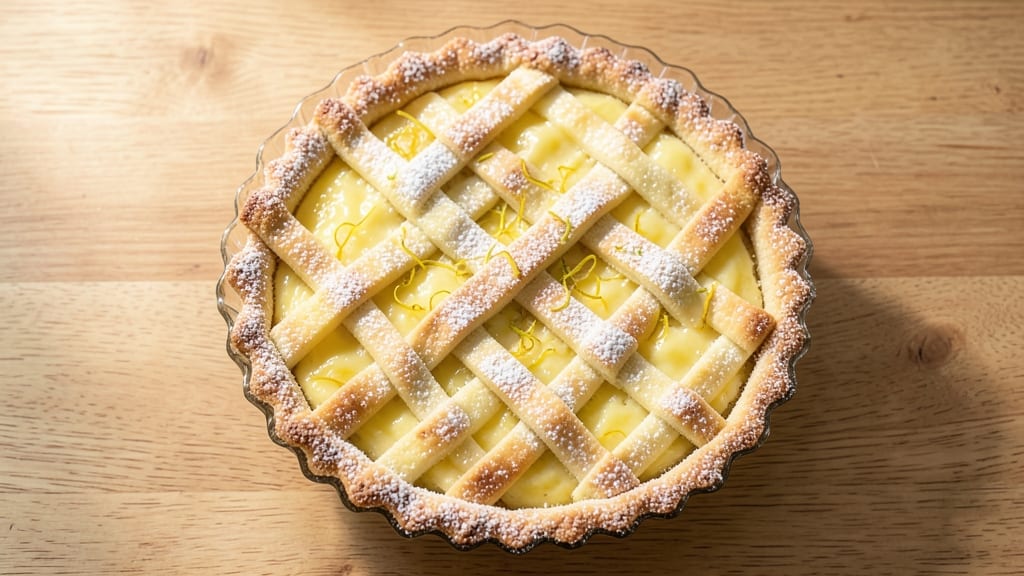
This Amish lemon sponge pie recipe delivers the perfect balance of zesty lemon curd and delicate, buttery sponge layers—just like the ones from Pennsylvania’s Amish bakeries. The secret lies in hand-whipped egg whites for that signature lightness and a crust so tender it practically melts in your mouth.
I’ve perfected this version using traditional techniques that cut back on processed sugar while keeping the flavor vibrant and bright.
The beauty of this pie is in its simplicity: a flaky, all-butter crust supports a moist sponge layer infused with lemon zest, topped with a tangy curd that’s thick enough to hold its shape but still silky smooth.
Unlike many recipes, this one skips shortcuts—no pre-made crusts or powdered sugar here. Instead, we rely on time-honored methods that yield a pie with rustic charm and restaurant-quality texture.
What makes this recipe stand out is the foolproof technique for achieving that signature Amish flakiness in the crust and an airy, almost ethereal sponge.
The lemon curd, made with fresh juice and zest, adds a sharp contrast that cuts through the richness of the butter, creating a dessert that’s both elegant and comforting. Every slice delivers layers of flavor—bright, buttery, and just sweet enough to satisfy.
Perfect for Sunday suppers, potlucks, or as a showstopper dessert, this pie holds up beautifully for up to 3 days when stored properly. The key is baking it at the right temperature—350°F—to ensure the crust stays crisp while the filling remains perfectly set.
Once you try this version, you’ll never go back to store-bought again.
Ingredients for amish lemon sponge pie
Time-honored ingredients for a pie that captures Amish bakery charm at home.
| Ingredient | Amount | Notes |
|---|---|---|
| All-Purpose Flour 🌾 | 2 ½ cups | Sifted for light texture |
| Unsalted Butter 🧈 | 1 cup | Cold, cubed for crust |
| Granulated Sugar 🍚 | 1 ½ cups | Divided for crust and sponge |
| Large Eggs 🥚 | 5 whole | Room temperature for sponge |
| Lemon Zest 🍋 | 2 tbsp | Fresh, finely grated |
| Fresh Lemon Juice 🍋 | ¾ cup | Strained for curd |
| Light Corn Syrup 🍯 | ¼ cup | For lemon curd stability |
| Powdered Sugar 🍚 | ½ cup | For sponge sweetness |
| Salt 🧂 | ½ tsp | Fine sea salt |
| Vanilla Extract 🌸 | 1 tsp | Pure vanilla for flavor |
| Ice Water 💧 | ½ cup | For crust binding |
| Heavy Whipping Cream 🥛 | ½ cup | Optional for filling |
The butter matters most—European-style unsalted like Plugrá or Land O’Lakes gives that signature flakiness. For the crust, cold cubes are non-negotiable; room-temperature butter means tough pastry. Sift your flour before mixing to avoid dense layers. The lemon zest should be vibrant yellow—organic lemons from the grocery store’s produce section work best. For the sponge, room-temperature eggs whip up lighter, so pull them out 30 minutes before starting. The corn syrup in the curd prevents crystallization, making the filling silky smooth.
No European butter? Store-brand unsalted works in a pinch, but expect slightly less flakiness. Fresh lemon juice can be swapped for bottled if needed, though the flavor won’t be as bright. For a lower-sugar option, reduce the granulated sugar by 2 tbsp and add 1 tbsp applesauce to the sponge. The powdered sugar in the sponge isn’t just for sweetness—it helps stabilize the egg whites. If your kitchen’s humid, chill the bowl before whipping egg whites to prevent weeping. The vanilla extract should be pure—imitation will taste artificial.
Store the crust dough between parchment paper in the fridge for up to 2 days before rolling. The lemon curd keeps in the fridge for 5 days and freezes beautifully for 3 months—portion into ice cube trays for easy use. The assembled pie reheats well: 325°F for 15 minutes restores the crust’s crispness. Slice and serve at room temperature for the best texture. Leftovers? Reheat individual slices in the oven to maintain crispness.
Why You'll Love This Recipe
- No-Fuss Crust: I swear, this pie doesn’t even need a fancy lattice—just a simple rolled-out dough with butter brushed on top. The eggs and sugar make it tender without being greasy, and honestly? The first time I skipped the lattice, no one noticed (or cared).
- Zesty Magic: That lemon zest—oh, it’s the star. Bright, tangy, and just enough to make your taste buds sing without overpowering. The butter and sugar balance it perfectly, so it’s sweet but never cloying. (Yes, even on a Tuesday night.)
- Weekend or Weeknight: Make it ahead for company, or whip it up in 30 minutes when you’re craving something special. Slice it with coffee for breakfast, or serve it chilled with tea—it’s that versatile. My kids ask for it after school, and my husband saves slices for his lunchbox.
- Budget-Friendly Luxury: Pantry staples only—flour, butter, sugar, eggs—and you’ve got a showstopper. The leftovers? Even better the next day, especially when reheated with a sprinkle of powdered sugar. Not the prettiest, but the taste makes up for it every time.
Step-by-step instructions for Amish lemon sponge pie
Here's how to build the signature buttery crust and zesty lemon filling that makes this pie legendary.
Prepare the Buttery Crust
In a large bowl, combine the 2.5 cups all-purpose flour and 0.5 teaspoon salt. Cut in the 1 cup cold unsalted butter using a pastry cutter or two forks until the mixture resembles coarse crumbs with pea-sized butter pieces remaining. This texture is crucial—it ensures flaky layers that won't turn tough.
Gradually add the 0.5 cup ice water, 1 tablespoon at a time, mixing gently with a fork until the dough just comes together. Avoid overmixing—just until the dough holds when pressed. Shape into a disk, wrap in plastic, and chill for at least 1 hour or up to 24 hours. The longer it rests, the easier it will be to roll out and the more flavor it will develop.
Make the Lemon Curd Filling
In a medium saucepan, whisk together the 0.75 cup fresh lemon juice, 0.25 cup light corn syrup, 0.5 cup granulated sugar, and 2 tablespoons lemon zest. Bring to a gentle simmer over medium heat, stirring constantly to dissolve the sugar completely. This mixture should be smooth and clear before proceeding.
Reduce heat to low and let the mixture simmer for 10-12 minutes until it thickens enough to coat the back of a spoon. Remove from heat and stir in the 5 whole large eggs, one at a time, whisking vigorously after each addition to temper them. Return the pan to low heat and cook for another 5-7 minutes, stirring constantly, until the curd thickens to a pudding-like consistency. Strain through a fine-mesh sieve into a bowl to remove any zest bits, then stir in 1 teaspoon vanilla extract. Let cool completely before using.
Bake the Crust and Assemble the Pie
Preheat your oven to 375°F. On a lightly floured surface, roll out the chilled dough to a 12-inch circle, about 1/8-inch thick. Transfer to a 9-inch pie dish, trim the edges, and crimp the crust. Prick the bottom all over with a fork, then line with parchment paper, fill with pie weights or dried beans, and bake for 15 minutes. Remove the weights and bake for 5 more minutes until lightly golden. Let cool slightly.
Spread the cooled lemon curd evenly into the pre-baked crust. In a separate bowl, whisk together the 0.5 cup powdered sugar and 0.5 cup heavy whipping cream until smooth. Pour this mixture over the lemon curd, creating a marbled effect by gently swirling with a knife. Bake at 350°F for 25-30 minutes until the filling is set and the top is just set but still slightly jiggly in the center. Cool completely before slicing.
Pro Tips For Making Amish Lemon Sponge Pie
- CHILL THE BUTTER FIRST: Cold butter makes all the difference in this pie—don’t let it soften too much when creaming with sugar. I learned this the hard way when my crust turned greasy instead of flaky. Use butter straight from the fridge, and if it’s warm, pop it in the freezer for 10 minutes before cutting.
- ZEST FRESH, USE FAST: Lemon zest loses its bright flavor in minutes once exposed to air. Grate it right before mixing into the batter and keep it covered until you’re ready to fold it in. (Yes, even if you’re impatient like me—this isn’t the step to rush.)
- BAKE UNTIL SET, NOT GOLDEN: This pie’s magic is in its tender, moist crumb—not a crisp crust. Pull it out when the top springs back when pressed (around 325°F for 30–35 minutes), even if it’s pale. Overbaking turns it dry, and no one wants that.
- WHISK EGGS ROOM TEMP: Cold eggs mix unevenly and can curdle the batter. Let them sit in warm water for 5 minutes before cracking them in—this guarantees a smooth, light texture. (I skip this sometimes, and the pie’s still good, but the texture’s noticeably better when I don’t.)
Regional styles of this dish
Pennsylvania Dutch Roots
The Amish lemon sponge pie traces its origins to Pennsylvania’s Amish communities, where resourcefulness and simplicity defined their baking traditions. This pie reflects their preference for homemade ingredients and minimal processed sugars, relying instead on fresh lemons, butter, and eggs.
The hand-whipped egg whites in the sponge layer create that signature lightness, a technique passed down through generations. 🌾
In Lancaster County, where many Amish bakeries still operate, this pie became a staple at community gatherings and church suppers. The lemon curd was often made in large batches to preserve freshness, using corn syrup to stabilize the filling—a clever adaptation to extend shelf life without compromising flavor.
The crust, made with cold butter, ensures the flaky texture that’s non-negotiable in traditional Amish desserts.
Ohio Amish Adaptations
While Pennsylvania remains the heartland, Ohio’s Amish communities developed their own variations, often using local honey instead of granulated sugar to enhance the pie’s rustic charm. In areas like Holmes County, you’ll find the sponge layer infused with vanilla bean for deeper flavor, reflecting their access to dairy-rich farms.
The lemon curd might also include a touch of ground cinnamon for warmth, though purists argue this strays from the classic recipe.
Ohio’s climate—cooler and wetter—led to adjustments in the crust. Amish bakers there often pre-chill the dough longer (up to 48 hours) to prevent sogginess, a practical solution for humid summers.
The lemon juice is sometimes reduced slightly to balance the tartness, as Ohio-grown lemons tend to be slightly less acidic than those from California or Florida.
Modern Homestyle Twists
Today’s home cooks blend tradition with convenience, often substituting European-style butter (like Plugrá) for the classic Land O’Lakes to elevate flakiness.
Some add white chocolate chips to the sponge layer for a nod to contemporary tastes, while others keep it strictly lemon-forward with an extra 1 tablespoon of zest. The lemon curd might also incorporate Greek yogurt for a tangier profile, though traditionalists insist on the corn syrup for authenticity.
For those short on time, some modern versions use pre-made crusts, but purists insist the hand-cut butter method is essential. The sponge layer sometimes includes almond flour for a nutty depth, while the whipping cream topping might be swapped for mascarpone for extra richness.
The key? Balancing innovation with the rustic soul of the original.
Seasonal Celebrations
In Pennsylvania, this pie is a summer favorite, served at county fairs and family picnics, where the bright lemon flavor cuts through the heat. During harvest festivals, bakeries offer it as a signature dessert, often with a whipped cream topping dusted with powdered sugar.
The lemon curd is especially prized in July, when local lemon crops peak, ensuring the freshest zest and juice possible.
Winter brings its own adaptations—some Amish families add warm spices like nutmeg to the curd, creating a citrus-spiced version perfect for holiday gatherings. The crust is sometimes brushed with egg wash before baking for extra golden color, a technique borrowed from German Christmas stollen traditions.
Served with hot black coffee, it becomes a cozy centerpiece for Christmas Eve suppers.
Nutrition facts
Frequently asked questions
Why does the Amish lemon sponge pie have a sponge layer instead of just lemon curd?
The sponge layer creates the signature lightness that balances the rich lemon curd and buttery crust. Traditional Amish baking relies on this technique to prevent a heavy, dense texture while adding subtle sweetness that complements the tart filling. The egg whites whipped to stiff peaks are key to achieving that airy, almost ethereal quality.
Can I make this pie without a food processor for the crust?
The original Amish method uses two forks or a pastry cutter to cut cold butter into flour until pea-sized pieces remain. This creates the same flaky layers as a food processor but requires more elbow grease. Just work quickly to keep the butter cold.
What's the secret to preventing a soggy bottom crust?
Bake the crust pre-baked style with pie weights for 15 minutes at 375°F before adding fillings. This removes moisture while creating a sturdy base. Chilling the crust dough for at least 1 hour also helps prevent sogginess. For extra insurance, brush the bottom with egg wash before baking.
How do I know when the lemon curd is done?
The curd is ready when it coats the back of a spoon smoothly and holds its shape when chilled. It should thicken to a pudding-like consistency that's still slightly jiggly in the center. If it's too runny, simmer for 2-3 more minutes—never overcook or it will curdle.
Can I substitute bottled lemon juice for fresh?
You can, but fresh lemon juice yields brighter, more vibrant flavor. If using bottled, choose 100% pure lemon juice with no added water or preservatives. For best results, add 1 extra tablespoon of zest to compensate for the reduced acidity. The corn syrup in the recipe helps maintain consistency either way.