
Desserts
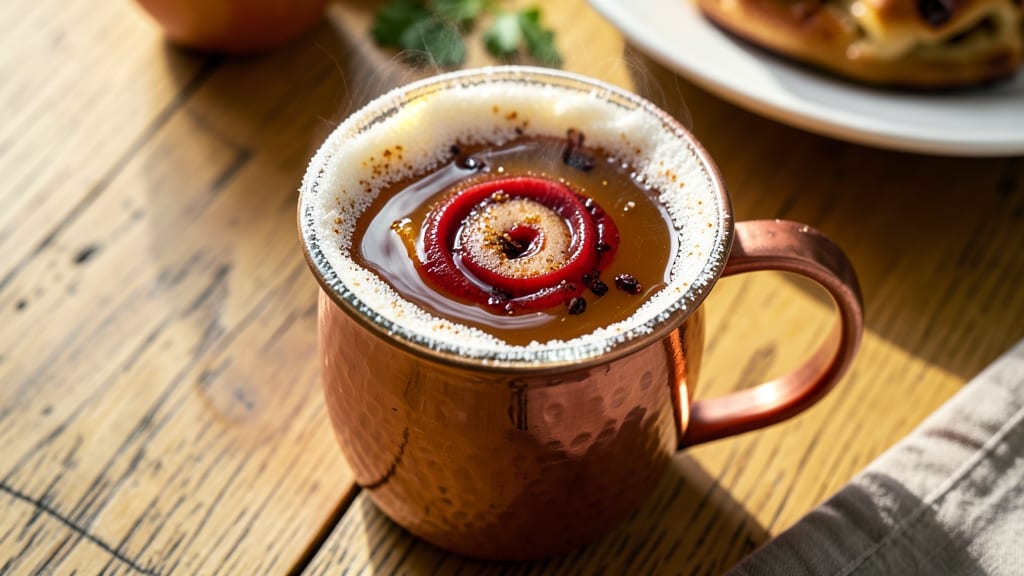
This apple pie brandy moonshine recipe transforms autumn’s favorite dessert into a rich, spiced liqueur that captures cinnamon, nutmeg, and apple cider in every sip. 🍏 The process blends traditional pie flavors with careful fermentation, creating a smooth, dessert-like spirit perfect for sipping or baking.
What makes this recipe special is its balance—warm spices without overpowering the apple’s natural sweetness, and a fermentation method that preserves those comforting flavors.
The foundation starts with fresh apple cider, simmered with classic pie spices until concentrated. After fermentation, the liquid infuses with brandy for depth, then ages to mellow the alcohol’s bite while intensifying the apple-cinnamon aroma.
This isn’t just a drink—it’s a boozy dessert experience you can pour into glasses or use in cocktails, like a spiced apple pie martini. The key is patience; aging transforms raw fermentation into a refined, velvety finish.
Safety and legality are critical—this recipe assumes you’re in a region where homemade spirits are permitted, and all steps prioritize proper fermentation techniques to avoid contamination. For beginners, I’ll include troubleshooting tips to ensure smooth results, from yeast selection to bottling.
The reward? A homemade liqueur that tastes like biting into a warm apple pie, but with the sophistication of a craft cocktail.
Whether you’re crafting this for holiday gifting or elevating your home bar, the process is methodical yet rewarding. Let’s break it down step by step—from spiced cider to the final, aged pour. Here’s how to make it right.
Ingredients for apple pie brandy moonshine
Spiced cider, yeast, and brandy—this isn’t your average pie recipe, but it’s pure autumn magic in a bottle.
| Ingredient | Amount | Notes |
|---|---|---|
| Fresh Apple Cider 🍏 | 4 cups | Unfiltered, organic preferred |
| Granulated Sugar 🍚 | 1 ½ cups | White or raw cane sugar |
| Ground Cinnamon 🌿 | 1 tbsp | Ceylon preferred for warmth |
| Ground Nutmeg 🌿 | ½ tsp | Freshly grated preferred |
| Ground Cloves 🌶️ | ¼ tsp | Whole cloves crushed first |
| Active Dry Yeast 🍞 | 1 tsp | Lallemand EC-1118 ideal |
| Light Brown Sugar 🍚 | ½ cup | For fermentation kick |
| Apple Pie Spice Blend 🌶️ | 2 tbsp | Homemade or store-bought |
| Vanilla Bean 🍦 | 1 whole | Split lengthwise for seeds |
| Brandy 🍷 | 1 cup | 80-proof minimum, aged |
| Lemon Juice 🍋 | 1 tbsp | Freshly squeezed |
| Diatomaceous Earth 🧪 | 1 tbsp | Food-grade, for clarity |
| Distilled Water 💧 | 1 cup | For dilution and rinsing |
The apple cider sets the soul of this moonshine. Organic, unfiltered cider from a local orchard has the most depth—avoid those sweetened, pasteurized brands. Mott’s or Woodchuck are solid choices if you’re shopping at Walmart or Whole Foods. For spices, Penzeys sells pre-mixed apple pie spice blends that cut prep time, but if you’re DIYing, toast the whole spices (cinnamon sticks, cloves) in a dry pan for 2 minutes first—trust me, it’s worth the extra minute. The yeast is non-negotiable: EC-1118 handles the sugar rush better than standard baker’s yeast, and it’s available online at MoreBeer.com.
No brandy? Apple brandy or bourbon works in a pinch, but the oak notes in brandy are what give this depth. Running short on vanilla? Vanilla extract at half the amount gets you close, but the seeds add a floral complexity you can’t replicate. The lemon juice is critical—it balances the sweetness and acts as a natural preservative during fermentation. If you’re in a rush, bottled lemon juice is fine, but fresh is always better. For the diatomaceous earth, Amazon or garden supply stores carry it—just make sure it’s food-grade. And if you’re worried about the cloves, pre-ground is fine, but crushing whole cloves releases more aroma.
Fermented batches keep in the fridge for up to 2 weeks before aging, but the magic happens after bottling. Store your finished moonshine in dark glass bottles in a cool, dark place for at least 3 months—longer if you can wait. I like to label mine with the date and batch number (use a whiteboard marker on the glass). For gifting, mini bottles with custom labels from Etsy sellers make it feel special. And if you’re feeling fancy, freeze the vanilla bean after splitting it—you’ll have it ready for your next batch in no time.
Why You'll Love This Recipe
- Pantry-Only Magic: I swear, this recipe lives in my spice rack and cider stash—no fancy shopping required. Just dump those spices into simmering cider, let it work its charm, and boom: flavor without the grocery haul.
- Fall in One Sip: That first taste? Like biting into a warm apple pie, but liquid and way more dangerous. The cinnamon and cloves cling to your tongue while the nutmeg adds this cozy, almost smoky depth—no baking skills needed.
- Host’s Secret Weapon: Serve it chilled at holiday gatherings or warm it over ice for summer picnics. It’s the one drink that feels elevated without trying too hard—guests will ask for the recipe, and you’ll just smile.
- No Waste, All Win: That half-gallon of cider you bought for autumn? Now it’s moonshine gold. A single batch stretches for weeks, and the leftovers? Even better the next day—proof that simplicity and flavor don’t need to fight.
Step-by-step instructions for apple pie brandy moonshine
Let's transform simple ingredients into a boozy dessert that tastes like autumn in a bottle.
🍳 Step 1: Create the Spiced Apple Base
In a large sanitized fermentation vessel, combine the 4 cups fresh apple cider, 1.5 cups granulated sugar, 0.5 cup light brown sugar, 1 tbsp ground cinnamon, 0.5 tsp ground nutmeg, 0.25 tsp ground cloves, and 2 tbsp apple pie spice blend. Stir vigorously until all sugar dissolves completely—this ensures even fermentation. I like to use a wooden spoon here because it won't react with the acidity.
Split the 1 whole vanilla bean lengthwise and scrape out the seeds, then add both seeds and pod to the mixture. The vanilla adds depth that complements the brandy later. Give it one final stir, then cover loosely with a clean kitchen towel. This initial mixture should smell like a warm apple pie fresh from the oven—warm, spicy, and inviting.
👨🍳 Step 2: Activate and Add Yeast
In a separate bowl, whisk together 1 cup distilled water and 1 tsp active dry yeast until fully dissolved. The water should be around 75°F—too hot and you'll kill the yeast; too cold and it won't activate properly. Let this sit for 5-10 minutes until it becomes foamy. This is your signal the yeast is alive and ready to work.
Once foamy, pour the yeast mixture into the apple cider blend and stir gently to combine. Cover the vessel with a fermentation airlock (or a clean towel secured with a rubber band) and let it sit at room temperature for 24 hours. You'll know fermentation is working when you see bubbles forming in the airlock or hear a slight fizzing sound. This is where the magic happens—the yeast converts sugar into alcohol and carbon dioxide, creating that signature boozy apple flavor.
🥘 Step 3: Add Brandy and Lemon Juice
After 24 hours, carefully pour in the 1 cup brandy and 1 tbsp lemon juice. The brandy adds that rich, caramelized depth while the lemon juice brightens the flavors and helps preserve the drink. Stir gently to combine, being careful not to create too many bubbles that could cause overflow. The mixture should now smell like a cross between spiced cider and warm apple brandy—intoxicatingly good.
Cover again and let it ferment for another 48 hours. During this time, the alcohol content will increase as the yeast continues working. I keep my fermentation vessel in a dark cupboard where the temperature stays consistent—around 70-75°F is ideal. The longer it ferments, the stronger and more complex the flavor becomes.
⏰ Step 4: Filter and Clarify
After 48 hours, it's time to filter and clarify. First, sprinkle 1 tbsp diatomaceous earth over the surface of the liquid. This food-grade powder will bind to particles and help clarify the moonshine. Stir gently with a clean spoon, then let it sit for 1 hour. The diatomaceous earth will sink to the bottom, taking impurities with it.
Next, carefully pour the liquid through a coffee filter or cheesecloth into a clean glass jar, leaving the sediment behind. I use a funnel lined with cheesecloth for this step to ensure everything stays clean. The result should be a beautifully clear, golden liquid with all the spiced apple flavor concentrated. This clarity is what makes homemade moonshine look professional.
🍽️ Step 5: Bottle and Age (Optional)
Transfer the filtered moonshine to sterilized glass bottles or jars, leaving about 1 inch of headspace at the top. Seal tightly and store in a cool, dark place. For best results, let it age for at least 2 weeks—this allows the flavors to meld and mellow. I like to taste it after 2 weeks and again after 4 weeks to see how the flavors develop over time.
When ready to serve, chill the bottles for 30 minutes before opening. The moonshine should have a warm, spiced apple aroma with hints of vanilla and brandy. Pour carefully and enjoy straight, over ice, or even in cocktails. Each sip should remind you of a perfect autumn afternoon with all the cozy flavors of apple pie and brandy combined.
Pro Tips For Making Apple Pie Brandy Moonshine
- STRAIN TWICE, PATIENCE PAYS: I learned this the hard way—skimming the first batch of brandy moonshine after fermentation leaves behind cloudy sediment that ruins the smoothness. Strain through a fine-mesh sieve first, then a coffee filter or cheesecloth for that crystal-clear finish. (Yes, it takes longer, but your guests won’t taste the difference between "homemade" and "craft distillery.")
- WEIGH THE SPICES: That pre-packaged spice blend? Toss it. Freshly ground cinnamon, nutmeg, and cloves make all the difference—just a pinch (½ teaspoon total) is enough to avoid overpowering the apple cider’s natural sweetness. Toast them lightly in a dry pan first for 30 seconds; the aroma jumps off the plate. (Your future self will thank you for not eyeballing it.)
- FERMENT COOL, NOT COLD: Apple cider ferments fastest at 68–72°F, but many people rush it by dropping the temp too fast. Use a fermentation lock and keep the airlock bubbling steadily—if it stops, your batch is at risk of contamination. A warm spot (like a basement corner) works better than a fridge for the first 5–7 days. (I know, I know—patience isn’t your strong suit either.)
- SUGAR GRADUALLY, NOT ALL AT ONCE: Dumping all 1–2 cups of sugar at once can spike the alcohol content too fast, leading to off-flavors or even stuck fermentation. Split it: Add half with the cider, then the rest after 48 hours. This keeps the yeast happy and gives you that balanced, pie-like depth without harsh boozy notes. (Trust me, your taste buds will notice the difference.)
Essential equipment for this recipe
Fermentation Essentials
Your fermentation vessel is the heart of this recipe—I recommend a 5-gallon glass carboy with an airlock for precision. Blichmann Glass Carboys are my go-to because they’re durable and easy to clean.
For smaller batches, a 1-gallon mason jar with a fermentation lid works perfectly. Always sanitize your vessel with Star San or a 1:10 bleach-to-water solution to prevent contamination. 🍏
Clarity Tools
For filtering, grab a coffee filter or cheesecloth—I prefer unbleached muslin cheesecloth for better clarity. A funnel makes pouring easier, and a food-safe siphon (like the Siphon King) speeds up the process.
The diatomaceous earth is non-negotiable for clarity; Amazon sells it in bulk for under $10. For aging, amber glass bottles protect your moonshine from light degradation.
Temperature Control
Consistent temperature is key—fermentation thrives between 70-75°F. If your kitchen fluctuates, use a fermentation chamber or store your vessel in a cool closet. A digital thermometer (like the Thermoworks TH5) helps monitor progress.
For yeast activation, a thermometer with a range of 50-120°F ensures accuracy. Pro tip: Ferment in a dark place to prevent light from altering flavors.
Safety Gear
Always wear food-safe gloves when handling diatomaceous earth and safety goggles during filtering. A fine-mesh strainer (like the OXO Good Grips) helps remove larger particles before final filtration. For bottling, use sterilized corks or screw caps—VinoLok caps are my favorite for sealing.
Label your bottles with the date and batch number using a permanent marker or printable labels from Etsy.
Optional Distillation
If you’re distilling (check local laws first!), you’ll need a copper pot still or stainless steel moonshine still. The Stainless Steel Moonshine Still from Moonshine Still Shop is a solid budget option.
For condensation, a copper coil or glass condenser works—just ensure it’s properly insulated. Safety first: Never distill without a flame arrestor or in an unventilated space.
Nutrition facts
Frequently asked questions
Can I use store-bought apple cider instead of fresh?
Yes, but choose unfiltered, unsweetened cider like Mott's or Woodchuck—avoid pasteurized brands with added sugar. The natural cloudiness and minimal processing preserve the apple's depth. For extra flavor, simmer your cider with apple peels or cores (removed afterward) before fermentation.
How do I know when fermentation is complete?
Fermentation is done when bubbles in the airlock slow to 1-2 per minute and the liquid stops rising. Taste a small amount—it should be noticeably sweeter than before but still have a slight cider tang. If it smells like vinegar or tastes overly sharp, fermentation may have gone too far. The total time is usually 3-5 days depending on temperature.
What if my moonshine turns cloudy after bottling?
Cloudiness often means residual yeast or sediment. To fix it, strain through a coffee filter or cheesecloth again, then add 1/4 tsp diatomaceous earth per bottle before sealing. Store bottles upright for 24 hours to let particles settle, then chill before serving. If cloudiness persists, the batch may need longer aging (3+ months) to stabilize.
Can I make this without brandy?
Yes! Replace brandy with 1 cup apple brandy or bourbon for a similar depth, though brandy's oak notes create the signature apple pie richness. For a non-alcohol version, add 1 cup apple juice concentrate (reduced with spices) instead. The fermentation process remains identical—just adjust sweetness to taste.
How long does this moonshine last once opened?
Once opened, refrigerate and consume within 2 weeks for peak freshness. The alcohol content preserves it longer than regular cider, but oxidation can dull the apple-spice flavors over time. For extended storage, transfer to a smaller bottle and keep sealed tightly. Freezing isn't recommended—it can alter the texture.