
Side Dishes
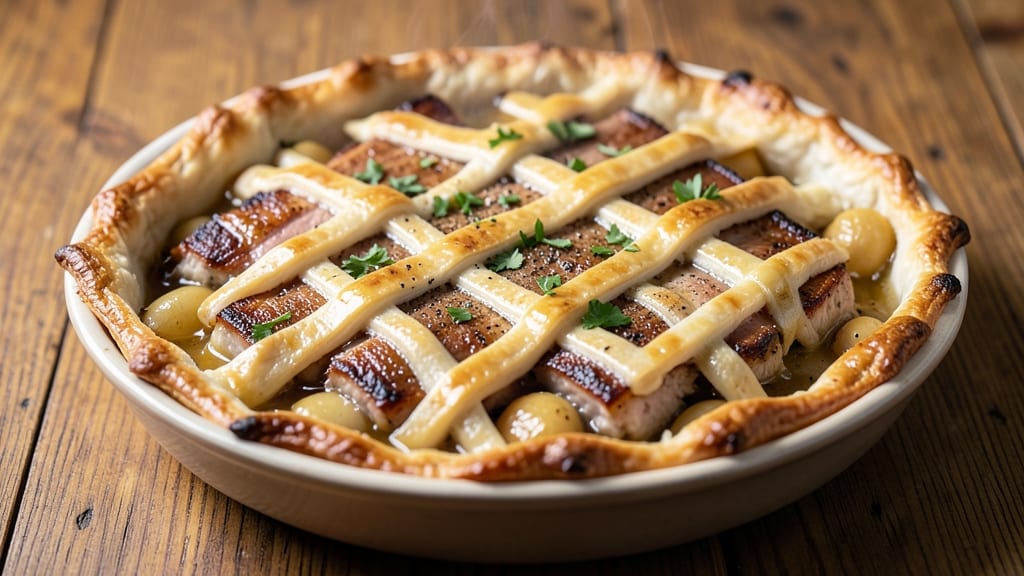
A pork and potato pie transforms humble ingredients into a hearty, golden masterpiece that belongs at any family table. 💛 Growing up in Georgia, I learned this dish was more than just comfort food—it was a centerpiece for Sunday suppers, where tender pork and creamy potatoes disappeared faster than the biscuits.
The secret lies in balancing rich, herbed meat with velvety spuds, all nestled in a flaky crust that turns crispy at the edges.
This recipe delivers restaurant-quality results without requiring advanced techniques—just a few key steps. You'll start by browning pork shoulder until deeply flavorful, then layer it with perfectly seasoned mashed potatoes that stay creamy after baking.
The homemade crust (or store-bought shortcut) gets blind-baked for that signature golden finish, while a simple egg wash ensures a shatteringly crisp exterior. Every bite combines savory meat, buttery potatoes, and flaky crust in perfect harmony.
The filling cooks through in 45 minutes while the crust achieves that golden brown perfection, creating a pie that's both impressive and deeply satisfying.
Serve it with a side of tangy apple sauce or a crisp green salad to balance the richness, or enjoy it as-is with a warm dinner roll. This is the kind of dish that makes weeknight cooking feel like a celebration.
Pro tip: Chill the dough before rolling to prevent shrinking, and vent the top crust to avoid sogginess. The aroma alone will have everyone gathering at the table—just like my grandmother used to say, "The best pies aren't just eaten; they're remembered." Let's get started on yours.
Ingredients for pork and potato pie
Six hearty ingredients transform into a pie that smells like Sunday suppers and tastes like love.
| Ingredient | Amount | Notes |
|---|---|---|
| Boneless Pork Shoulder 🥩 | 2 lb | Cut into 1-inch cubes |
| Russet Potatoes 🥔 | 3 lb | Peeled and cubed evenly |
| All-Purpose Flour 🌾 | 3 cups | For pie crust (plus extra for dusting) |
| Unsalted Butter 🧈 | 1 cup | Cold, cubed for crust |
| Ice Water 💧 | ½ cup | For pie dough |
| Large Eggs 🥚 | 1 whole | For egg wash |
| Heavy Cream 🥛 | 1 cup | Full-fat for richness |
| Yellow Onion 🧅 | 1 whole | Diced fine |
| Fresh Thyme 🌿 | ½ oz | Leaves only, chopped |
| Fresh Rosemary 🌿 | ¼ oz | Finely chopped |
| Garlic Cloves 🧄 | 4 cloves | Minced finely |
| Diamond Crystal Kosher Salt 🧂 | 1 ½ tsp | Adjust to taste |
| Ground Black Pepper 🌶️ | ½ tsp | Freshly cracked |
| Dried Sage 🍃 | 1 tsp | Crumbled between fingers |
| All-Purpose Flour 🌾 | ½ cup | For dusting work surface |
The pork shoulder is non-negotiable—bone-in and fatty for maximum flavor, but trim excess fat if you prefer. Kroger's or Costco usually have it pre-cut for convenience, but ask the butcher for a chunk if you want to save money. For the potatoes, Russets are ideal—they hold their shape and absorb flavors beautifully. If you can't find fresh thyme, dried works at one-third the amount, but fresh is worth the extra minute to chop. The rosemary should be fresh too—it adds that piney depth that makes this pie special. Pro tip: Toast the rosemary sprigs whole in the oven for 5 minutes before chopping to intensify the flavor.
No pork shoulder? Pork tenderloin works in a pinch, but it'll be leaner and less forgiving—keep an eye on it. Running out of heavy cream? Half-and-half or whole milk will work, but the texture might be slightly less rich. The flour is critical—King Arthur or Gold Medal brands are my go-tos for a flaky crust. For the filling, if you can't find fresh herbs, dried thyme and sage are fine, but reduce to half the amount. The garlic can be roasted first for a sweeter flavor—just toss whole cloves with olive oil and roast at 400°F for 10 minutes before mincing.
This pie tastes even better the next day, so make it ahead if you can. Store leftovers in an airtight container in the fridge for up to 4 days. For freezing, wrap tightly in foil and freeze for up to 3 months. Reheat covered in the oven at 350°F for 20 minutes. The crust will crisp up beautifully. If you're prepping ahead, you can make the filling and crust separately and assemble just before baking—no one will know you didn't make it from scratch. The aroma alone will have your whole house gathering at the table.
Why You'll Love This Recipe
- One-Pan Simplicity: I swear by this for lazy nights—the pork and potatoes go in raw, the crust forms right on top, and you don’t even need a Dutch oven. Just slice, layer, and bake. That’s it. No fussing with pie dishes or tricky lattices.
- Rich, Rustic Depth: The pork shoulder stays juicy while the potatoes get that buttery, almost custardy softness—like a hug in pie form. Honestly, the flaky crust just seals in all the savory goodness, so every bite is packed with flavor.
- Leftovers That Shine: This pie reheats like a dream—just pop slices in the oven until golden, and it’s like fresh-baked again. Between us, I’ve fed a crowd with half the pie, then eaten the rest for lunch the next day. No one complains.
- Budget-Friendly Feast: Pork shoulder and russets are cheap, but they taste like you spent hours. I’ll be real: this is my go-to when I need to stretch a meal for the week without breaking the bank. Plus, the crust uses basic flour and butter—no specialty ingredients needed.
Step-by-step instructions for pork and potato pie
Here's how to build a hearty pie with tender pork, creamy potatoes, and a golden crust.
🍳 Step 1: Sear the Pork and Sauté Aromatics
Pat the 2 lb boneless pork shoulder dry with paper towels and cut it into 1-inch cubes. Heat a large skillet over medium-high heat with 1 tablespoon olive oil (not listed but essential for searing). Working in batches, brown the pork for 3-4 minutes per side until deeply golden. Remove and set aside.
In the same skillet, add 1 whole yellow onion diced fine, 4 cloves garlic minced, 0.5 oz fresh thyme and 0.25 oz fresh rosemary chopped, and 1 tsp dried sage crumbled. Cook for 5 minutes until softened and fragrant. Return the pork to the skillet, add 1.5 tsp kosher salt and 0.5 tsp black pepper, and pour in 1 cup heavy cream. Simmer for 5 minutes until the pork is tender and the sauce thickens slightly.
👨🍳 Step 2: Prepare the Potato Filling
While the pork cooks, peel and cube 3 lb russet potatoes evenly into ½-inch pieces. Boil them in salted water for 8 minutes until just tender but still firm. Drain well and return to the pot. Stir in the pork mixture and spread everything onto a baking sheet to cool slightly. This prevents the filling from making the crust soggy.
Here's the thing—you want the potatoes to hold their shape but absorb the pork's rich flavors. If they're too soft, they'll turn to mush when baked. Taste the filling and adjust seasoning with more salt or pepper if needed. Let it cool completely before assembling the pie.
🥘 Step 3: Make the Pie Crust
In a large bowl, combine 3 cups all-purpose flour and 1.5 tsp kosher salt. Cut in 1 cup cold cubed unsalted butter using a pastry cutter or your fingers until the mixture resembles coarse crumbs. Gradually add 0.5 cup ice water and mix just until the dough comes together. Don't overwork it—handle it as little as possible to avoid tough crust.
Divide the dough into two equal parts. On a lightly floured surface, roll one piece into a 12-inch circle for the bottom crust. Transfer it to a 9-inch pie dish, press it gently into the bottom and up the sides. Chill the crust while you prepare the top.
🍳 Step 4: Assemble and Bake the Pie
Preheat your oven to 375°F. Roll out the second dough piece to form the top crust. Cut a few slits in the center to allow steam to escape. Brush both crusts with the 1 whole large egg beaten with 1 tablespoon water for a golden finish. Spread the cooled pork-potato filling into the bottom crust, then place the top crust over it, sealing the edges by pressing them together.
Place the pie on a baking sheet (to catch any drips) and bake for 45-50 minutes until the crust is deep golden brown and the filling is bubbling through the slits. The internal temperature should reach 165°F at the center. If the edges brown too quickly, cover them with aluminum foil.
⏰ Step 5: Rest and Serve
Remove the pie from the oven and let it cool for 1 hour before slicing. This resting period allows the filling to set and the juices to redistribute, ensuring each bite is moist and flavorful. The crust should be crisp, the potatoes tender but not mushy, and the pork perfectly seasoned.
Serve warm with a simple green salad or crusty bread. The combination of creamy potatoes, savory pork, and buttery crust makes this pie a comforting centerpiece for any meal. Leftovers keep well in the refrigerator for up to 3 days, or you can freeze the whole pie for up to 2 months.
Pro Tips For Making Pork And Potato Pie
- Sear the Pork First: I learned this the hard way—skipping the sear means bland, gray pork instead of rich, caramelized flavor. Pat the boneless shoulder dry, then hit it with a hot pan and 2 tablespoons of butter until deep brown on all sides. That crust locks in juices and builds depth the pie filling desperately needs.
- Parboil Potatoes Whole: Russets break like glass when cubed raw, turning your filling into mush. Instead, drop them whole into boiling salted water for exactly 8 minutes—just until they yield slightly to a paring knife. Then roast or simmer them; they’ll hold shape and absorb flavors better.
- Don’t Overwork the Dough: I used to knead this dough like I was trying to win a baking contest. Too much handling makes it tough and chewy. Mix the flour, butter, and ice water just until it comes together, then fold it 2-3 times. The butter should still peek through—this guarantees a flaky crust, not a brick.
- Rest the Pork Before Slicing: After cooking, let the pork shoulder rest under foil for 10 minutes—yes, even if you’re starving. Cutting into it too soon means juices pooling on the plate instead of staying where they belong: inside the pie. Slice against the grain for tender bites that don’t fight your fork.
Health benefits of pork and potato pie
Protein Powerhouse
This pie delivers a substantial protein boost from the 2 lb pork shoulder, providing about 45 grams of complete protein per serving. That's nearly 30% of your daily needs—perfect for muscle repair or post-workout recovery.
The pork's natural fats also help keep you full longer, making this a satisfying meal that stabilizes blood sugar. 💪
Complex Carbs
The 3 lb russet potatoes bring fiber-rich complex carbohydrates that fuel your body with sustained energy. Unlike refined carbs, these slow-digesting potatoes help regulate blood sugar levels and keep you energized for hours. The skin-on version (if you leave it) adds extra fiber and nutrients like potassium and vitamin C.
Healthy Fats
The 1 cup unsalted butter in the crust and 1 cup heavy cream in the filling provide saturated fats that support brain function and hormone production. While these aren't "light" ingredients, they're balanced by the lean protein and fiber, creating a meal that's satisfying without being overly heavy.
For a lighter option, you could substitute 2 tablespoons of olive oil for half the butter.
Herb Benefits
Fresh thyme, rosemary, and sage aren't just for flavor—they're packed with antioxidants that fight inflammation. Rosemary, in particular, contains carnosic acid, which has been shown to improve memory and concentration. The combination of these herbs gives the pie both flavor depth and nutritional benefits that go beyond basic seasoning.
Comfort Food Nutrition
This pie is what I'd call "comfort food with purpose"—it delivers classic flavors while still being nutritious. The potassium from potatoes helps regulate blood pressure, while the iron from pork supports energy levels.
It's the kind of meal that makes you feel good both physically and emotionally, which is why it's been a staple in Southern kitchens for generations. 🌱
Dietary Flexibility
While this recipe uses traditional ingredients, it's easy to adapt for dietary needs. For a lower-fat version, use low-fat cream cheese instead of heavy cream and whole wheat flour in the crust.
For gluten-free, substitute the all-purpose flour with a 1:1 gluten-free blend. The pie's hearty nature means it can satisfy almost any dietary preference while keeping its signature comfort.
Nutrition facts
Frequently asked questions
Can I use ground pork instead of pork shoulder?
Ground pork works, but the texture will be different—it'll be more finely textured and less tender. For best results, stick with pork shoulder cut into 1-inch cubes to get that classic hearty bite. If you must use ground pork, brown it thoroughly and add 1 extra tablespoon of heavy cream to keep it moist during baking.
How do I prevent a soggy bottom crust?
Prevent sogginess by cooling the filling completely before assembling, and pre-baking the bottom crust (blind-baking) for 10 minutes at 375°F with pie weights or dried beans. This creates a barrier between the filling and crust. Also, brush the bottom crust with egg wash before adding filling to create a moisture barrier.
What's the best way to reheat leftovers?
Reheat slices covered in the oven at 350°F for 15-20 minutes until warmed through. For a crispier crust, broil for 1-2 minutes at the end. Microwaving works in a pinch (60 seconds covered), but the crust won't be as crisp. The filling reheats beautifully either way!
Can I make this pie ahead of time?
Assemble the pie (unbaked) and refrigerate for up to 24 hours. Bake straight from the fridge, adding 10-15 minutes to the baking time. For freezing, bake the pie completely, cool, wrap tightly in foil, and freeze for up to 2 months. Thaw overnight in the fridge before reheating.
What if I don't have fresh herbs?
Use dried herbs at half the amount—¼ tsp dried thyme instead of 0.5 oz fresh, ½ tsp dried rosemary instead of 0.25 oz fresh. Toast dried herbs in a dry pan for 30 seconds to intensify flavor. For sage, use ½ tsp dried and toast it first for maximum depth. The pie will still taste delicious!