
Main Courses
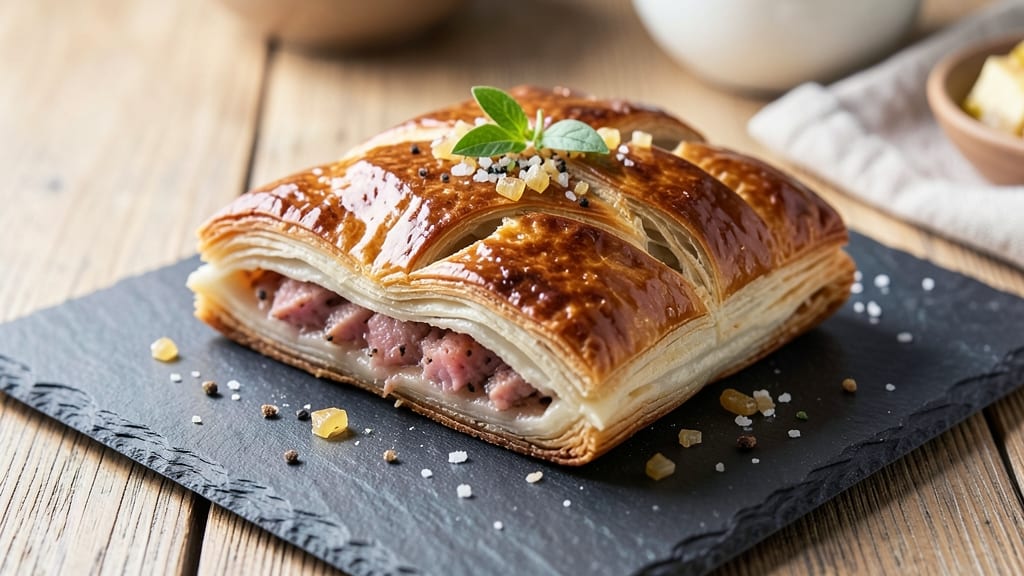
This pork pie pastry recipe delivers the perfect harmony of savory minced pork and golden, flaky crust—a classic comfort food with restaurant-quality results. 🔥 After years of perfecting the balance between tender filling and crisp pastry, I’ve developed a method that’s both traditional and foolproof, whether you’re baking for a family gathering or a special occasion.
The secret lies in layering the dough properly and cooking the filling just until it’s fully tender, ensuring every bite is rich and satisfying.
The recipe begins with a simple yet flavorful pork mixture—minced pork simmered with onions, herbs, and spices until it’s perfectly seasoned and just tender. Meanwhile, the pastry dough gets rolled out and carefully layered to create that signature flaky texture that makes pork pies irresistible.
This isn’t just a recipe; it’s a lesson in patience and precision, where each step builds on the last to create a dish that’s as impressive as it is delicious.
By the time it emerges from the oven, you’ll have a pork pie with a golden, crisp crust that shatters at the touch and a filling so rich and aromatic it’ll have everyone asking for seconds.
The aroma alone—warm, savory, and just slightly spiced—will fill your kitchen and draw everyone to the table. This is the kind of dish that feels like a hug in food form, perfect for holidays or any day you want to treat yourself to something truly special.
Whether you’re making it for a crowd or just craving a taste of nostalgia, this recipe scales beautifully and delivers restaurant-quality results every time. The pastry stays crisp, the filling remains tender, and the flavors are perfectly balanced. Ready to master the art of the pork pie? Let’s get started.
Ingredients for pork pie pastry
Golden crust meets savory pork—just 14 ingredients for restaurant-quality comfort.
| Ingredient | Amount | Notes |
|---|---|---|
| Ground Pork 🐷 | 1 ½ lb | Freshly minced for best texture |
| Yellow Onions 🧅 | 1 whole | Medium size, finely chopped |
| All-Purpose Flour 🌾 | 4 cups | For pastry dough, sifted |
| Cold Unsalted Butter 🧈 | 1 cup | Cut into small cubes |
| Ice Water 💧 | ½ cup | For dough elasticity |
| Salt 🧂 | 1 ½ tsp | Fine sea salt preferred |
| Ground Black Pepper 🌶️ | ½ tsp | Freshly cracked |
| Dried Thyme 🌿 | 1 tsp | Or 1 tbsp fresh |
| Garlic Cloves 🧄 | 4 cloves | Minced for filling |
| Beef Stock 🍲 | ½ cup | For rich filling flavor |
| Eggs 🥚 | 1 whole | For egg wash |
| Milk 🥛 | 1 tbsp | For egg wash |
| Mustard Powder 🌶️ | ½ tsp | For depth of flavor |
| Ground Allspice 🌶️ | ¼ tsp | Traditional spice blend |
The ground pork is non-negotiable here—freshly minced at the butcher counter gives the best texture. Costco or your local grocery store's pre-ground pork works, but avoid the ultra-fine stuff. For the onions, yellow with a medium size (about 6 oz) is perfect—no need for red or sweet. The all-purpose flour should be King Arthur or Bob's Red Mill if you're picky, but honestly any store-brand works fine. The butter needs to be cold when cutting it into cubes—this is key for flaky layers. I always grab Land O'Lakes unsalted from the freezer section since it's pre-cubed and ready to go.
No beef stock? Chicken stock or even water with a bouillon cube gets you close. Fresh thyme is ideal, but dried works at one-third the amount—just crush it between your fingers first. The mustard powder can be swapped for Dijon mustard (1 tsp) if you're in a pinch, but the powder gives a cleaner flavor. For the pastry, no butter substitute—this is where the magic happens. If you're short on time, Trader Joe's pre-made pie crust works in a bind, but it won't be as flaky. The egg wash can use just milk if you're out of eggs—it'll still brown nicely.
Pastry dough keeps for 3 days wrapped in plastic in the fridge or 3 months frozen in a sealed bag. The filling can be prepped ahead and refrigerated for 2 days before assembly. For freezing whole pies, wrap tightly in foil and thaw overnight in the fridge. The filling reheats beautifully—microwave 2 minutes with a splash of water if you're short on time. These pies are even better the next day, so make extras—they disappear fast at gatherings.
Why You'll Love This Recipe
- No-Fuss Dough: Honestly, the pastry here is ridiculously simple—just flour, butter, and ice water. You’ll have it rolled out in 10 minutes flat, no fancy techniques required. (Yes, even on a Tuesday night when you’re exhausted.)
- Savory Crispy Magic: That golden, flaky crust with tender, juicy pork inside? It’s the kind of combo that makes people ask, “What’s in this?” The onions caramelize just enough to add depth without overpowering.
- Leftovers That Last: This keeps perfectly for days—reheat slices in the oven or microwave, and they’re just as good cold. I’ve packed it for lunches, frozen extras for busy weeks, and still had people begging for seconds.
- Budget-Friendly Feast: Ground pork and basic pantry staples stretch into enough filling for a whole pie—or two. Between us, this is how I feed a crowd without breaking the bank, and no one ever complains.
Step-by-step instructions for savory meat and flaky crust masterpiece
Here's how to build that perfect balance of rich filling and golden, flaky pastry.
👨🍳 Step 1: Make the Pastry Dough
In a large bowl, combine the 4 cups all-purpose flour and 1.5 tsp salt. Cut in the 1 cup cold unsalted butter using a pastry cutter or your fingers until the mixture resembles coarse crumbs with pea-sized butter pieces. This cold butter is what creates those beautiful flaky layers later.
Gradually add the 0.5 cup ice water, 1 tablespoon at a time, mixing gently with a fork until the dough just comes together. Don't overwork it—just until it forms a shaggy mass. Turn it out onto a lightly floured surface and knead lightly for about 30 seconds until smooth. Wrap tightly in plastic and refrigerate for at least 1 hour (or up to 2 days).
🍳 Step 2: Prepare the Savory Filling
In a large skillet over medium heat, cook the 1.5 lb ground pork until browned, breaking it apart with a wooden spoon. Drain all but 2 tablespoons of the pork fat from the skillet—this fat is flavor gold.
Add the finely chopped yellow onion and cook for 5 minutes until softened. Stir in the minced garlic cloves and cook for another 30 seconds until fragrant. Sprinkle in the 1 tsp dried thyme, 0.5 tsp ground black pepper, 0.5 tsp mustard powder, and 0.25 tsp ground allspice, stirring to combine. Pour in the 0.5 cup beef stock and simmer for 5 minutes until the liquid reduces slightly.
🥘 Step 3: Assemble the Pies
Preheat your oven to 375°F. Roll out about ⅓ of the chilled dough on a lightly floured surface to about ⅛-inch thickness. Cut into 6-inch circles using a round cutter or plate. Place one circle in each of 6 greased pie pans.
Divide the pork filling evenly among the pie shells, mounding it slightly in the center. Roll out the remaining dough and cut into 6-inch circles again. Place one on top of each pie, pressing gently to seal the edges. Use a fork to crimp the edges decoratively, then cut 4 small slits in the top of each crust for steam to escape.
🔥 Step 4: Bake to Golden Perfection
Brush the tops of the pies with a mixture of 1 whole egg beaten with 1 tbsp milk for that beautiful golden finish. Bake for 35-40 minutes until the crust is deep golden brown and the filling is bubbling through the slits. The pies are done when the crust sounds hollow when tapped.
Let the pies cool for 10 minutes before serving. The filling should be rich and savory, while the crust remains tender with those signature flaky layers. Serve warm with a sharp mustard or tangy chutney for dipping.
Pro Tips For Making Pork Pie Pastry
- Chill the Butter First: Grab that unsalted butter straight from the fridge—cold is non-negotiable here. I learned this the hard way when my pastry turned greasy and greasy. Cut it into small cubes, toss them in the flour, then pulse until it looks like coarse sand. This keeps the layers crisp, not soggy.
- Fine Dice the Onions: Onions here aren’t just flavor—they’re texture. Chop them into tiny dice, no bigger than 1/8-inch. Too big, and they’ll steam instead of caramelize, turning your filling mushy. Sauté them low and slow until they’re translucent but not browned—just enough to mellow their bite.
- Work the Dough Fast: Once you mix flour, butter, and ice water, stop fiddling. Overworking the dough makes it tough, and you’ll end up with a chewy mess, not a flaky crust. Handle it just enough to bring it together—about 30 seconds—then slap it into the pan and let the butter do its magic.
- Use Ice Water Sparingly: This isn’t a science experiment—you don’t need precise measurements. Start with 1-2 tablespoons of ice water, then add more gradually until the dough holds together. Too much, and your pastry will steam instead of bake, leaving you with a dense, gummy disaster. Test with a pinch: if it crumbles, add a drop more.
Pro cooking tips for great pork pie pastry
Pastry Dough Mastery
For that signature flaky texture, never skip chilling the dough—I mean it. After mixing, refrigerate for at least 1 hour (up to 2 days) to let the gluten relax. This prevents shrinking during baking.
When rolling, keep the dough thin but sturdy—about ⅛-inch thickness—and avoid pressing too hard. I use a rolling pin with marble handles from Le Creuset because it maintains even pressure. 🧈
Work quickly with cold butter—it should stay pea-sized in the dough. If it melts too soon, pop your bowl in the freezer for 5 minutes while you finish mixing.
For extra crispness, dust your rolling surface with rice flour instead of all-purpose—it gives a lighter crust. Trust me, this small swap makes a big difference in texture.
Filling Perfection
Don’t drain all the pork fat—keep 2 tablespoons in the skillet. That rendered fat carries all the meaty flavors into the filling. For deeper color, add ½ teaspoon smoked paprika to the spice mix.
I like to toast the spices in the skillet for 30 seconds before adding the stock—this blooms their aromas and makes the filling taste more complex. 🌶️
Simmer the filling until it’s just reduced—you want it thick enough to hold its shape when baked but still moist. If it’s too dry, stir in 1 teaspoon beef stock before assembling.
Pro tip: Let the filling cool completely before filling the pies to prevent steam from weakening the crust during baking.
Assembly Secrets
Grease your pie pans with butter, not oil—it gives a richer flavor and helps the crust brown beautifully. For a tighter seal, brush the edges of the bottom crust with a little egg wash before adding the top crust.
This creates a natural glue. I use a pastry wheel to cut the dough circles—it’s faster and gives cleaner edges than a knife. 🔪
When crimping the edges, use a fork or decorative crimper for that classic look. Press firmly but gently—too much pressure can tear the dough. For extra flakiness, brush the inside of the top crust with a little melted butter before sealing.
This adds another layer of richness that your guests will notice immediately.
Baking Like a Pro
Bake on the middle rack of your oven for even heat distribution. If your crust starts browning too quickly, tent it loosely with aluminum foil. For that golden finish, I switch to the top rack for the last 5 minutes of baking.
The high heat gives a beautiful caramelization without overcooking the filling. 🔥
Check doneness by tapping the crust—it should sound hollow when fully baked. If the filling isn’t bubbling through the slits after 40 minutes, cover the pies with foil and bake 5-10 minutes more.
Overbaking dries out the crust, so pull them out just as they reach that perfect golden hue.
Nutrition facts
Frequently asked questions
Can I make pork pies with store-bought pie crust instead of homemade dough? For convenience, use 1 sheet of refrigerated pie crust (like Pillsbury) for each pie. Just press it into your greased pan, fill with the pork mixture, then top with another crust. The texture won't be as flaky as homemade, but it's a great shortcut.
How do I prevent the crust from shrinking during baking?
Chill your dough for at least 1 hour before rolling, and keep it cold while working. Use a rolling pin with marble handles to maintain even pressure, and avoid pressing too hard. For extra stability, brush the crust edges with egg wash before adding the top layer. This creates a natural seal that prevents shrinking.
Can I make pork pies ahead of time?
Yes! Assemble the pies and refrigerate them unbaked for up to 24 hours or freeze them for 3 months. Thaw overnight in the fridge before baking. For extra flavor, brush the crusts with melted butter before baking after thawing. The filling reheats beautifully—just microwave with a splash of water if short on time.
What can I substitute for beef stock in the filling?
Use chicken stock or even water with 1 tsp beef bouillon for a similar depth of flavor. For a richer taste, add 1 tbsp Worcestershire sauce or ½ tsp soy sauce. The key is to keep the liquid reduced so the filling holds its shape when baked.
Why did my crust turn out soggy?
Soggy crusts usually happen when steam gets trapped.