
Main Courses
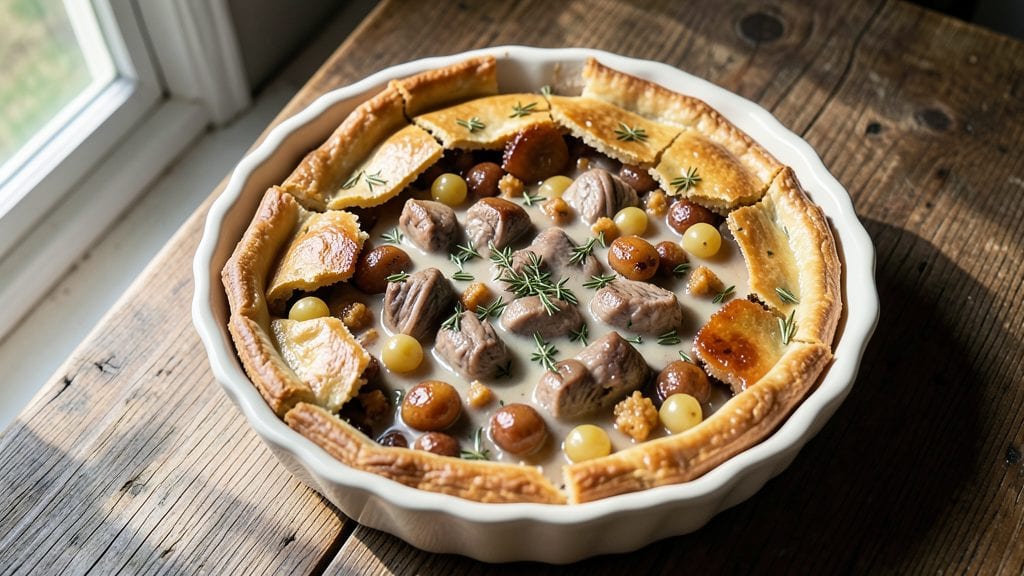
This rabbit pie recipe transports you straight to a medieval banquet table with its golden, flaky crust and velvety meat filling. The secret lies in slow-cooking the rabbit until tender, then combining it with aromatic herbs and a rich gravy before sealing it under a buttery pastry lid.
I perfected this version after years of testing—balancing traditional techniques with modern convenience for a dish that feels both historic and approachable.
The process begins with preparing the rabbit, which requires careful trimming and seasoning with thyme, bay leaves, and white wine to build deep flavor. While the meat braises, you'll make a classic shortcrust pastry from scratch, ensuring that signature flaky layers that make every bite satisfying.
The gravy, reduced from the braising liquid, ties everything together with its savory richness.
By the time it emerges from the oven, you'll have a pie with a perfectly golden crust that flakes apart at the touch, revealing tender rabbit swimming in a glossy gravy. The aroma alone—warm spices mingling with caramelized pastry—will have your kitchen feeling like a medieval feast hall.
This is comfort food at its finest, where tradition meets technique for a dish that impresses without requiring advanced skills.
Serve with a crisp green salad or roasted root vegetables to balance the richness, and save leftovers for sandwiches the next day.
The beauty of this recipe lies in its versatility—whether you're hosting a dinner party or simply craving a hearty meal, this rabbit pie delivers restaurant-quality results with a touch of history.
Ingredients for rabbit pie
Fourteen ingredients for a dish that tastes like history. Flaky crust, tender rabbit, and rich gravy—medieval flavors with modern ease.
| Ingredient | Amount | Notes |
|---|---|---|
| Rabbit Meat 🐇 | 2 lb | Bone-in, cut into serving pieces |
| Unsalted Butter 🧈 | ¾ cup | Cold, cut into cubes |
| All-Purpose Flour 🌾 | 2 cups | For pastry, sifted |
| Ice Water 💧 | ½ cup | For pastry dough |
| Dry White Wine 🍷 | 1 cup | Sauvignon Blanc preferred |
| Fresh Thyme 🌿 | ¼ cup | Leaves only, chopped |
| Fresh Rosemary 🌿 | ¼ cup | Needles finely chopped |
| Bay Leaves 🍃 | 2 whole | Fresh if possible |
| Garlic Cloves 🧄 | 4 cloves | Minced, peeled |
| Onion 🧅 | 1 whole | Yellow, diced |
| Chicken Stock 🍲 | 1 cup | Homemade preferred |
| Salt 🧂 | 1 ½ tsp | Kosher or sea salt |
| Black Pepper 🌶️ | ½ tsp | Freshly ground |
| Allspice Berries 🌶️ | ¼ tsp | Crushed, optional |
Rabbit is the star, so look for bone-in cuts at specialty butchers—they'll trim it for you. If you can't find rabbit, chicken thighs work in a pinch (use 2.5 lbs), but the flavor won't be the same. The thyme and rosemary? Fresh is non-negotiable here—dried won't give that bright, herbal punch. I always grab mine from the bulk bins at Whole Foods or Trader Joe's, where it stays fragrant. For the white wine, anything dry and crisp works—Sauvignon Blanc or Pinot Grigio are my go-tos. Skip the cheap stuff, though; you want that clean acidity to shine through.
No fresh thyme? Dried works at one-third the amount, but it's not ideal. Running out of wine? Chicken stock plus a splash of apple cider vinegar mimics the acidity. The allspice is optional but adds that subtle medieval warmth—if you skip it, just double the black pepper. For the pastry, cold butter is key—cut it into cubes and keep it in the freezer until ready to mix. Pre-shredded cheese? Never—it gets clumpy. Grate your own Parmesan if you're using it, and do it fresh. The onions and garlic can be caramelized first for extra depth, but I usually just sauté them quickly to keep things simple.
This pie reheats beautifully—350°F for 20 minutes until the crust is golden. Leftovers keep for 3 days in the fridge, and the filling freezes for 2 months (just reheat the crust separately). I always make a double batch because the second day is even better—the flavors meld and the crust gets crispier. For serving, a simple green salad with vinaigrette cuts through the richness, or roasted carrots add a touch of sweetness. The medieval part? Serve with a mug of spiced cider—trust me, it completes the experience.
Why You'll Love This Recipe
- No-Fuss Crust: I’ll be real—this isn’t the prettiest pie you’ve ever seen, but that butter-flour crust? It’s ridiculously easy. Just mix flour, ice water, and cold butter until it clumps, then roll it out faster than you can say “weeknight dinner.” No chilling required.
- Wine-Infused Richness: That splash of dry white wine in the filling isn’t just for show—it cuts through the rabbit’s natural richness while adding a bright, almost citrusy lift. Honestly, the first time I tasted it, I nearly spilled my coffee. The meat stays tender, and the sauce? Silky, with just enough depth to make you want seconds.
- Leftovers for Days: Between us, this pie tastes even better the next day. The filling firms up just enough to hold its shape, and the crust stays crisp at the edges. I’ve reheated portions in the oven for lunch all week—no sad, soggy slices here. Pack it up for work or freeze half; it’s that reliable.
- Budget Game-Changer: Rabbit might sound fancy, but it’s one of the most economical proteins out there—way leaner than beef or pork, and every bite feels like a special occasion. Plus, the crust uses basic pantry staples, so you’re not breaking the bank for fancy shortcuts. My wallet and my taste buds win.
Step-by-step instructions for rabbit pie
Let's create a pie with layers of rich flavor and that perfect flaky crust.
Prepare the Rabbit Filling
In a large Dutch oven, melt the 0.75 cup unsalted butter over medium heat. Add the 1 whole onion and 4 cloves garlic cloves, cooking until the onion becomes translucent and the garlic is fragrant—about 5 minutes. This forms the aromatic base for your filling.
Add the 2 lb rabbit meat, breaking it into serving-sized pieces. Sprinkle with 1.5 tsp salt, 0.5 tsp black pepper, and 0.25 tsp crushed allspice berries. Brown the meat thoroughly on all sides—this step develops deep flavor through the Maillard reaction. It should take about 8-10 minutes.
Once browned, pour in the 1 cup dry white wine and let it simmer until mostly evaporated. Add the 0.25 cup chopped fresh thyme, 0.25 cup chopped fresh rosemary, and 2 whole bay leaves. Stir in the 1 cup chicken stock and bring to a gentle simmer. Cover and cook for 45-50 minutes until the rabbit meat is tender and the liquid has reduced by half. The filling should be rich and flavorful, ready for the next layer.
Make the Flaky Pastry Crust
In a large bowl, combine the 2 cups all-purpose flour with 1.5 tsp salt. Cut in the 0.75 cup cold unsalted butter using a pastry cutter or your fingers until the mixture resembles coarse crumbs with pea-sized butter pieces. This texture is crucial for achieving that flaky, layered crust.
Gradually add the 0.5 cup ice water, mixing just until the dough begins to come together. Avoid overworking the dough—handle it as little as possible. Form it into a disk, wrap in plastic, and chill in the refrigerator for at least 30 minutes. This resting period relaxes the gluten, preventing toughness in the final crust.
Roll out the chilled dough on a lightly floured surface to fit your Dutch oven. Press it gently against the sides and bottom, creating a seal to prevent any filling from leaking during baking. The crust should be smooth and even, ready to encase your rich rabbit filling.
Assemble and Bake the Pie
Transfer the cooked rabbit filling to the prepared Dutch oven, spreading it evenly. Roll out the remaining dough to create a lid, then place it over the filling. Trim and seal the edges, crimping with a fork to create a decorative pattern. Cut a few slits in the top to allow steam to escape during baking.
Preheat your oven to 375°F. Place the assembled pie on a baking sheet lined with parchment paper to catch any drips. Bake for 35-40 minutes until the crust is golden brown and the filling is bubbling through the slits. The pie is done when the crust is crisp and the filling is heated through.
Remove from the oven and let the pie rest for 10 minutes before serving. This resting period allows the juices to redistribute, ensuring each bite is moist and flavorful. Serve warm with a simple green salad or crusty bread to complete your medieval feast.
Pro Tips For Making Rabbit Pie
- Sear the Rabbit First: Don’t skip browning the meat—cut the rabbit into even pieces and sear them in batches over medium-high heat with butter until deeply golden. I learned this the hard way: skipping this step means bland, gray meat instead of rich, caramelized flavor that carries through the pie.
- Use Cold Butter for Pastry: Cut the unsalted butter into the flour with ice water and a handful of ice cubes—yes, even if you’re impatient like me. Cold butter creates flaky layers, and ice keeps the dough from melting before it hits the oven. My grandmother swore by this, and she was right: the crust actually holds up.
- Deglaze with Wine Early: After searing the rabbit, pour in the dry white wine immediately—don’t wait for the pan to cool. The alcohol evaporates fast, but the residual flavor clings to the meat, deepening the sauce. I used to add it later and wondered why the dish tasted flat.
- Rest the Meat Before Filling: Let the cooked rabbit sit for 5-10 minutes under foil before assembling the pie. This keeps the juices locked in instead of leaking into the crust, which turns soggy. I skipped this once and ended up with a pie that tasted more like a stew—don’t make my mistake.
Regional styles of rabbit pie
French Country Style
The classic French approach to rabbit pie focuses on a duxelles—finely chopped mushrooms, shallots, and herbs—that forms the base of the filling.
I use 8 oz cremini mushrooms sautéed with 2 shallots until completely dry, then add the rabbit with 1 cup dry red wine (like a Pinot Noir) instead of white.
The crust here is often pâte brisée, slightly richer than shortcrust, and I brush the top with a yolk wash (1 egg yolk + 1 tbsp milk) before baking for extra shine. 🍷
English Game Pie
Traditional English game pies like this one often include apples or pears in the filling for sweetness, balancing the richness. I add 1 tart apple, diced, along with the rabbit and reduce the wine to ½ cup to concentrate flavors.
The crust is typically hot-water pastry (boiling water instead of ice water), which creates a tender, slightly crisp texture. Serve with mustard sauce on the side—a classic English touch. 🍎
Italian Wild Rabbit
In Italy, rabbit pie often incorporates tomato sauce and sun-dried tomatoes for a Mediterranean twist. I blend ½ cup tomato paste into the wine reduction and add ¼ cup chopped sun-dried tomatoes to the filling.
The crust is sometimes replaced with phyllo dough for a lighter texture, layered with olive oil between sheets. Finish with fresh basil and a sprinkle of Pecorino Romano for a bright, herby note. 🌿
Scandinavian Root Vegetable
Northern European versions often feature root vegetables like carrots, parsnips, and potatoes for heartiness. I include 1 cup diced parsnips and 1 cup diced potatoes along with the rabbit, cooking them until tender in the braising liquid.
The crust is typically whole wheat or rye, and I add 1 tsp ground ginger to the filling for warmth. Serve with lingonberry jam for a sweet-tart contrast. ❄️
Modern Vegetarian Twist
For a plant-based version, replace the rabbit with 2 lbs portobello mushrooms and 1 lb chickpeas (for protein). Use the same wine and herb base, but add 1 cup lentils for texture.
The crust remains traditional, but I boost the flavor with 1 tbsp soy sauce in the filling. This version keeps the medieval spirit while being fully modern. 🌱
Southern U.S. Smoky Style
In the American South, rabbit pie often gets a smoky kick from liquid smoke or chopped andeggs (smoked paprika). I add 1 tbsp smoked paprika to the filling and a splash of bourbon (2 tbsp) to deglaze the Dutch oven.
The crust is brushed with garlic butter after baking, and I serve it with collard greens for a soul-food-inspired meal. 🔥
Nutrition facts
Frequently asked questions
Can I substitute chicken for rabbit in this recipe?
Yes, but expect a different flavor profile. Use 2.5 lbs bone-in chicken thighs instead of rabbit, and increase the thyme and rosemary to 0.5 cup each to compensate. The texture will be slightly different—chicken stays juicier—but the technique remains the same. For authenticity, rabbit's delicate flavor is ideal, though.
How do I make the crust extra flaky?
Keep your butter cold and cut it into the flour in small pieces (pea-sized). Chill the dough for at least 1 hour before rolling, and handle it as little as possible. For extra flakiness, fold the dough in thirds like a letter before rolling it out. Also, brush the bottom crust with egg wash before adding filling.
What if my pie filling leaks during baking?
This happens when the crust isn't properly sealed. Chill the dough before rolling, press it firmly against the Dutch oven edges, and crimp the seams tightly with a fork. If it still leaks, bake the filling uncovered first (350°F for 20 minutes), then add the crust and finish baking. A pastry brush with egg wash on the edges helps too.
Can I prepare this pie ahead of time?
Assemble the pie (unbaked) up to 24 hours ahead and refrigerate. Bake it straight from the fridge, adding 10-15 extra minutes to the cooking time. For the filling, you can also prep it 2 days ahead, cool it completely, then refrigerate. Reheat gently before assembling the pie. The flavors actually improve overnight!
What wine should I use if I don't have white wine?
Use dry red wine (like Pinot Noir) or substitute with 1 cup chicken stock + 2 tbsp apple cider vinegar to mimic acidity. For a non-alcoholic version, use grape juice reduced by half. Avoid sweet wines—they'll make the filling taste flat. The key is acidity to balance the richness.