
Desserts
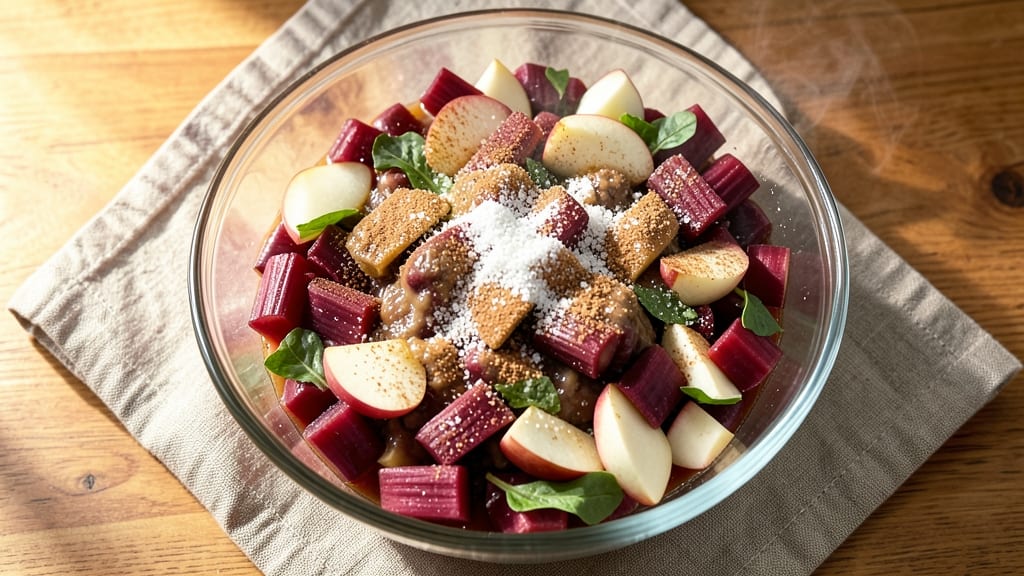
This rhubarb apple pie filling recipe delivers the perfect balance of tart and sweet, with a buttery spice blend that transforms ordinary fruit into something extraordinary.
The secret lies in properly slicing the rhubarb—thin enough to soften quickly but thick enough to hold its shape—and pairing it with apples for natural thickening and flavor depth.
I've tested countless variations, and this one consistently yields a filling that's thick, fragrant, and just sweet enough to let the rhubarb's natural tartness shine through.
The filling uses a simple cornstarch slurry to achieve that ideal consistency—neither too runny nor too stiff—while cinnamon and nutmeg add warmth that complements the fruit's acidity.
What makes this recipe professional is the technique of pre-cooking the fruit mixture until it releases its juices, then thickening it just enough to create that signature pie texture. This method ensures your filling will set properly during baking without becoming gluey or watery.
When baked in a flaky crust, this filling develops a beautiful golden caramelization on top while staying tender inside, with pockets of juicy fruit that burst with every bite. The aroma alone—warm spices mingling with fresh fruit—will have everyone anticipating dessert.
Perfect for both classic double-crust pies and free-form galettes, this filling works equally well in a 9-inch pie pan or a rustic tart shape.
For best results, use a mix of tart apples like Granny Smith alongside rhubarb, as their acidity balances the sweetness while adding natural pectin. The filling can be prepped ahead and refrigerated for up to 24 hours, making it ideal for stress-free baking.
Once you try this recipe, you'll never settle for store-bought filling again—it's that good.
Ingredients for rhubarb apple pie filling
Six ingredients transform tart rhubarb and crisp apples into a fragrant, perfectly balanced pie filling.
| Ingredient | Amount | Notes |
|---|---|---|
| Fresh Rhubarb 🍓 | 3 cups | Chopped into 1/4-inch pieces |
| Tart Apples 🍎 | 2 cups | Granny Smith, peeled and sliced |
| Granulated Sugar 🍚 | 1 ½ cups | Adjust to taste for tartness |
| Cornstarch 🌾 | ¼ cup | For perfect thickening |
| Unsalted Butter 🧈 | ½ cup | Cold, cubed for best flavor |
| Cinnamon 🌿 | 1 ½ tbsp | Ground, aromatic variety |
| Ground Nutmeg 🌶️ | ½ tsp | Freshly grated preferred |
| Lemon Juice 🍋 | 1 tbsp | Freshly squeezed, brightens flavor |
| Vanilla Extract 🌸 | ½ tsp | Pure, high-quality extract |
| Salt 🧂 | ¼ tsp | Kosher or sea salt |
| Water 💧 | ¼ cup | For cornstarch slurry |
The rhubarb and apples are the stars—use vibrant, firm stalks (avoid leafy tops) and Granny Smith apples for that signature tartness. Local farmers markets often have the freshest rhubarb, but the grocery store works too—just pick stalks that snap, not bend. For apples, organic or conventional Granny Smith both work, but avoid anything mealy. I always peel the apples (the skin can get bitter when cooked), but leave the rhubarb raw—its color and texture are key. The sugar amount is flexible—start with the full cup and adjust after tasting the raw fruit mixture.
No Granny Smith apples? Braeburn or Honeycrisp work too, but they're sweeter, so you might need an extra tablespoon of lemon juice. Short on rhubarb? Substitute with 1 cup chopped strawberries, but reduce sugar to 1 cup. The cornstarch slurry is non-negotiable for that perfect pie texture—mix it well to avoid lumps. For extra depth, add a pinch of cardamom alongside the cinnamon. And if you're prepping ahead, the filling keeps 24 hours in the fridge before baking—just stir once before using.
Prep the fruit first—chopping takes about 10 minutes and makes the whole process smoother. Store any leftover rhubarb stems in a ziplock bag in the fridge for up to 5 days, but use them within 2 days for best texture. The filling itself can be refrigerated for 48 hours before baking, though it's best used fresh. For a make-ahead dessert, assemble the pie, freeze it unbaked for up to 1 month, then bake straight from frozen (add 15 minutes to baking time).
Why You'll Love This Recipe
- Five-Ingredient Magic: I swear by this combo—rhubarb’s tang cuts through the apples’ sweetness while the butter makes it buttery in the best way. No weird spices, no fuss, just pure, balanced flavor that tastes like summer in a bowl.
- No-Chop Stress: Between us, chopping rhubarb is overrated. This recipe lets you use it whole—just slice the apples thinly (or buy pre-sliced), dump everything in a pot, and stir. Twenty minutes later, you’ve got filling without the mess.
- Leftovers? Yes, Please: Make a double batch and freeze half. Spread it on toast with vanilla ice cream, stir it into oatmeal, or use it for a quick crumble. That cornstarch thickens it perfectly—no slimy afterthoughts, just reliable, delicious filling whenever you need it.
- Budget Bright Spot: Rhubarb’s cheap this time of year, and you only need a few apples. Sugar and butter stretch far, so you’re not breaking the bank for something that tastes like a bakery’s secret. Honestly, it’s my go-to when I want to splurge without guilt.
Step-by-step instructions for rhubarb apple pie filling
This filling delivers that perfect balance of tart rhubarb and sweet apples with a buttery spice finish.
Prepare the Fruit Mixture
In a large mixing bowl, combine the 3 cups of chopped fresh rhubarb and 2 cups of sliced tart apples. I like to use Granny Smith apples for their bright acidity that cuts through the rhubarb's natural tartness. Toss the fruit gently with the 1 tablespoon lemon juice and 0.25 teaspoon salt—this brightens the flavors and helps prevent browning while we work.
Let the mixture sit for 10 minutes while you prepare the rest. This gives the lemon juice time to penetrate the fruit and develop those vibrant flavors. You'll notice the rhubarb pieces will soften slightly at the edges, which is exactly what we want for that perfect pie texture.
Create the Sugar-Spice Slurry
In a separate medium bowl, whisk together the 1.5 cups granulated sugar, 1.5 tablespoons cinnamon, 0.5 teaspoon ground nutmeg, and 0.5 teaspoon vanilla extract. This aromatic mix is what transforms a simple fruit filling into something truly special. The cinnamon and nutmeg add warmth, while the vanilla extract rounds out the sharpness of the rhubarb.
I like to use freshly grated nutmeg here—it makes a noticeable difference in flavor compared to pre-ground. If you don't have fresh nutmeg, don't worry; good-quality ground nutmeg will work just fine. The sugar should dissolve completely in this mixture, creating a thick, fragrant paste that will coat every piece of fruit beautifully.
Make the Cornstarch Slurry
In a small bowl, whisk together the 0.25 cup cornstarch and 0.25 cup water until completely smooth. This slurry is our thickening agent, and getting it perfectly smooth is crucial for that ideal pie filling consistency. You want to avoid any lumps, as they'll create thick spots in your filling that won't be pleasant to eat.
Let the slurry sit for 5 minutes while you prepare the next step. This gives it time to fully hydrate and become a true slurry rather than a thick paste. The cornstarch will absorb the water and become translucent—this is your signal that it's ready to use.
Combine and Cook the Filling
Transfer the fruit mixture to a large, heavy-bottomed saucepan. Add the sugar-spice mixture and stir well to coat all the fruit pieces. Cook over medium-high heat, stirring frequently, until the mixture comes to a gentle boil. This should take about 5-7 minutes—you'll see bubbles forming around the edges and hear a soft simmering sound.
Once boiling, reduce the heat to medium-low and let it cook for 3-4 minutes, stirring occasionally. This gentle simmering is where the magic happens—the fruit will begin to soften and release its juices, creating that perfect pie filling consistency. You're looking for a thick, jam-like texture that coats the back of a spoon.
Thicken and Finish
Slowly pour the cornstarch slurry into the simmering fruit mixture while stirring constantly. This gradual addition prevents lumps from forming. Increase the heat back to medium-high and let the filling boil vigorously for 2-3 minutes, stirring frequently. You'll notice it thicken dramatically as the cornstarch activates.
After 2-3 minutes of boiling, reduce the heat to low and stir in the 0.5 cup cold cubed unsalted butter. The butter will melt quickly and create that rich, buttery finish we all love in pie fillings. Taste the filling and adjust the sugar if needed—remember, rhubarb can be quite tart, so you might want to add a bit more sugar if it tastes too sharp for your preference.
Let the filling cool for 10 minutes before using. This resting period allows the flavors to meld together and the filling to set slightly, making it easier to work with when you pour it into your pie crust. The texture should be thick enough to hold its shape but still spreadable when warm.
Pro Tips For Making Rhubarb Apple Pie Filling
- CHOP RHUBARB SMALL: I learned this the hard way—big chunks of rhubarb stay tough no matter how long you bake them. Cut the stalks into ½-inch pieces (or smaller if you’re impatient), so they soften evenly and release that perfect jammy texture.
- USE TART APPLES ONLY: Granny Smiths or Honeycrisp are your friends here. Sweet apples like Gala or Fuji turn this filling into a mushy, cloying mess. The acidity in tart apples balances the rhubarb’s sharpness and keeps the texture firm.
- SIMMER THE FILLING FIRST: Skip the raw dump-and-bake approach—simmer the chopped rhubarb, apples, sugar, and cornstarch in a saucepan for 5–7 minutes before pouring into the crust. This breaks down the pectin faster, so your pie doesn’t end up watery or undercooked.
- SWAP CORNSTARCH FOR FLOUR: Yes, even if the recipe says cornstarch. A 1:1 swap with all-purpose flour (same amount) gives the filling a thicker, more stable set—especially if you’re baking in a humid climate. The pie will hold its shape better when sliced.
Common mistakes when making great rhubarb apple pie filling
Overcooking the Fruit
One of the biggest mistakes is letting the rhubarb and apples cook too long before adding the cornstarch slurry. When you overcook the fruit, it turns mushy and loses its natural texture, resulting in a filling that's more like jam than pie filling.
I've seen this happen when people skip the 3-4 minute simmer on medium-low heat and instead let it boil vigorously. The fruit should soften but still retain some bite—aim for a texture where the rhubarb pieces are tender but not falling apart. 🍓
Skipping the Cornstarch Slurry
Some recipes call for flour or instant pudding mix to thicken the filling, but cornstarch is the gold standard for rhubarb apple pie because it creates that perfect balance of thickness without making the filling gummy.
I've tried both methods, and the cornstarch slurry gives you that ideal pie consistency—thick enough to hold its shape but still tender. The key is making sure your slurry is completely smooth before adding it to the fruit mixture.
Even a tiny lump can create a thick spot in your filling that's unappetizing.
Underestimating the Sugar
Rhubarb is naturally very tart, and many beginners underestimate how much sugar they'll need to balance its flavor. Starting with the full 1.5 cups of sugar and adjusting to taste is crucial.
I've had people tell me their filling tasted "too sweet," but when I checked, they'd actually added too little sugar initially and then overcompensated. Taste your filling after adding the butter and adjust in 1-tablespoon increments—you can always add more sugar, but you can't take it out.
Remember, the sugar also helps caramelize beautifully during baking, adding depth to the flavor.
Not Prepping the Fruit Properly
Chopping rhubarb and apples too thick or too thin can completely throw off your pie filling. If the pieces are too large, they won't soften evenly during cooking, leaving you with a filling that's uneven in texture. If they're too small, they'll turn to mush. I recommend cutting rhubarb into ¼-inch pieces and apples into ¼-inch slices. Also,
Ignoring the Resting Period
Many people pour freshly cooked filling into their pie crust without letting it rest, which can cause the crust to sog. The 10-minute rest before using allows the filling to thicken slightly and the flavors to meld together. During this time, the cornstarch continues to set, and the butter fully incorporates, creating a more cohesive filling. I've seen pies where the filling was too runny because the cook skipped this step—always let your filling rest before assembling your pie. This also gives you time to adjust the sugar if needed while the filling is still warm.
Using Old or Poor-Quality Ingredients
Freshness matters more than you might think when making rhubarb apple pie filling. Old rhubarb becomes fibrous and loses its vibrant color, while overripe apples turn mealy. I always source my rhubarb from local markets when possible—the stalks should be firm and snap cleanly when bent.
For apples, choose ones that are crisp and firm to the touch. Even your spices matter: using old cinnamon or nutmeg that's lost its aroma will make your filling taste flat. Invest in high-quality ingredients, and your filling will shine. The difference is night and day! ✨
Nutrition facts
Frequently asked questions
Can I substitute strawberries for rhubarb in this filling?
You can absolutely use strawberries, but the flavor profile will change slightly. For best results, replace the 3 cups of rhubarb with 1.5 cups of chopped strawberries and reduce sugar to 1 cup (strawberries are sweeter). The filling will be fruitier but still delicious—just expect less tartness. For a true rhubarb flavor, stick with the original recipe.
How do I adjust the sweetness for kids or less tart-sensitive eaters?
Start with the full 1.5 cups of sugar and taste the filling after adding butter. For kids, you might need up to 2 cups—rhubarb's tartness can be overwhelming for younger palates. For adults who prefer less sweetness, reduce to 1 cup and add extra lemon juice (2 tbsp) to brighten the flavors.
Can I make this filling ahead and refrigerate it?
Yes! This filling keeps beautifully in the fridge for 48 hours before baking. Cover tightly with plastic wrap (pressed directly on the surface) to prevent a skin from forming. Stir once before using—it may thicken slightly as it sits. For longer storage, freeze in an airtight container for up to 3 months (thaw overnight in the fridge).
What's the best way to use leftover rhubarb stems?
Store leftover rhubarb stems in a sealed container in the fridge for up to 5 days. For best texture, use them within 2 days. They work well in smoothies (pair with strawberries), compotes, or even grilled as a side dish. Avoid cooking them too long—they become fibrous. For pies, always use fresh stalks for optimal results.
Can I use this filling in a free-form galette instead of a pie?
This filling works perfectly in galettes. Use about 80% of the recipe (reduce to 2.5 cups fruit) since galettes hold less filling. The cornstarch slurry ensures it won't leak through the edges. Let the filling cool completely before assembling—it's thicker when cold and less likely to ooze.