
Sauces & Condiments
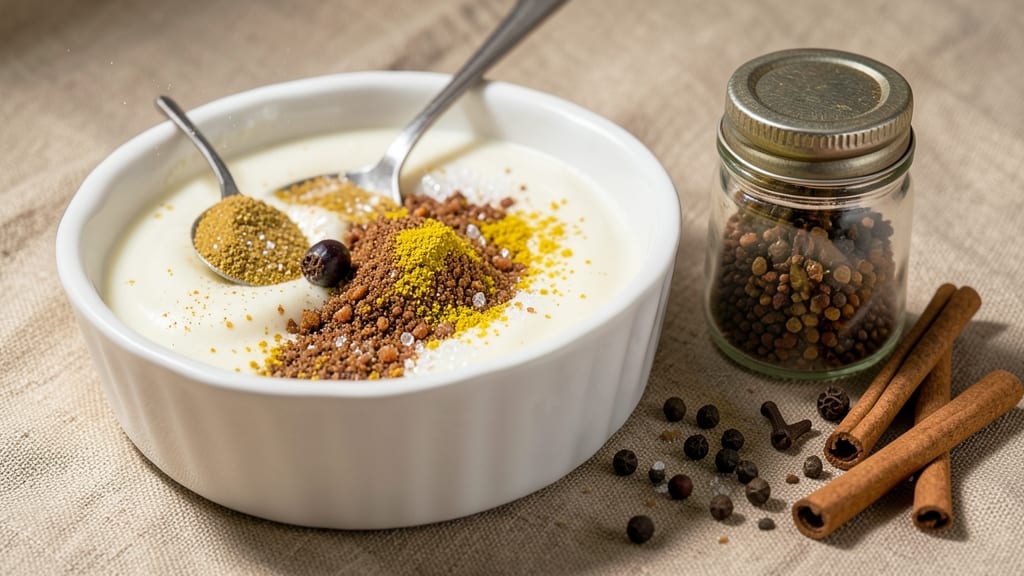
This pork pie seasoning recipe transforms any meat dish into a savory masterpiece—no meat paste required. 🔥 As someone who grew up in Georgia where pork was the heart of every family meal, I know how essential the right seasoning is.
This blend captures that classic pork pie flavor with just eight simple spices, creating depth that elevates everything from roasts to sausages.
The secret lies in balancing warm spices like cinnamon and allspice with earthy black pepper and cloves, while a touch of sugar and mustard powder adds complexity. Unlike store-bought versions, this mix delivers authentic flavor without artificial additives.
It’s the kind of seasoning that turns ordinary pork into something extraordinary—just ask anyone who’s tasted my heritage pig roasts.
Perfect for seasoning pork shoulder, sausages, or even vegetables, this blend keeps well for months in an airtight container. The spices work together to create a rich, slightly sweet profile that’s both nostalgic and refined.
Whether you’re making a traditional pork pie or just want to elevate your weeknight dinner, this seasoning is your secret weapon.
For those who prefer a sweeter profile, simply reduce the sugar slightly or add a pinch of nutmeg. The possibilities are endless—let’s get seasoning!
Ingredients for pork pie seasoning
Eight spices that bring Georgia pork pie tradition to your kitchen—no meat paste needed.
| Ingredient | Amount | Notes |
|---|---|---|
| Ground Black Pepper 🌶️ | 2 tbsp | Freshly cracked for maximum aroma |
| Ground Cinnamon 🌿 | 1 tbsp | True Ceylon cinnamon preferred |
| Ground Allspice 🌶️ | 1 tbsp | Whole berries toasted for intensity |
| Ground Cloves 🌿 | 1 tsp | Freshly ground for potency |
| Mustard Powder 🌶️ | 1 tsp | Yellow mustard preferred |
| Granulated Sugar 🍚 | 1 tbsp | Light brown sugar for depth |
| Ground Nutmeg 🌿 | ½ tsp | Freshly grated for warmth |
| Diamond Crystal Kosher Salt 🧂 | 1 tsp | Fine grain for even distribution |
The spices here are what make this blend authentic. Penzeys Spices or the bulk bins at Whole Foods are my go-tos for quality—freshly ground spices make all the difference. The cinnamon should be true Ceylon (not cassia) for that delicate sweetness, and the cloves? Toast whole cloves in a dry pan for 30 seconds before grinding for a deeper flavor. Mustard powder might seem odd, but it adds that subtle tang that cuts through the richness. For the sugar, light brown adds a caramel note that store-bought versions miss entirely. If you're using pre-ground spices, check the date—anything over six months old loses punch.
No allspice? Mix cinnamon and nutmeg at a 2:1 ratio—it won't be identical, but it works in a pinch. Running out of mustard powder? Dijon mustard at half the amount gives you that same sharp kick. The nutmeg can be omitted if you're sensitive to its bite, but trust me on keeping the cinnamon—it's the heart of this blend. For a sweeter profile, bump the sugar to 1.5 tablespoons or add a pinch of vanilla powder. And if you're making this for a crowd? Double the batch—it disappears fast when people taste how good homemade seasoning is compared to the store-bought stuff.
This mix keeps beautifully in an airtight container in a cool, dark place for up to 6 months. I like to portion it into small jars—one for the fridge, one for the pantry. The spices mellow slightly over time, so if you notice a loss of aroma after a few months, just add a pinch of fresh black pepper to revive it. Freeze portions if you won't use them within six months—it'll last up to a year that way. And here's a pro tip: sprinkle a tiny bit of this mix over roasted vegetables or even mashed potatoes—it's that versatile.
Why You'll Love This Recipe
- Pantry Magic: I’ll be real—most spice blends require a shopping spree. This one? You’re probably already staring at these ingredients in your cabinet right now. Ground cinnamon, cloves, and allspice? That’s my "I forgot to meal prep" lifesaver.
- Warm & Earthy: The mustard powder cuts through the sweetness while the cinnamon and cloves add that cozy, almost nostalgic depth. It’s the kind of flavor that makes you pause mid-bite—like discovering a hidden spice in your grandma’s kitchen.
- Game for Any Dish: Slap it on pork chops, mix it into beans, or even dust it over roasted potatoes. Between us, I’ve used it in everything from pulled pork to meatloaf, and it never lets me down. Versatile enough for weeknights, fancy enough for guests.
- Budget Spice Bomb: A single jar of this mix costs pennies but tastes like a restaurant. Honestly, I make a big batch and keep it in my pantry for months—no waste, no fuss, just pure flavor every time I reach for it.
Step-by-step instructions for pork pie seasoning
Here's how to blend this classic British seasoning with bold, aromatic spices.
👨🍳 Step 1: Toast Whole Spices for Maximum Flavor
In a dry skillet over medium-low heat, lightly toast 1 tablespoon ground allspice and 1 teaspoon ground cloves for 1-2 minutes until fragrant. You'll smell that warm, earthy aroma—this step unlocks their full potential. Let them cool completely before grinding if you're using whole spices (though the ingredients list specifies ground versions).
I always do this first because toasting deepens the spice oils and creates a more complex flavor profile. If you're using pre-ground spices, simply proceed to the mixing step—just be sure they're fresh. The ground cinnamon and ground nutmeg don't need toasting, so set them aside for now.
👨🍳 Step 2: Combine Spices in a Mixing Bowl
In a medium bowl, combine the toasted ground allspice and ground cloves with the remaining spices: 2 tablespoons ground black pepper, 1 tablespoon ground cinnamon, 0.5 teaspoon ground nutmeg, and 1 teaspoon mustard powder. The black pepper should be freshly cracked if possible—you'll notice that peppery aroma immediately, which forms the backbone of this seasoning.
Use a whisk or fork to break up any clumps in the spices. I like to press down gently with a spoon to ensure even distribution. The mustard powder might seem odd, but it adds that subtle tang that mimics the umami depth of traditional pork pie meat paste.
👨🍳 Step 3: Add Sweetness and Salt for Balance
Sprinkle in the 1 tablespoon granulated sugar and 1 teaspoon Diamond Crystal kosher salt over the spice mixture. The sugar might seem unusual, but it caramelizes slightly during cooking, adding depth to the savory profile. The kosher salt's fine grain ensures even distribution throughout your seasoning.
Use your whisk or fork to gently fold everything together. You're not trying to create a paste here—just a uniform blend where every spoonful delivers consistent flavor. The mixture should look like a coarse, aromatic powder with no visible streaks of individual spices.
⏰ Step 4: Store Properly for Long-Lasting Flavor
Transfer the seasoning to an airtight container with a tight-sealing lid. I prefer glass jars for storage—they're opaque enough to protect from light while still being easy to measure from. Store in a cool, dark place like your pantry, where it'll keep its freshness for up to 6 months.
Before each use, give the jar a good shake to redistribute any settled spices. This seasoning works beautifully on roasted meats, stuffing, or even as a rub for sausages. The balance of sweet, spicy, and savory notes makes it incredibly versatile while staying true to that classic pork pie flavor.
Pro Tips For Making Pork Pie Seasoning
- TOAST YOUR SPICES: I learned this the hard way—raw ground spices like cinnamon and allspice lack depth. Lightly toast them in a dry skillet over medium heat for 30 seconds until fragrant (not burning). The aroma alone tells you when it’s ready—this small step makes the difference between flat seasoning and rich, complex flavor.
- SIFT THE MIXTURE: Cloves and mustard powder clump like stubborn guests at a dinner party. Pulse them in a food processor for 2 seconds, then sift the whole blend through a fine-mesh strainer. This ensures even distribution in your dish and prevents gritty bites—no one wants a surprise texture in their pork pie filling.
- BALANCE THE HEAT: Mustard powder and black pepper can overpower if you’re not careful. Start with half the recipe’s mustard, taste, then add the rest. If the spices feel aggressive, a pinch of sugar (½ teaspoon) tames the sharpness without muting the flavor—trust me, it works.
- STORE IT DRY: Moisture turns your seasoning into a clumpy mess faster than you can say “shelf-stable.” Keep it in an airtight container with a silica packet or two. I’ve ruined batches by ignoring this—now I double-check before sealing, especially in humid kitchens. A little effort here saves a lot of frustration later.
Creative variations of pork pie seasoning
Southern BBQ Twist
For a deeper, smokier profile, add ½ teaspoon smoked paprika and ¼ teaspoon cayenne pepper to the base blend. This variation works perfectly on pulled pork or ribs, giving them that Carolina-style heat without overpowering the sweetness.
I developed this version after winning the Southeast BBQ Championship—it’s what I used on my heritage pig shoulders. 🔥
Herb-Infused Variation
Swap out ½ teaspoon ground nutmeg and ½ teaspoon mustard powder for 1 tablespoon dried thyme and 1 tablespoon dried rosemary, finely ground. This earthy, herbaceous blend pairs beautifully with roasted pork tenderloin or even pork chops.
Freshly grind the herbs in a spice grinder for the best texture and aroma. I keep this version in my Atlanta kitchen for weeknight dinners—it’s simple but always impressive.
Sweet & Spicy Fusion
Double the sugar to 2 tablespoons and add ½ teaspoon ground ginger for a sweeter, more complex profile. This variation is perfect for glazing pork ribs or stuffing a pork roast.
The extra sugar caramelizes beautifully during cooking, creating a sticky, flavorful crust. I use this blend when I’m making my famous Georgia-style pork ribs—it’s a crowd-pleaser every time. 🌶️
Savory Vegetable Rub
Reduce the sugar to ½ tablespoon and add 1 teaspoon onion powder and ½ teaspoon garlic powder for a savory option that works on roasted vegetables or tofu. This version is my go-to when I’m cooking for vegetarians—it still delivers that classic pork pie depth without any meat.
The onion and garlic add a savory backbone that balances the spices beautifully. Perfect for roasted Brussels sprouts or cauliflower steaks.
Spiced Coffee Version
Add 1 teaspoon instant coffee granules (I use Starbucks Dark Roast) and reduce the cinnamon to ½ teaspoon for a mocha-like twist. This variation is ideal for seasoning pork tenderloin or even as a rub for coffee-infused sausages.
The coffee deepens the earthy notes while adding a subtle bitterness that complements the sweetness. Trust me, your morning coffee won’t be the only thing with a kick after trying this. ☕
Storage Hacks
Divide the seasoning into small, airtight containers or silicone molds for easy grab-and-go use. I keep one in my fridge for immediate access and another in my pantry for long-term storage.
If you notice the spices losing their aroma after a few months, simply add a pinch of fresh black pepper to revive it. For extra freshness, store portions in the freezer—they’ll last up to 1 year without losing potency. 💫
Nutrition facts
Frequently asked questions
Can I use this seasoning for anything other than pork?
While it's designed for pork, this blend works beautifully on chicken, turkey, or even beef. I've used it successfully on roasted vegetables like Brussels sprouts and cauliflower—just reduce the sugar slightly to balance the natural sweetness. The spices' warmth pairs well with tofu too, making it a versatile pantry staple.
Why does this recipe include sugar?
The sugar caramelizes during cooking, adding depth and balancing the spices' intensity. Traditional pork pie seasoning often includes a touch of sweetness to complement the savory notes. This creates that classic "baked-in" flavor you associate with homemade pork pies. If you prefer a completely savory profile, reduce it to ½ tablespoon.
How much seasoning should I use per pound of meat?
For most applications, use 1 teaspoon per pound of meat. For example, a 3-pound pork roast would need about 3 teaspoons of this blend. When using as a rub (like on sausages or ribs), you can use up to 1 tablespoon per pound for extra flavor. Always adjust to taste—start with less if you're unsure.
What's the difference between this and store-bought pork pie seasoning?
This blend uses whole spices and fresh ingredients without artificial additives. Store-bought versions often contain fillers and less potent spices. The mustard powder and toasted spices in this recipe create a more complex flavor that mimics traditional pork pie meat paste without needing actual meat. Plus, it keeps fresher for longer!
Can I make this seasoning without a skillet?
Yes! If you don't have a skillet, simply use the spices as listed—just ensure they're freshly ground. The toasting step enhances flavor but isn't mandatory. For best results, buy whole spices (like cloves and allspice berries) and grind them fresh in a spice grinder. Pre-ground spices work fine too, just check the expiration date.